Category: Astronomy

Celestial Whispers:Southern  Pinwheel

Celestial Whispers:Southern  Pinwheel

Capturing a high-fidelity image of a distant barred spiral galaxy requires precision, patience, and the right processing workflow.

Below is the technical breakdown of a deep-space imaging session targeting Messier 83 (M83), commonly known as the Southern Pinwheel Galaxy.
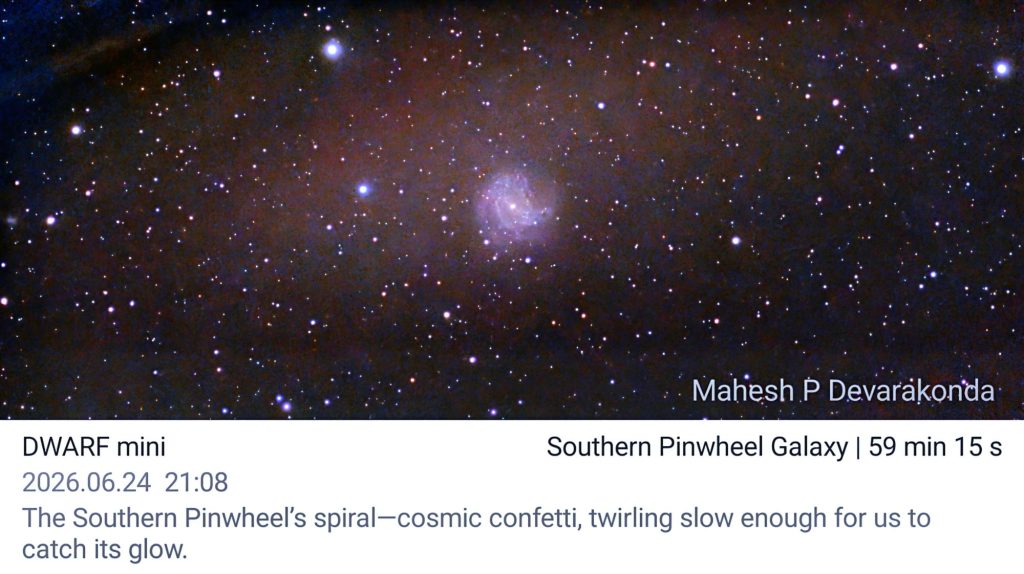
The data was collected using a DWARFLAB DWARF mini smart telescope over an integration window of 59 minutes and 15 seconds.

What’s in a Name? Why the “Pinwheel”?

For readers wondering about its distinctive nickname, the galaxy is called a Pinwheel because of its beautifully defined, symmetric spiral arms that gracefully sweep out from a central bar.

When viewed face-on from Earth, these star-studded arms resemble a classic, spinning child’s toy wheel. Because it is located in the southern sky within the constellation Hydra, astronomers appended “Southern” to differentiate it from its northern counterpart, Messier 101.

Orbital Mechanics & Spatial Coordinates
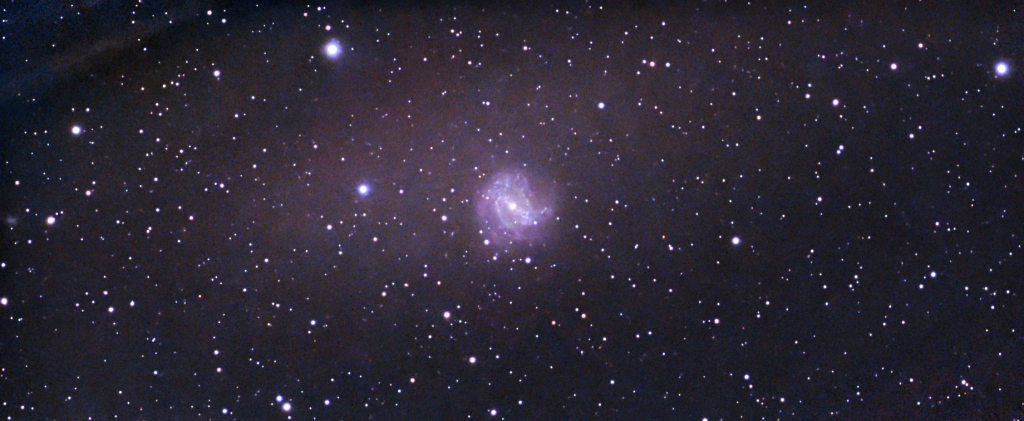
To resolve M83, the smart telescope’s GoTo mount registers specific coordinates within the southern celestial hemisphere. M83 sits on the border of the constellations Hydra and Centaurus.

Right Ascension (RA): 13h 37m 00.9s
Declination (Dec): −29° 51′ 56″
Apparent Magnitude: +7.6 (requires optimal sensor sensitivity to cleanly pull from background noise)
Distance: Approximately 15 million light-years from Earth.

Resolving Power of the DWARF mini
Integrating for nearly an hour (59m 15s) allows the DWARF mini’s automated stacking algorithm to build up the signal-to-noise ratio (SNR). This exposure window is critical for overcoming light pollution and drawing out the faint, loosely wound arms classified under its SAB(s)c barred spiral profile.

The resulting data frames clearly resolve the bright central bar structure, along with the distinct asymmetrical glow of its outer stellar nurseries.

The Dwarf Mini’s Stellar Studio provided ‘Auto’ correction to noise removal and star corrections. Finally,  I used the Samsung S26 Ultra photo editor for the final edits.
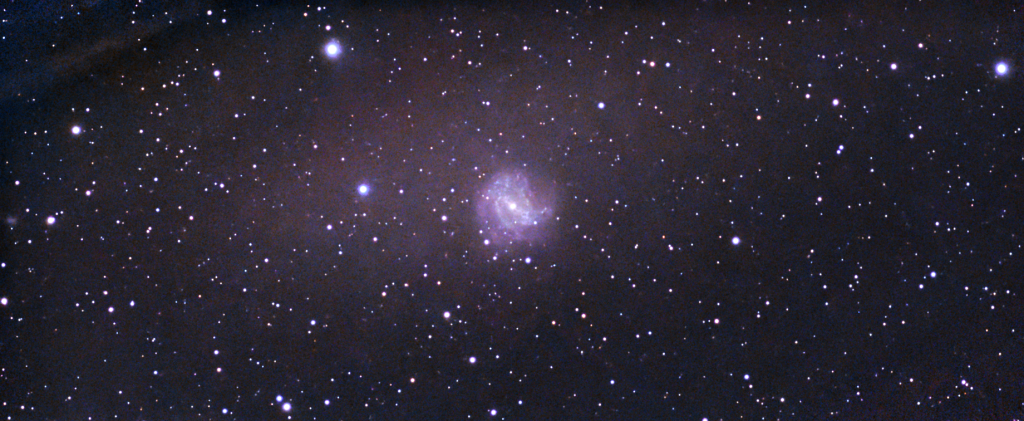
Comparative Analysis: M83 vs. M101
When optimizing exposure times, it helps to analyze structural morphology against an evolutionary counterpart. Astronomers often compare M83 to Messier 101 (M101), the Northern Pinwheel Galaxy.

While they share physical similarities, their scale and star-forming dynamics differ dramatically:

Mass Density & Star Count: M101 is an expansive grand design spiral housing roughly 1 trillion stars across a 252,000 light-year diameter. Conversely, M83 is far more compact, containing 40 billion stars spanning roughly 55,000 to 118,000 light-years.

Starburst Dynamics: Despite its smaller size, M83 exhibits massive starburst activity. Its core acts as a high-density star factory fueled by dense H II regions.

Supernova Frequency: M83 is an incredibly volatile environment. Six supernovae have been cataloged here within the modern era (including SN 1923A, SN 1950B, and SN 1983N), showcasing rapid stellar lifecycle turnover compared to more stable spiral structures.

Technical Reference Links
Structural & Historical Overview: Detailed documentation via the Wikipedia Messier 83 Page.

Positional Ephemerides: Coordinate mapping and target visibility guides on the AstroPixels Messier 83 Database.

Deep-Space Imaging Analysis: Space-telescope observations and multi-wavelength profiles on the European Southern Observatory (ESO) M83 Index.
Divine Choreography!

Divine Choreography!

There is a quiet magic that happens in the brief window between sunset and nightfall. While the bustling streets of Bengaluru hum with the usual evening rush, a completely different kind of rush hour takes place if you look upward into the skies above.

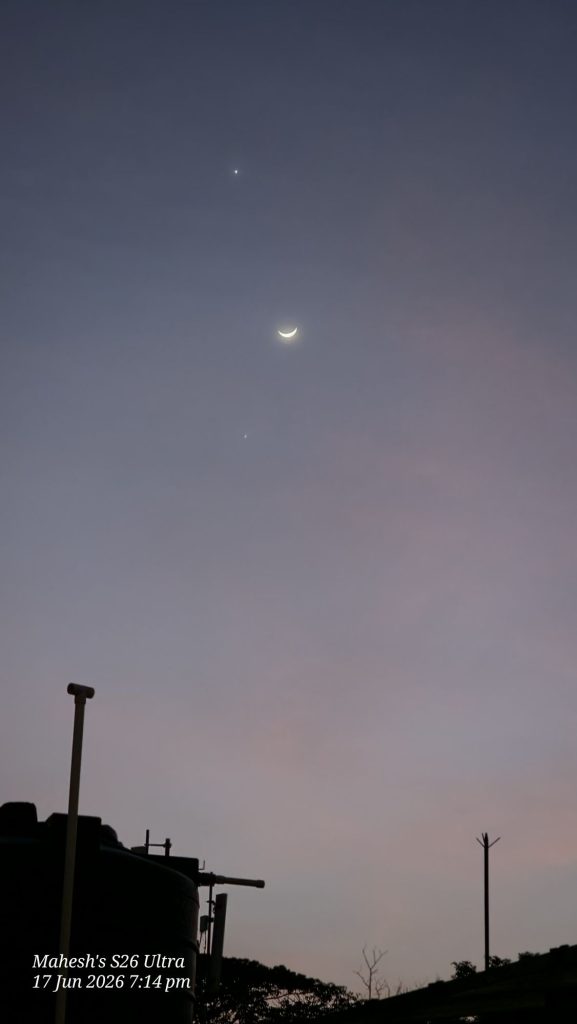
On the evening of June 17, 2026, the sky cleared just enough to grant a spectacular front-row seat to a rare, fleeting celestial dance: a four-body alignment featuring Venus, Jupiter, Mercury, and a slender crescent Moon.

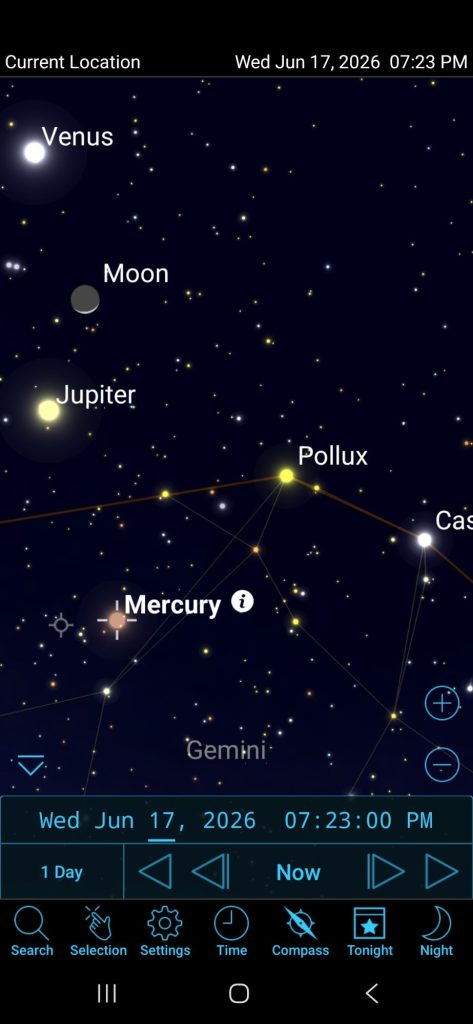
Sky Safari app screenshot

Armed with a smartphone camera,  a tripod, the Sky Safari App  and a clear western horizon, I tracked these cosmic wanderers as they chased the sun below the tree line.

This is the minute-by-minute chronicle of how the twilight faded, how an elusive planet was won, and how a technical photography session transformed into a deeply divine experience.

The Sunset Timeline

As the day concludes, the sun begins its graceful descent. Its golden rays lengthen, casting a warm, soft glow across the landscape. The sky transforms into a canvas of breathtaking colors, blending oranges, pinks, and purples. Each moment of this spectacle is a fleeting masterpiece, a gentle reminder of nature’s beauty.

Capturing a planetary alignment at dusk is a race against a ticking clock. As twilight deepens, the sky acts like a developing photograph—revealing dimmer objects piece by piece, even as the horizon rises to swallow them whole.

7:14 PM – The Early Lineup

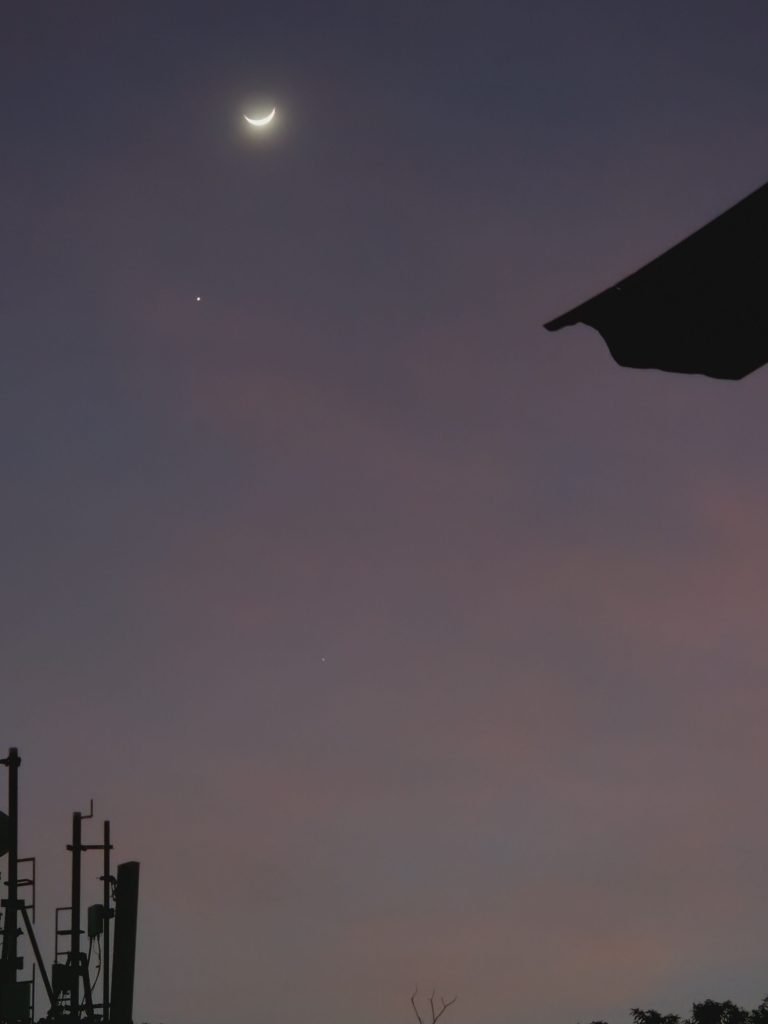
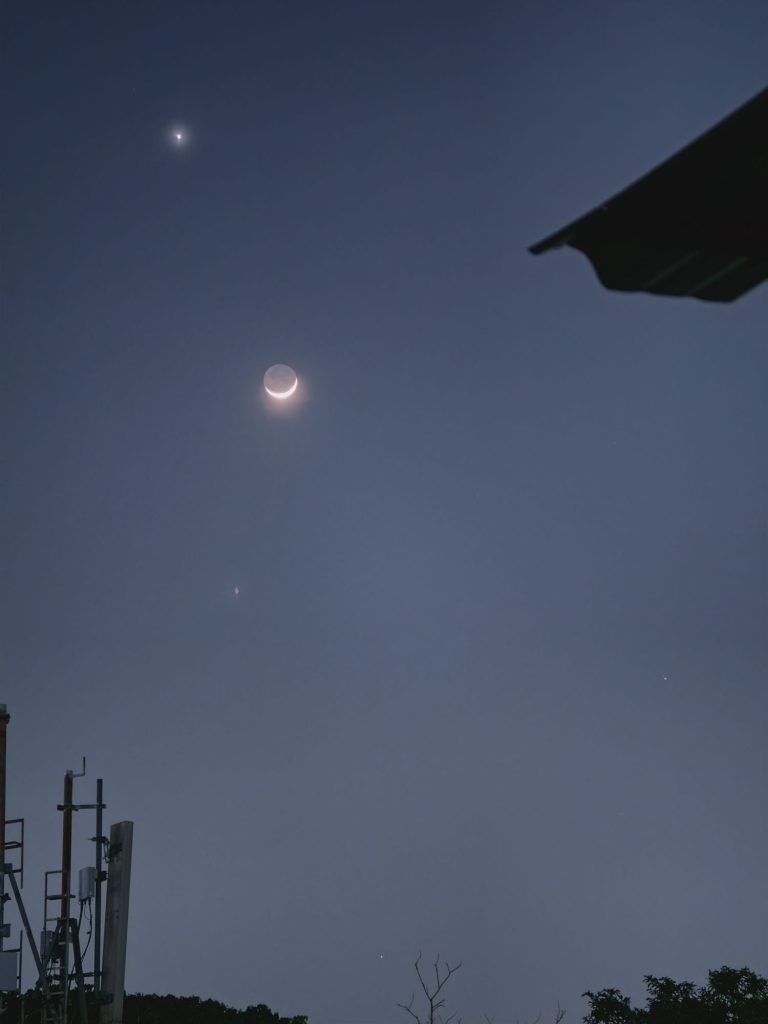
The session began just as dusk settled. Looking up, three of the major players were immediately striking. High in the sky, Venus blazed fiercely at a brilliant magnitude of roughly -4.0, acting as the anchor of the parade. Below it hung a beautiful, slender waxing crescent Moon, about 12% illuminated. Anchoring the vertical line directly beneath the curve of the crescent was Jupiter. Click the images to open in a new browser tab.

At this stage, however, Mercury was entirely missing—buried completely inside the thick, bright orange-pink glare of the sun’s twilight twilight curtain.

7:18 PM – Mercury Emerges

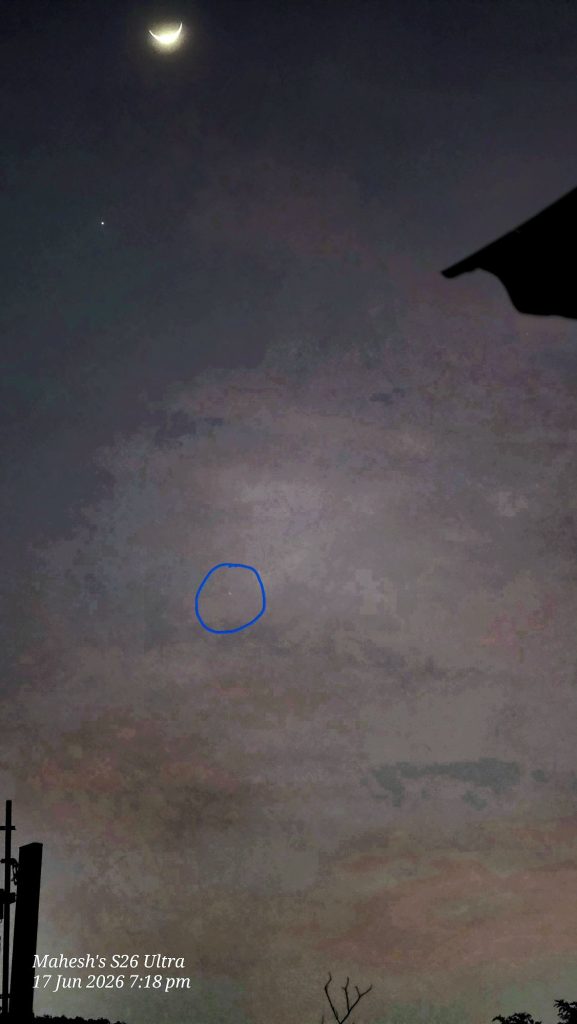
As the minutes ticked by and the ambient glare dropped, the sky began to give up its secrets. By 7:18 PM, looking closely at the camera sensor through the twilight gradient, a tiny, incredibly faint speck of light finally broke through.

Sitting at a faint +0.6 magnitude to the lower right of Jupiter, Mercury had officially joined the parade, fighting through the heavy atmospheric haze of the city horizon.

7:21 PM – Cutting the Noise with Astro Mode

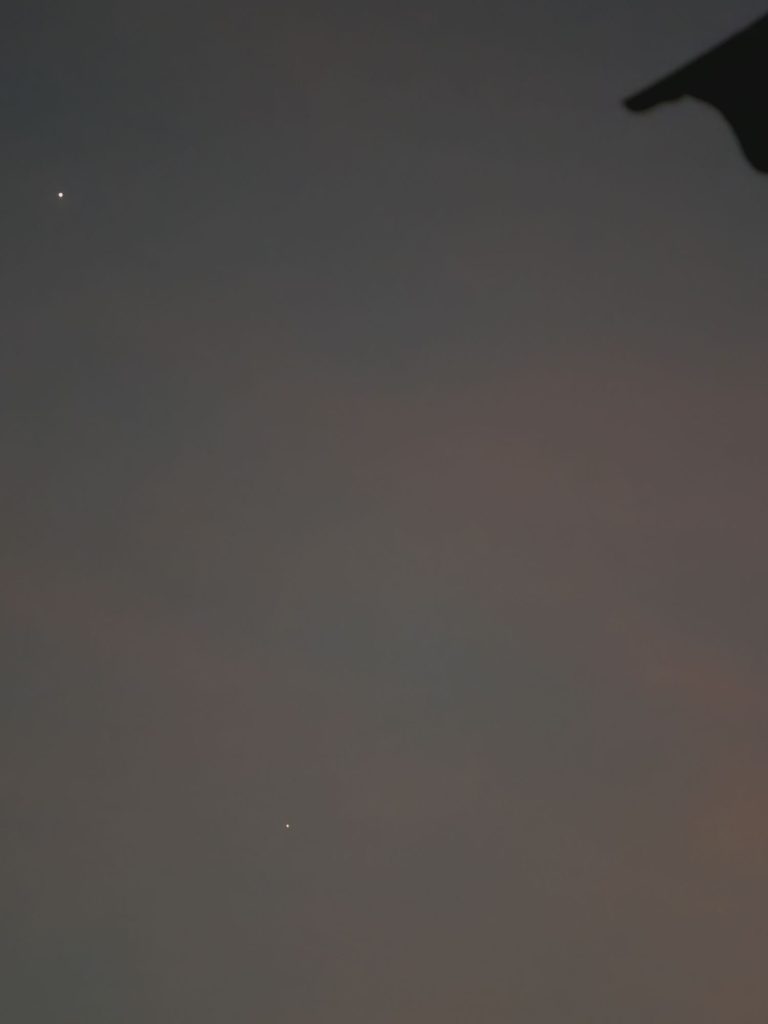
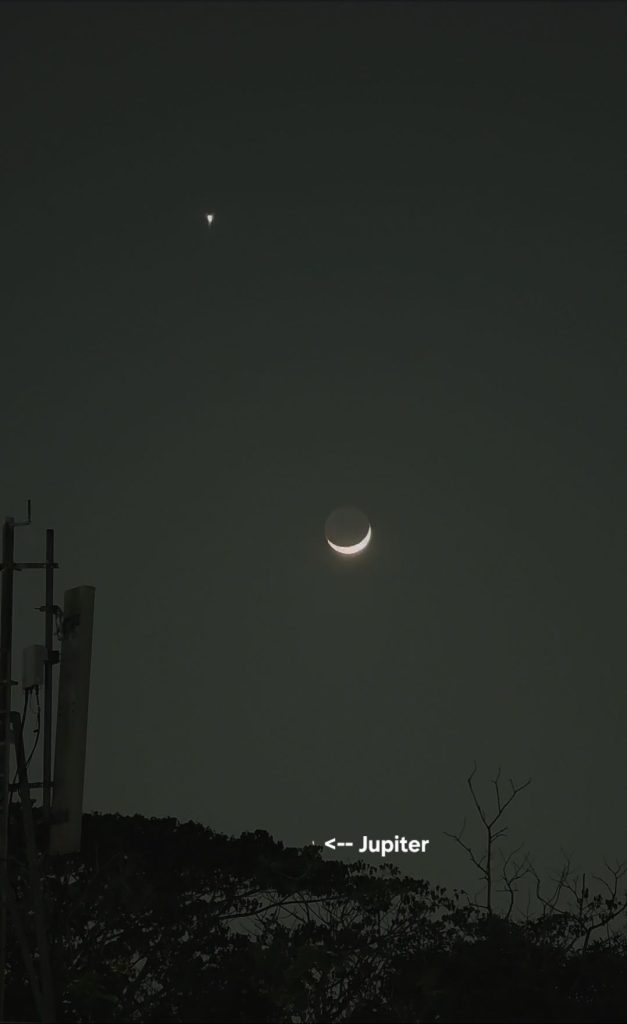
By 7:21 PM, I switched over to Samsung’s Expert RAW Astro Photo mode to utilize its multi-frame auto-stacking capabilities. The difference was night and day. The computational stacking completely smoothed out the background atmospheric noise, turning a tricky twilight shot into a crisp portrait. The crescent Moon’s shape sharpened, Jupiter anchored the center-left cleanly, and Mercury—now freed from the muddy sky-glow—stood out as a natural, steady point of light.

Jupiter and Mercury

7:28 PM to 7:34 PM – The Sky Deepens

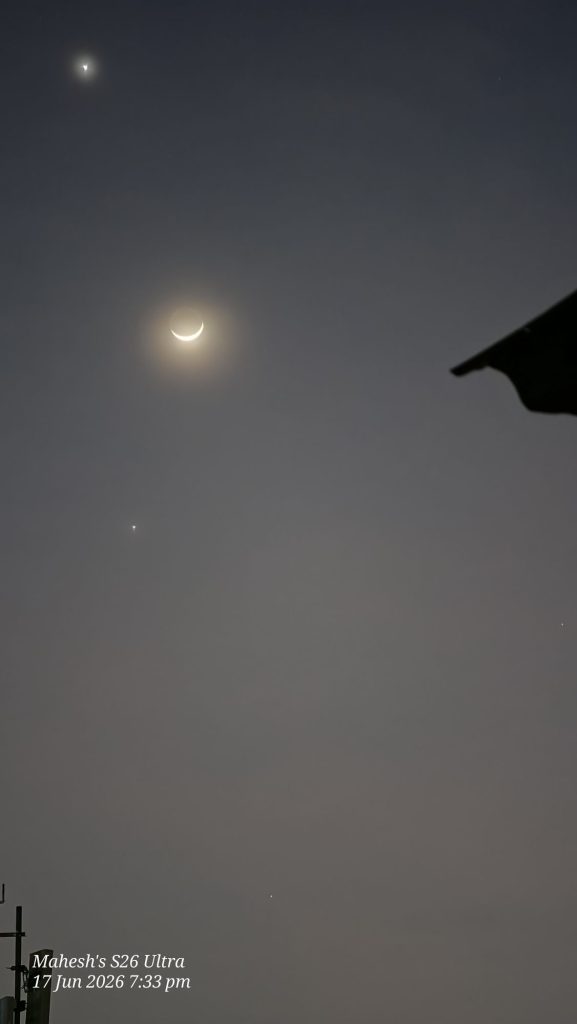
As the clock passed 7:28 PM, the true layout of the night sky bared itself. With the darkness intensifying, a new object pierced through the mid-right side of the frame—the bright star Pollux from the Gemini constellation, forming a wide, cosmic triangle with the Moon and Jupiter.

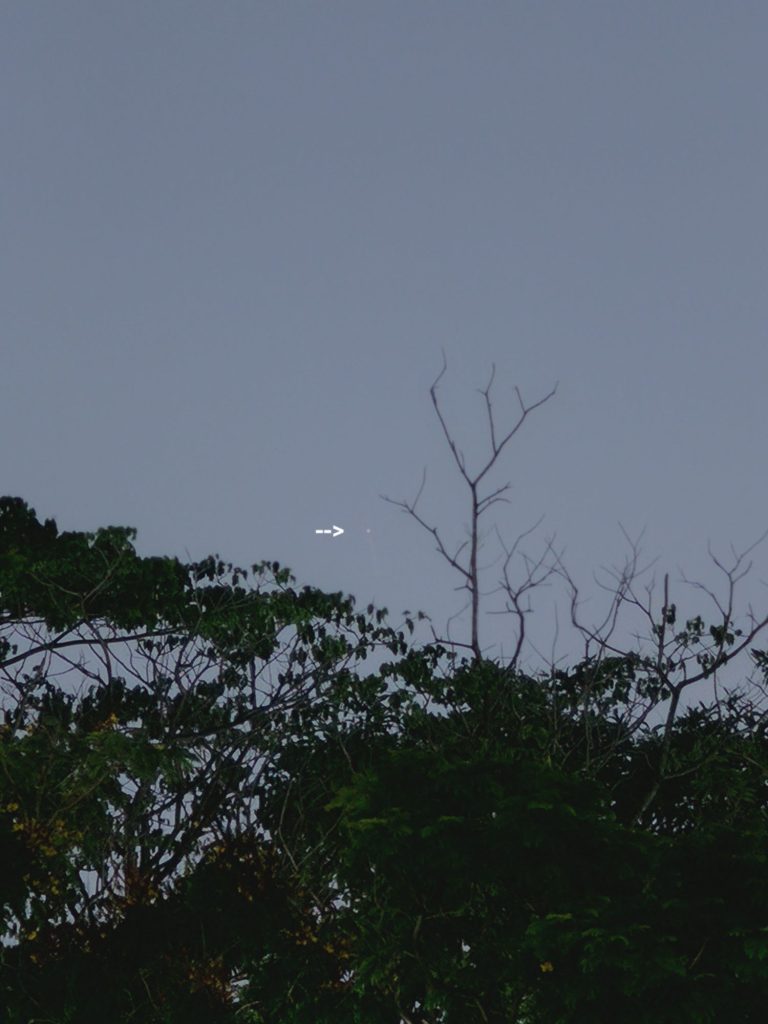
By 7:34 PM, the dark sky allowed the camera to capture a masterclass in Earthshine—where sunlight reflecting off Earth’s own oceans and clouds softly illuminated the dark, unlit shadow of the lunar disk, showing the complete circle of the Moon. Low on the bottom right, Mercury was still holding on, dropping visibly lower by the minute.

7:46 PM – The Slate-Blue Shift
To capture the mood of the deep dusk, I manually tweaked the Auto White Balance, dropping the color temperature down to around 4300 Kelvin. This stripped away the last remnants of warm city light pollution, casting the entire sky in an otherworldly, cinematic slate-blue hue.

In this frame, the entire house was visible: Venus at the peak, the glowing cradle of the Moon, Jupiter below it, Pollux to the right, and Mercury just skirting the top of the dark horizon line, next to the bald tree..

7:50 PM – The Final Second
The chase concluded right at the absolute brink of horizon extinction.

At 7:50 PM, Mercury had plummeted to the very edge of the sky. I managed to capture it one last time, nestled perfectly as a sharp, tiny pinprick in a small gap just to the left of a silhouetted, bald tree branch, a split second before it vanished into the horizon vegetation for the night.

The Motion: 23 Minutes in 19 Seconds
To truly understand how fast these inner worlds move relative to our local horizon, I set up a hyperlapse video to lock onto the alignment. The camera captured 23 minutes of continuous cosmic descent, compressing it into a rapid burst of raw motion, which I then slowed down to a 19-second clip to appreciate every detail.

Refereing to the above video, the planetary descent is mesmerizing:

  • You watch the crescent Moon dipping below the heavy silhouette of the trees.
  • Venus, sitting incredibly high in its orbit, holds its ground stubbornly at the top of the frame.
  • If you keep your eyes on the tree line around the 0 to 3-second mark, Jupiter makes a brief, dramatic cameo, blinking just over the branches before it is entirely cut off by the horizon.

The Transcending Lens: A Divine Choreography

Standing on the roof in the quiet night air after the camera stopped clicking, the entire experience transcended mere physics, focal lengths, or sensor capabilities.

Watching those massive worlds glide along their paths in absolute silence didn’t make me feel small—it felt like witnessing a silent, Divine Choreography.

In ancient traditions, these celestial movements weren’t viewed as random, clinical clockwork, but as the visible expression of a higher, cosmic order(Rtam).

There is a profound spiritual awakening and an experience of awe that happens when you witness such perfect harmony up close. It’s blissfully divine – Ananda! ✨️

A Line Drawn by the Divine: The Moon and Jupiter’s Intimate Evening Rendezvous

A Line Drawn by the Divine: The Moon and Jupiter’s Intimate Evening Rendezvous

If last night’s sky was a grand, sweeping dance across the western horizon, tonight was an intimate, hushed conversation between two cosmic giants.

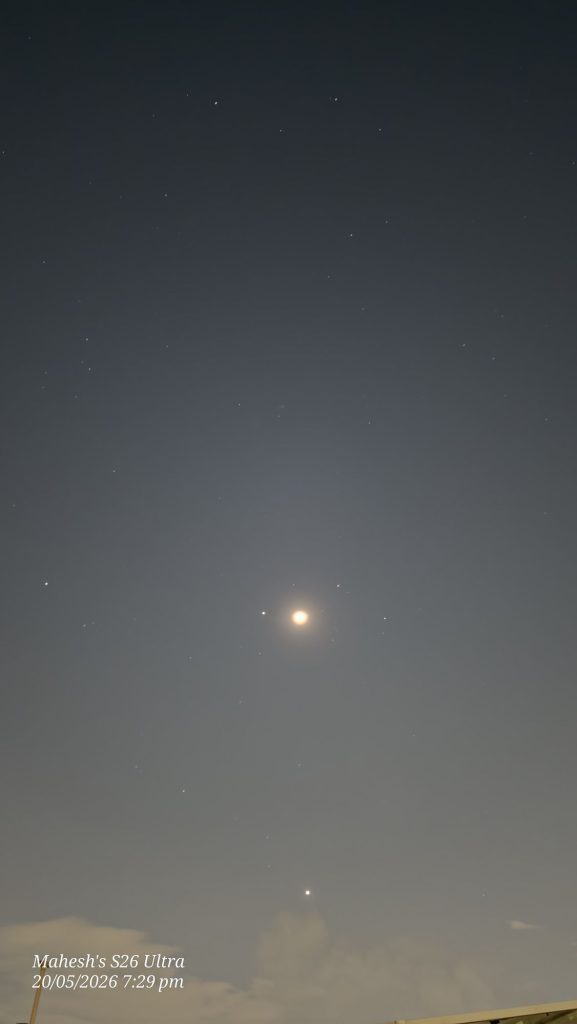
Returning to the rooftop this Wednesday evening, May 20th, 2026, the Bengaluru skies cleared once more to reveal a sight so perfectly geometric, it felt less like random cosmic mechanics and more like deliberate artistry (click on any photo to open it in a new tab)

Moon and Jupiter aligned on a horizontal straight line

It was as if the Divine took a 12-inch ruler, drew a flawless, crisp line across the deep twilight sky, and carefully placed the crescent Moon and Jupiter side-by-side right upon it.

The Shift in the Cosmic Choreography
The Moon is a swift traveler. Just twenty-four hours prior, it hung gracefully as a bridge between brilliant Venus below and regal Jupiter above. Tonight, continuing its eastward journey across the zodiac, the Moon climbed significantly higher, leaving Venus to burn intensely near the horizon while it side-stepped right up to Jupiter.

1. A High-Society Celestial Gathering (7:20 PM – 7:25 PM)

In the early evening frames, the true scale of this planetary mixer became beautifully apparent. While the Moon and Jupiter held center stage, the western sky felt like a bustling social evening for the stars.

Framing the top and sides of the planetary pair were the familiar guardians of Gemini—Castor and Pollux—while surrounding stellar neighbors sparkled through the clean, post-rain atmosphere. The planets weren’t merely passing through empty space; they were attending a brilliantly lit cosmic party.

Stellar Party

2. Balanced on a Needle’s Point
As twilight surrendered to the night, the sheer proximity of the two bodies became breathtaking. Looking through the lens, the alignment was strikingly linear.

Jupiter, the king of the planets, shone with a brilliant, steady, diamond-like intensity just a fraction of a degree away from the lunar limb. The perfect horizontal alignment created a powerful sense of balance, symmetry, and cosmic order.

3. The Perfect Da Vinci Glow (7:27 PM & 7:33 PM Close-ups)
When zooming directly into the pair, the phone’s sensor pulled off a magnificent feat of exposure. In the dedicated close-ups, the blazing, sunlit silver crescent curve is razor-sharp.

Yet, cradled within that bright arc is the unmistakable, ghostly silhouette of Earthshine. The unlit portion of the Moon glows softly with the reflected light of Earth’s oceans and clouds. Capturing this haunting “old Moon in the new Moon’s arms” right next to the piercing point of Jupiter feels incredibly profound.

4. Piercing the Surface: The View Through the Dwarf Mini (7:58 PM)
While the mobile sensor captured the magnificent atmosphere and planetary alignment of the evening, switching over to the smart telescope unlocked an entirely new dimension of the experience.

Stepping away from the wide field and pushing deep into the lunar architecture, the optics resolved the crescent with jaw-dropping clarity.

Along the terminator line—the shadow line where lunar day meets night—the stark, dramatic play of sunlight highlights individual crater rims, deep impact basins, and rugged mountain ridges. Seeing the soft, ghostly glow of Earthshine via wide-angle suddenly paired with raw, hard-edged topographical crags brings a beautiful, scientific intimacy to tonight’s stargazing session.


Transcendental Reflection: Trusting the Precision of the Universe
There is immense comfort to be found in looking up at a sky that aligns itself with such absolute, geometric precision.

In our human lives, we often feel like we are navigating chaos. Our schedules cross, our plans drift, and the trajectories of our days can feel cluttered and unaligned. We scramble to find balance, wondering if the pieces of our lives will ever line up.

Yet, the same unseen laws that effortlessly balance a multi-billion-ton planet next to our silver Moon on a perfect, imaginary line—and carve the ancient craters on its surface—are quietly at work behind the scenes of our lives. Tonight’s alignment is a gentle reminder to trust the underlying order of things.

We do not have to force the alignment of our lives; sometimes, we simply need to keep moving along our orbit, trusting that when the timing is right, the clouds will part, the lines will straighten, and everything will balance out perfectly.


Over to You
Did you step outside to see the Moon and Jupiter standing side-by-side tonight?

Piercing the Storm: Capturing the Moon, Venus, Jupiter, and the Twins of Gemini

Piercing the Storm: Capturing the Moon, Venus, Jupiter, and the Twins of Gemini

There is a distinct, breathless magic that occurs when the celestial clockwork aligns perfectly to pierce through a stormy night.

Earlier this evening, right here in Bengaluru, the heavy pre-monsoon clouds parted just enough to reveal a breathtaking cosmic triad: a delicate, glowing crescent Moon suspended beautifully in the western sky, flanked by the two brightest planets in our solar system—Venus and Jupiter.

For those tracking the heavens this week, the Moon has been on an elegant pilgrimage, visiting the evening planets one by one. While the monsoon-laden skies blocked out yesterday’s view, tonight offered a blessed, short-lived window of absolute clarity. It was a visual reminder that no matter how dense the earthly clouds around us become, the grand alignment of the universe remains entirely uninterrupted.

The Evening in Frames: From Dusk to Deep Space
Capturing this event over the span of an hour using a flagship mobile sensor yielded a progression of details that feel deeply intimate yet staggeringly vast.

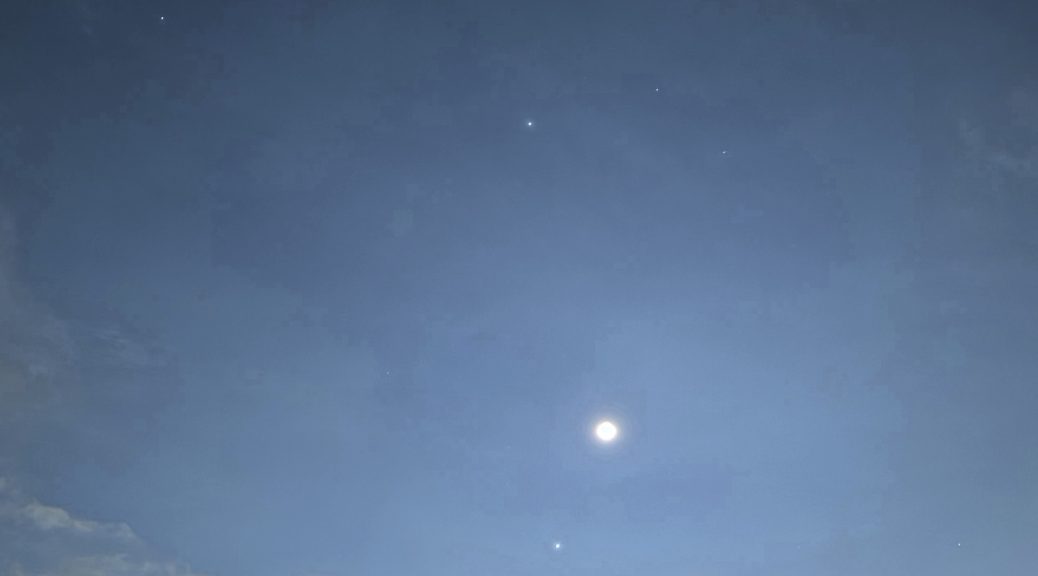
1. The Twilight Geometry (7:14 PM)
As twilight began to deepen, the sheer scale of the alignment became visible over the urban skyline. Even with city lights and low-hanging moisture, Venus and the crescent Moon pierced the blue hour with remarkable brilliance, hanging like gems over the cityscape.

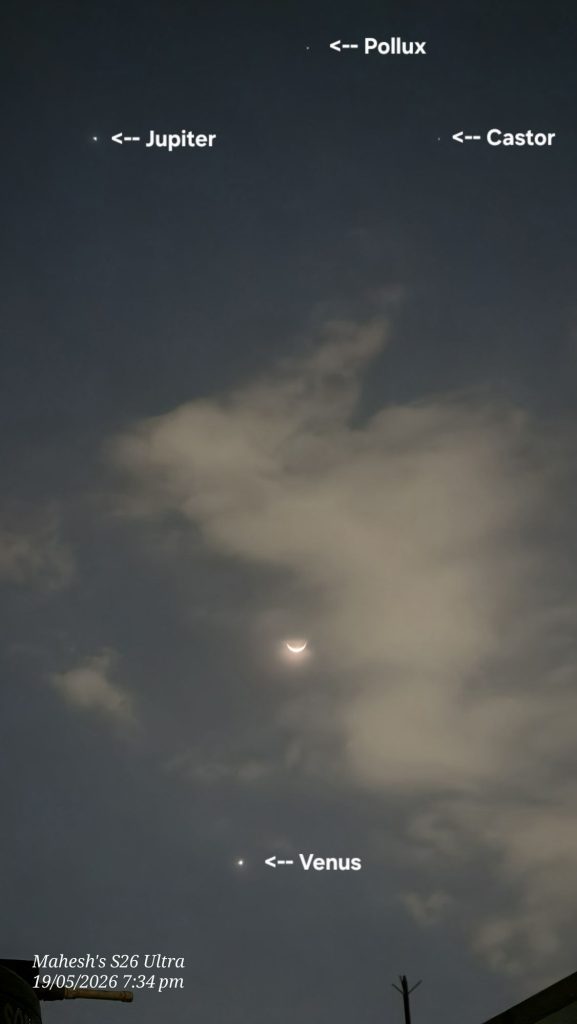
2. Enter the Twins: Castor and Pollux (7:34 PM)
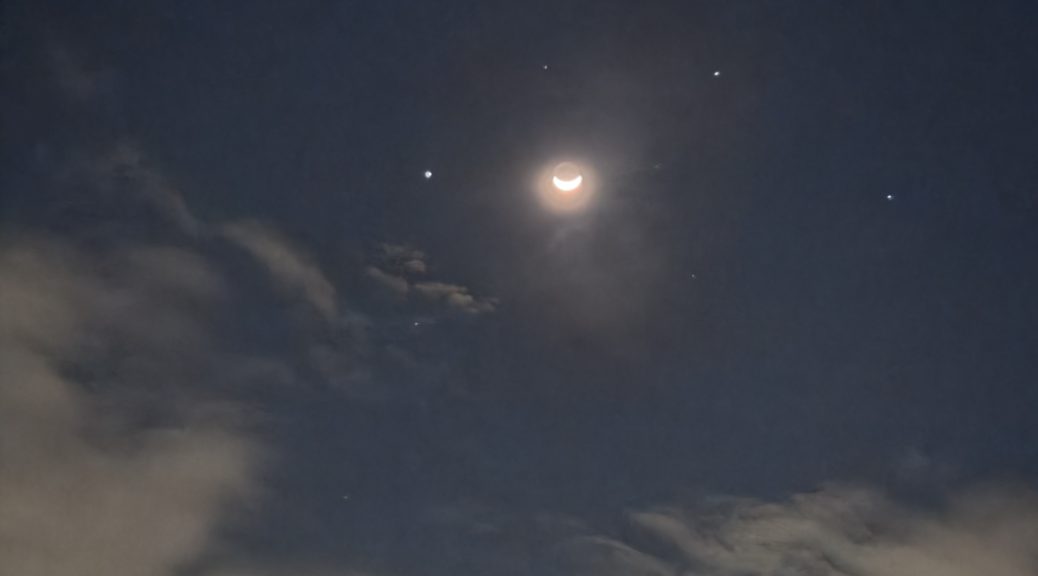
As the sky darkened further, the composition expanded dramatically. The Moon hung in perfect poise—positioned directly above brilliant Venus (blazing at an intense apparent magnitude of roughly -3.9) and just below the majestic authority of Jupiter (shining at magnitude -1.9).

But the real surprise was the appearance of the famous celestial twins of the Gemini constellation. Sitting high above the planetary dance, Pollux (the brighter, golden giant) and Castor (the bright binary system) framed the top of the view, creating a spectacular multi-body celestial matrix.

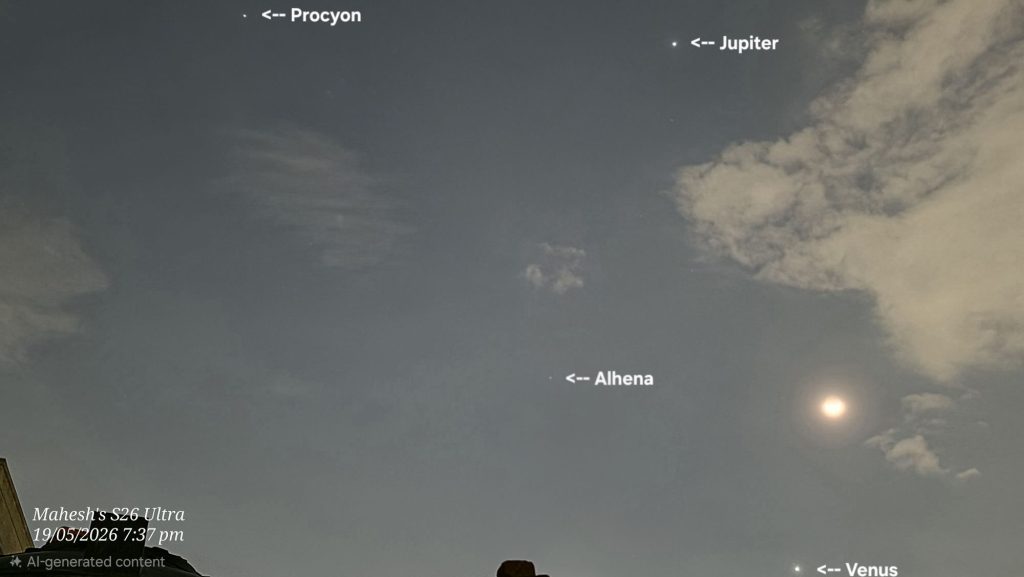
3. The Grand Panoramic Canvas (7:37 PM)
Just a few minutes later, switching to a landscape orientation completely transformed the perspective, turning a tight planetary framing into a sweeping cosmic map. This wide-angle shot beautifully illustrates the massive scale of the celestial neighborhood.

To the far upper left, the brilliant star Procyon—the eighth-brightest star in the night sky and the anchor of Canis Minor—shines with its steady, distinct light.
Right in the center of the frame, standing like a cosmic milestone directly above the rooftop line, sits Alhena (gamma Geminorum). Alhena marks the “left foot” of the twin Pollux in the constellation Gemini. Seeing Alhena, Jupiter, Venus, and the Moon all suspended in a vast, open horizontal plane reveals the beautiful, geometric web that connects our immediate solar system neighbors to stars burning light-years away in the deep background of space.

4. The Ghostly Radiance of Earthshine
Zooming into the lunar disk revealed the spectacular phenomenon of Earthshine —often called the “Da Vinci Glow.” While the sunlit sliver of the crescent burned intensely, the dark, un-illuminated portion of the lunar disk was softly, visibly awake. This ghostly illumination isn’t caused by direct sunlight, but by sunlight reflecting off Earth’s own clouds and vast oceans, bouncing back into the dark spaces of the Moon. It is a profound reminder that even the dark side of our neighbor is gently lit by the home we stand on.

5. Resolving the Deep Space Beacon: Mebsuta
Perhaps the most technically thrilling success of the evening was zooming past our planetary neighbors to capture a true deep-sky beacon sitting just to the upper left of the lunar glow: Mebsuta (epsilon Geminorum). Click on the photo below.

Tucked within the constellation Gemini, Mebsuta is a yellow supergiant stellar engine sitting nearly 900 light-years away from Earth. Remarkably, the phone’s sensor managed to distinctly resolve not just the primary star, but its faint, 9.6-magnitude optical companion star. Resolving a companion star of that magnitude through the atmospheric haze of a post-rain city sky is a true triumph of modern optical stacking and computational mobile photography.


Did you manage to catch a glimpse of the Moon sitting between the two evening giants tonight?

Video of this evening’s alignment
Celestial Whispers: A Night of Automated Discovery

Celestial Whispers: A Night of Automated Discovery

Last night, May 12, 2026, was a testament to how modern technology can bridge the gap between our busy daily lives and the silent, ancient wonders of the cosmos.

Between 7:20 PM and 10:15 PM, while I was indoors attending to other tasks, my gear was outside under the Bengaluru sky, diligently working through a pre-planned cosmic itinerary.

The true hero of this session was the Dwarf Mini’s Scheduler feature. By setting up a sequence in advance, the telescope seamlessly transitioned from one Deep Sky Object (DSO) to the next without any manual intervention.

Connected via STA mode to my home Wi-Fi, I could monitor the live stacks on my S26 Ultra from the couch. It is a profound shift—observing the universe not through shivering hours in the dark, but through a harmonious blend of automation and intentionality.

Observations

1. Markarian’s Chain: A Cosmic Neighborhood

This capture reveals a stretch of galaxies in the heart of the Virgo Cluster. Seeing these massive structures grouped together reminds us that nothing in the universe exists in true isolation; everything is part of a grand, gravitational dance.

Type: A string of galaxies including M84, M86, and the “Eyes” galaxies.

Distance: Approximately 50 to 60 million light-years from Earth.

Significance: Most of these galaxies are moving in a coherent motion, hence the “chain” designation, though some are just line-of-sight coincidences.

Reference: https://apod.nasa.gov/apod/ap190331.html

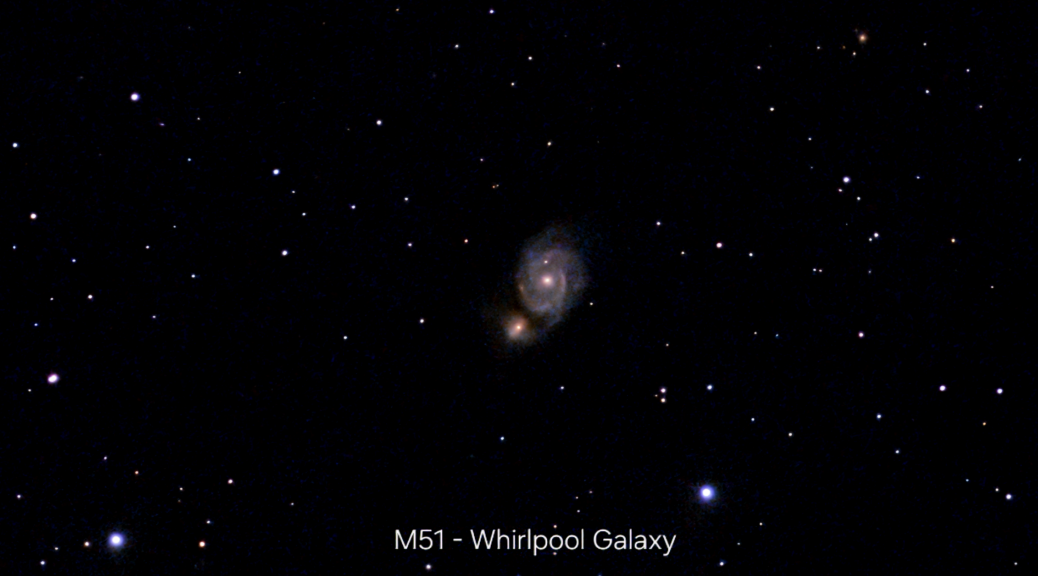
2. M51: The Whirlpool Galaxy

The spiral structure of M51 is perhaps the most iconic “transcendental” image in astronomy. It represents the perfect whirlpool of creation, where the smaller companion galaxy (NGC 5195) is literally tugging on the arms of the larger spiral.

Type: Grand-design spiral galaxy.

Distance: Roughly 31 million light-years away in the constellation Canes Venatici.

Interaction: The gravitational interaction with its companion triggers intense star formation, lighting up the spiral arms with brilliant pink nebulae.

Reference: Explore M51 at the Hubble Site

3. M104: The Sombrero Galaxy

Looking at the Sombrero, one can’t help but see a “crown” or a “brim” of starlight. It is a solitary, majestic object that sits on the edge of the Virgo Cluster, characterized by its unusually large central bulge and a prominent dark dust lane.

Type: Unbarred spiral galaxy (often appearing like an elliptical with a disk).

Distance: About 28 million light-years from Earth.

Feature: It contains a massive central black hole, estimated to be a billion times the mass of our Sun, and a rich system of nearly 2,000 globular clusters.

Reference: M104 Technical Details via Messier-Objects.com


Reflecting on the Night
As I reviewed the final edits on my S26 Ultra, I realized that it isn’t just about the images—it’s about the process. By using the scheduler, we remove the friction of the “how” and allow ourselves to focus on the “why.” We are capturing light that has traveled for millions of years to reach a terrace in Bengaluru.

How do these distant giants change your perspective on the “small” tasks we handle every day?

Celestial Whispers

Celestial Whispers

Date: April 26, 2026
Location: Bengaluru, India
Equipment: DWARF mini Smart Telescope
Processing: Live Stacking via App & Stellar Studio

There is a unique kind of magic that happens on the terrace in Bengaluru. Between the hum of the city and a sky occasionally draped in clouds, you wouldn’t expect to find the birthplace of stars or the heart of distant galaxies. Yet, tonight, the DWARF mini proved that the universe is always waiting—you just need the right lens to see it.

The Thrill of the “Live Reveal“
If you’ve never experienced Live Stacking, it’s hard to describe the sensation. You start with a blank, dark screen. Then, frame by frame, the light begins to accumulate. What looked like an empty patch of space slowly reveals a spiral arm, a glowing gas cloud, or a dense core of a million suns. Tonight was a marathon of these “Aha!” moments.


Tonight’s Cosmic Catalog
1. The Giants of the South
We started strong with Omega Centauri. At a 6-minute exposure, this globular cluster looked like a shimmering ball of diamonds.

Shortly after, we swung over to the Carina Nebula. Despite the city lights and some cloud interference, the reddish glow of hydrogen gas began to bleed through the darkness—a testament to the device’s ability to “see” through the haze.

2. A Tale of Two Galaxies: M81 & M82
The highlight for me was capturing Bode’s Galaxy and the Cigar Galaxy in a single frame. Watching the smooth, regal spiral of M81 contrast with the chaotic, starburst energy of M82 appearing live on my phone screen was truly intriguing.

It’s a perspective of the cosmos I had never seen for this long, and it was worth every second of the 12-minute wait.


3. Deep into the Virgo Cluster
For the Virgo Galaxy Cluster, I decided to let the AI take the wheel, setting the gain to 40 and letting the “Auto” shutter handle the light. The plate-solving algorithm is incredibly sophisticated; it calibrated on the fly, centered the target, and began tracking with surgical precision. Catching M86 and its neighbors felt like peering into a secret corner of the local supercluster.

4. Clusters and Beehives
We rounded out the session with the Hercules Globular Cluster (M13) and the Beehive Cluster (M44).

M13 resolved beautifully into a dense, bright core, while the Beehive showed off its scattered, colorful gems, reminding us that even “nearby” objects have a grandeur all their own.

Lessons from the Terrace
Tonight wasn’t just about the photos; it was about learning the dance of gain and shutter speeds. Even when the clouds threatened to end the session, the Mini kept stacking, only dropping a frame or two.

The Stellar Studio tools in the app handled the post-cleanup and captions effortlessly, leaving me more time to simply marvel at the screen.

As I plan to push our next session to a 45-minute deep-dive, I’m reminded that the sky isn’t the limit—it’s just the beginning.


Clear Skies, Mahesh P Devarakonda


“Ancient wisdom tells us we are made of stardust; tonight, I watched that stardust come back to life on a digital screen.“

Capturing the Cosmos: A New Lens on the Universe

Capturing the Cosmos: A New Lens on the Universe

The Arrival of a Tiny Giant
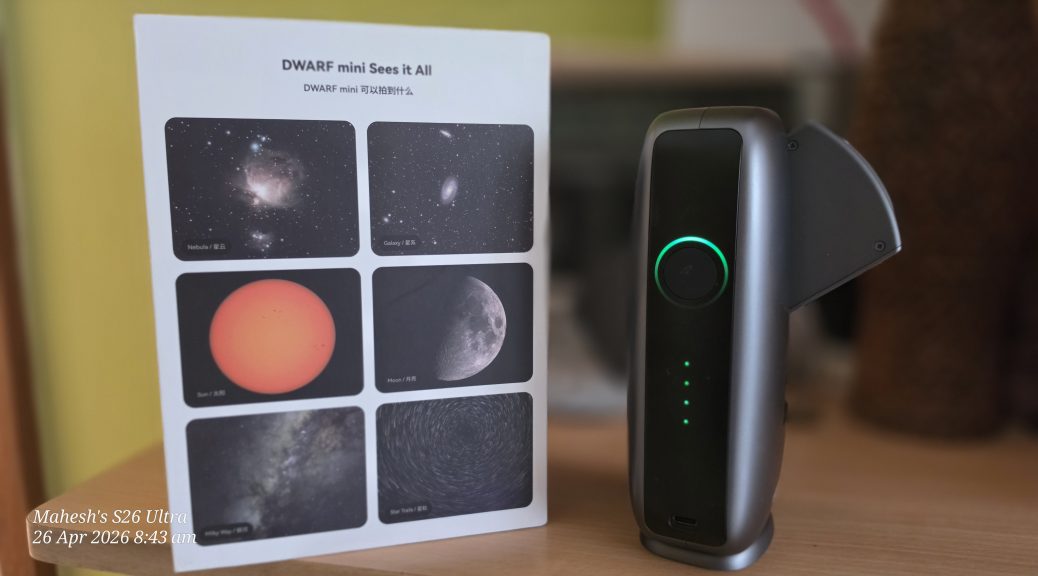
Yesterday, a small box arrived that promised to bridge the gap between my terrace and the deep reaches of space: the DWARF mini. In an age where we are often glued to small screens for trivialities, this device uses technology to turn our eyes upward, reminding us of the vastness that the ancient texts have long contemplated.

The DWARF Mini: A Loaf of Bread That Sees Stars
To capture these images, I used the DWARF Mini. It’s an incredible piece of engineering—weighing only about 840 grams (roughly the same as a loaf of bread!), yet it houses a Sony IMX662 sensor and a 150mm telephoto lens. It’s a “smart” telescope, meaning it handles the complex star-tracking and autofocusing via an app, making astrophotography accessible even from a backyard in Bengaluru.

I’m still learning the nuances of this smart tech—figuring out the best stacking times and how to frame these distant wonders. But even in these first “wide” views, the connection to the universe feels more personal than ever.

1. The Moon: A Silent Witness
My first target was the Moon. Even at a 0.1s exposure, the detail is breathtaking. Looking at the craters, I’m reminded of how the Moon has been a steady companion in our history—constant yet ever-changing in its phases.


2. M41: A Celestial Gathering
Next, I pointed the DWARF toward M41, an open cluster in Canis Major. To the naked eye, it’s a faint smudge; through the telescope, it’s a brilliant gathering of stars. It reminds me of the concept of Satsang—a community of light-bearers coming together to create something more luminous than they could alone.


3. M104: The Sombrero Galaxy – 30 Million Light Years Away
Finally, I tracked M104, the Sombrero Galaxy. While it appears small in this wide-angle view, the thought that I am capturing light that traveled for 30 million years is humbling. In our fast-paced modern life, looking at a galaxy teaches us the ultimate lesson in patience and scale.

The Might of M104
To put that little “smudge” of light into perspective, here is what we are actually looking at:

The Weight of 800 Billion Suns: NASA estimates that M104 has a mass equivalent to 800 billion suns. It is one of the most massive objects in the Virgo galaxy cluster.

A Billion-Solar-Mass Black Hole: At its very center lies a supermassive black hole. For comparison, the black hole at the center of our Milky Way is about 4 million times the mass of our Sun; M104’s is estimated to be nearly one billion times as massive.

A “Hat” of Dust: The “brim” of the sombrero is actually a massive lane of dust and gas that is a primary site for star formation.

Ancient Neighbors: The galaxy is home to nearly 2,000 globular clusters—ten times more than our own Milky Way. Some of these star clusters are up to 13 billion years old, nearly as old as the universe itself.

Verified References for Further Reading:
NASA’s Hubble Gallery: Messier 104
The Sombrero Galaxy Overview (Wikipedia)

A Journey Across Continents: Words of Thanks
This cosmic journey wouldn’t have been possible without the incredible kindness of a few special people who helped bring the universe a little closer to me.


I want to extend my deepest gratitude to Suchitra and Sanjay Rao. They believed in this vision early on, securing the pre-order all the way back in January 2026. Your foresight and help in navigating the initial steps were the foundation of this project.


I also wish to offer my most sincere heartfelt  thanks, gratitude and regards to Dr. Emmanuelle Voisin.

Despite her demanding schedule as a CEO, she very graciously and kindly agreed to carry this telescope all the way from France specifically for me🙏💐


To both of you: thank you for your generosity and for being the “stars” that helped make this possible.

Your kindness is a reminder that while telescopes help us see the light of distant suns, the brightest light often comes from the people around us.

Thank you for taking the time to read through ☺️

The Sky as an Altar: A 48-Hour Vedic Journey

The Sky as an Altar: A 48-Hour Vedic Journey

In the last two days, my terrace in Bengaluru transformed into an intense night sky viewing altar. With the S26 Ultra acting as my “Modern Drik”—a contemporary lens of divine perception—I tracked the “Jewels” of the cosmos, connecting the dots between the stars above and the profound wisdom of many ancient verses.

Through this lens, the act of photography becomes a ritual, turning a simple observation of the heavens into a bridge between our modern world and the eternal truths of the past.

I. The Sun as the Visible God

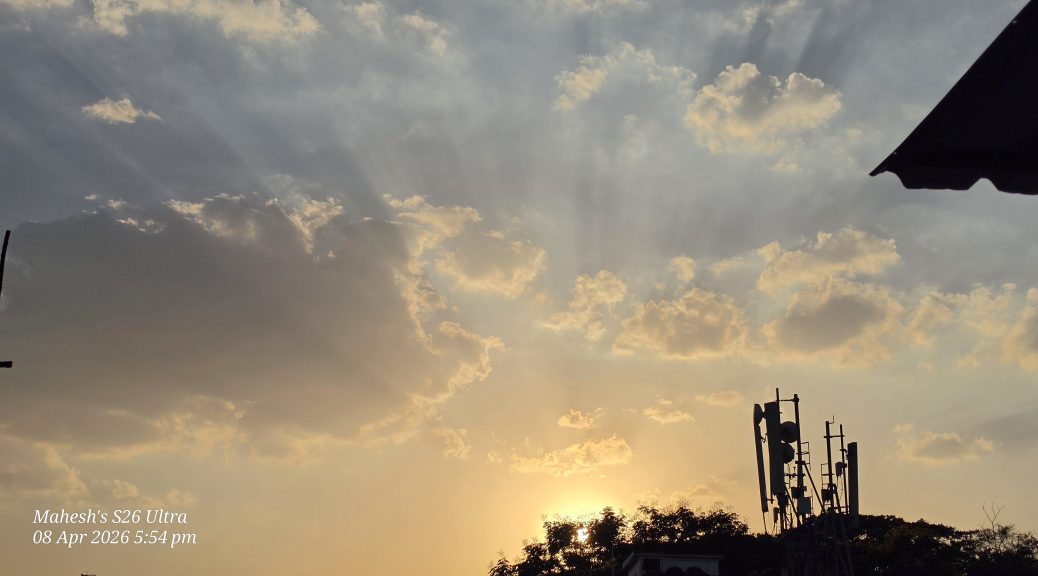
Before the stars emerge, the Sun sets the stage. This evening’s sunset (captured at 5:54 PM) felt like a divine blessing. We often chant “āditya‑rūpeṇa śrī‑rudraṁ namāmi“ – I bow to Śrī Rudra, appearing in the form of the Sun.

Seeing those rays pierce the clouds felt like the “kindling” of the cosmic fire, a reminder that the same light in our hearts is the light that fuels the galaxies.

The Aditya Altar: Kindling the evening fire at 5:54 PM.

II. The Guardians of the North: Sapta Rishi & Dhruva

As night fell, the Sapta Rishi Mandala (The Big Dipper) stood tall. These seven sages are the administrators of Rta (Cosmic Order). By tracing the “Pointers,” I found Dhruva (Polaris)—the unmoving anchor. In a world of constant motion, these stars remind us to find our own “Fixed Point” of Truth.

The Celestial Counsel: The Seven Sages keeping watch.

III. The Subtle Threads: Coma Berenices

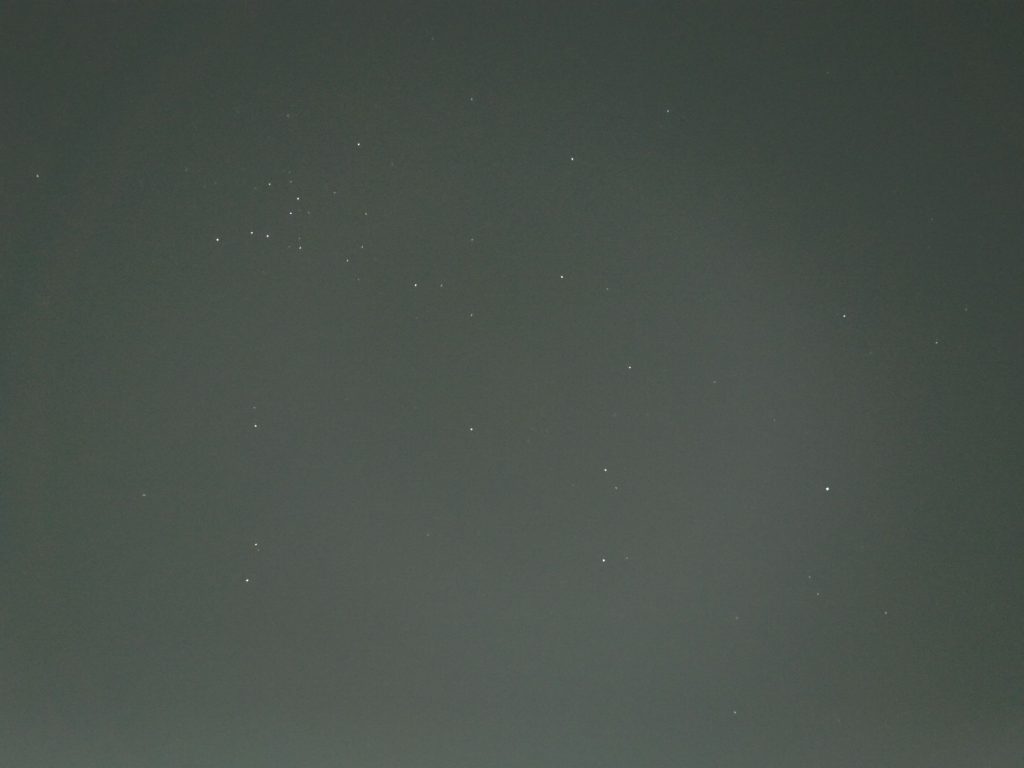
Hidden near the Lion’s tail, I captured the Coma Berenices cluster. This is the “Sukshma” (subtle) side of creation—thousands of stars woven together like a silver braid. It represents the delicate, interconnected threads of energy that hold our lives together, often invisible until we take the time to truly look.

The Subtle Weave: Where a thousand lights become one. Screenshot from Sky Safari app showing the constellation.

IV. The Pillar of the South: The Radiant Crux

Looking toward the South, the Crux (Southern Cross) appeared as a brilliant, steady anchor.  This constellation acts as a celestial compass, providing the foundational light needed to navigate our journey with purpose and grace.

The Southern Pillar: Anchoring our journey across the cosmic ocean.

V. The Beehive: M44

Though clouds played hide-and-seek with its inner jewels, the Beehive Cluster (M44) in the East revealed itself—a literal honeycomb of stars. As the heart of the Pushya Nakshatra, it reminds us of the “Nectar of Knowledge” (Madhu) that nourishes our spiritual growth.

M44 Beehive cluster of stars in the center.

The Nectar of Pushya: A cosmic honeycomb found exactly when nourishment was needed.

VI. The Conclusion: Orion’s Final Bow

Finally, I watched Orion (Mrigashirsha) setting in the West. As this “Giant of Time” dipped below the horizon, it signaled the completion of a cycle. Just as the Vedic rituals conclude with a Purnahuti (final offering), Orion’s setting is a graceful exit, making way for the new dawn.

As I closed my lens and viewed the photos and the experience of seeing the grandeur of the cosmos, I realized we do not just live under the sky; we are a part of its breathing, rhythmic dance.

Moon video

Moon video

Here’s a brief clip of the moon from my archives

By zooming in, the surface features are clearly visible.

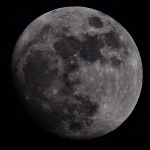
Moon 4th Oct 2025

Moon 4th Oct 2025

Exploring the Moon — Observations from October 4, 2025

Location: Bengaluru, India
Telescope: 127mm Maksutov-Cassegrain
Camera: ZWO ASI 462MC
Lunar Phase: Waxing Moon (~43% illuminated)
Seeing Conditions: Good (7/10), thin passing clouds

A Night of Lunar Detail

The Moon was in a perfect position tonight for high-contrast views along the terminator, where sunlight rakes across crater rims and mountain slopes.


Using the 127mm MAK-CAS with the ZWO ASI 462MC camera, I was able to capture both wide-field and close-up views of several craters, mountain ranges, and maria.

Featured Craters

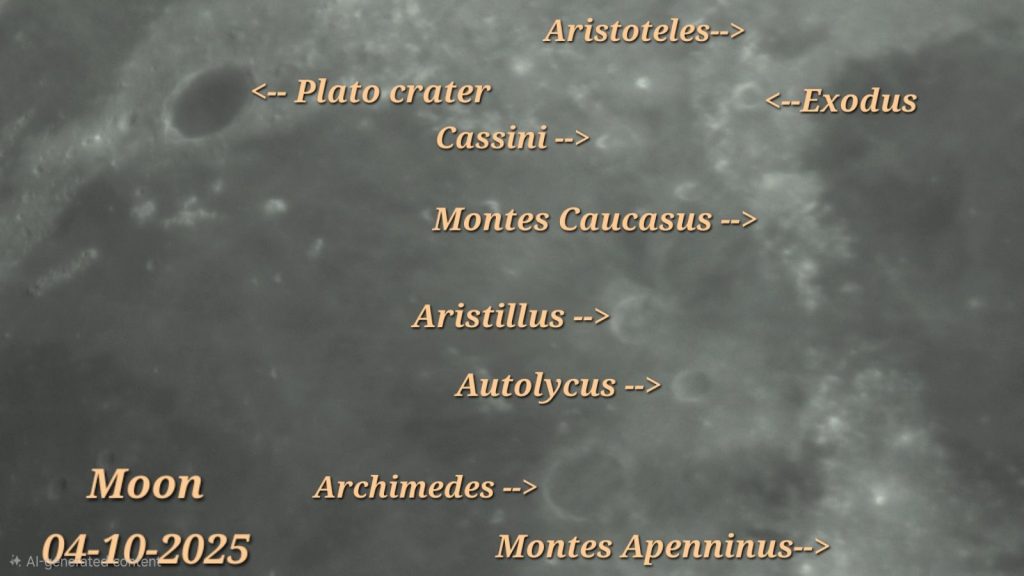
Composite image showing several of the observed craters.


1. Copernicus – ~93 km wide and 3.8 km deep.
Bright ray systems and central peaks make it a favorite for lunar observers.

2. Tycho – ~85 km wide and 4.8 km deep.
One of the youngest craters, famous for rays extending over 1,500 km.

3. Plato – ~101 km in diameter with a dark, basaltic floor near Mare Imbrium.
Smooth and subtle, ideal for testing seeing stability.

4. Archimedes – 83 km wide, with a bright rim and lava-flooded interior.

5. Aristillus – 55 km across, showing sharp walls and a distinct central peak complex.

6. Cassini – 57 km in diameter, with two smaller inner craters (Cassini A and B).

7. Aristoteles – 87 km wide with 3.3 km high terraced walls, bordering Mare Frigoris.

8. Eudoxus – 67 km across, located just south of Aristoteles — together they form one of the Moon’s most picturesque crater pairs.


Mountain Ranges

The Apennine Mountains marking the Imbrium Basin’s rim.

Montes Apenninus – Stretching over 600 km, with peaks rising above 5 km, this range forms a dramatic arc along Mare Imbrium’s southeastern rim.

Montes Caucasus – Extending roughly 445 km, these rugged peaks bridge the Apenninus and Haemus ranges, outlining the Imbrium Basin’s northern boundary.

Lunar Sea

The Sea of Serenity — a vast, smooth lava plain with a soft bluish tint.

Mare Serenitatis (Sea of Serenity) – Roughly 700 km in diameter, this ancient basaltic plain shows a gentle bluish tone through color imaging — a striking contrast to the bright crater rims nearby.


Reflections
Even after countless observing sessions, the Moon always feels new.


Tonight’s combination of clear air, steady seeing, and moderate illumination revealed an extraordinary sense of texture — from the razor-sharp crater rims of Copernicus and Tycho to the serene lava plains of Serenitatis.

Each feature is a frozen moment in the Moon’s history — a record of impacts, volcanic floods, and cosmic time, captured from a quiet night here on Earth.


Image Notes
Most craters were captured together in a single wide-field image, while a few — including Tycho and Copernicus — have individual close-ups.


All frames were processed with gentle sharpening to retain a natural look.

Images

Archives