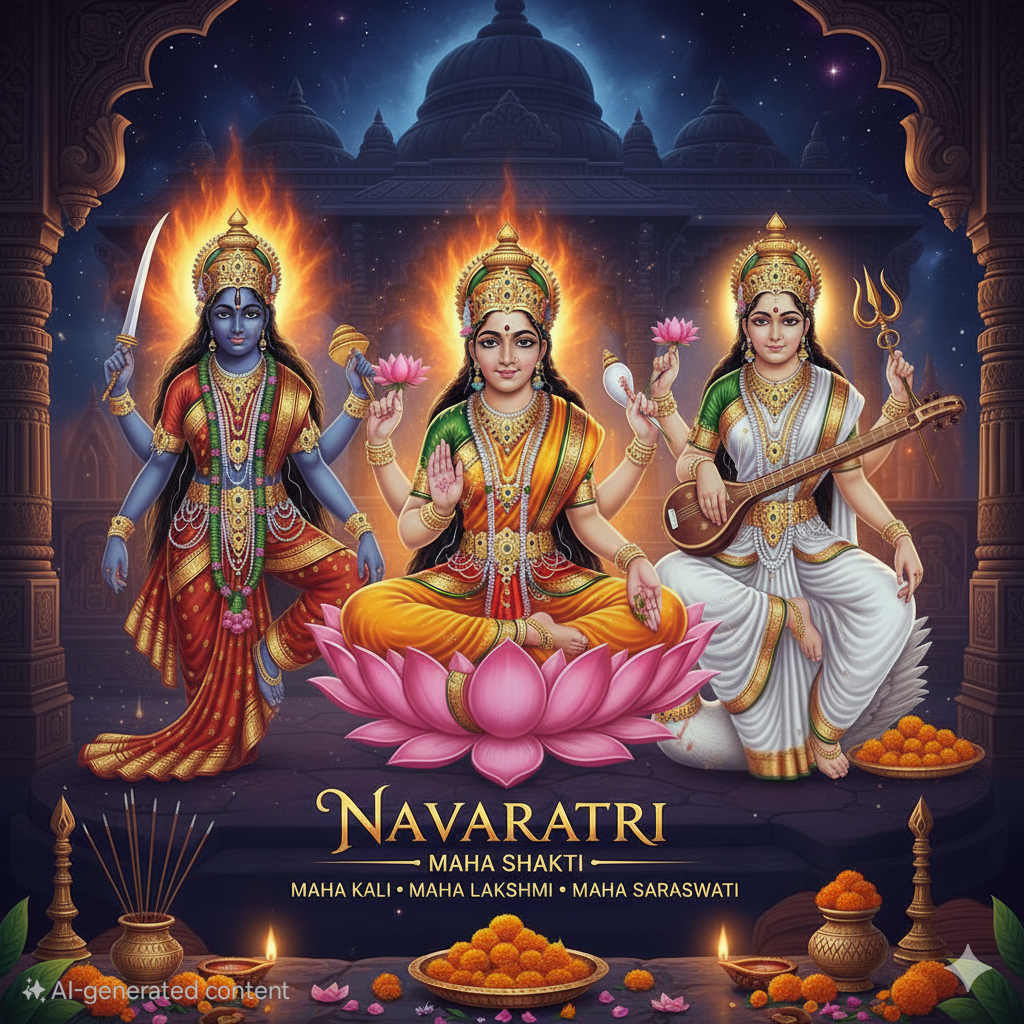
Devi’s Grace – Day 8

Introduction: The Reward of Spiritual Practice
Welcome to Day 8 of our sacred journey! After witnessing the fierce battles (Chapters 1-10) and offering the ultimate hymn of praise and realization (Chapter 11), the narrative now moves to its conclusion with Chapter 12, the Phala Shruti—literally, “The Hearing of the Fruit.” This chapter is the Divine Mother’s direct, loving assurance to the gods (and to us) that devotional practice is never in vain.
The Phala Shruti is the heart of the Devi Mahatmyam’s promise. It details the specific spiritual, protective, and material rewards granted simply by reciting, hearing, or studying the accounts of the Devi’s glories. It confirms that the greatest blessing is the Divine Mother’s perpetual grace and protection, guaranteeing that the effort we invest in remembering her will return to us a thousandfold.
Chapter 12: The Phala Shruti (Benefits of Listening)

Chapter 12 is presented as the Goddess’s loving address to the gods who just offered the Narayani Stuti. Having accepted their devotion, she promises them—and all future devotees—a direct return on their faith. The Phala Shruti is a comprehensive list of boons and protections that cover all aspects of human existence.
This chapter contains two distinct sections that guide the listener to liberation:
The first portion, up to verse 30, is the Devi’s direct voice of assurance. Here, the Divine Mother outlines a comprehensive spiritual covenant, unequivocally promising to remove every type of distress and danger faced by anyone who hears, recites, or remembers her glory. She assures her devotees that they will be protected from all evil spirits, natural calamities, and fear of enemies, and will be blessed with health, wealth, and the supreme merit that leads to her eternal abode. Her promise is one of complete liberation from suffering, encapsulated in the assurance that the devotee will be “sarvābādhāvinirmukto” (freed from all afflictions). This section establishes the power and benevolence of her direct, limitless grace.
The rest of the chapter, from verse 31 onwards, transitions into the voice of the supreme narrator, the sage Mārkaṇḍeya. He takes over to summarize the totality of the promised boons and stresses the importance of regularly performing this sacred recitation. This framing confirms the teaching’s ultimate truth: that the Goddess, though eternal, will manifest “nityāpi punaḥ punaḥ” (again and again) to carry out the “jagataḥ paripālanam” (protection of the world). This powerful narrative shift assures the original recipients of the teaching—King Suratha and the merchant Samādhi—that these benefits are real, verifiable, and achievable simply through faith and dedication to the text itself.
Key Thematic Breakdown of the Phala Shruti:
The Devi explicitly outlines three main categories of benefits that accrue to those who sincerely engage with the Devi Mahatmyam:
- Ultimate Spiritual Benefits (Mokṣa-Phala):
- The primary benefit is the acquisition of supreme merit (puṇya) and the freedom from all sins committed.
- It promises a final end to rebirth and the attainment of Mokṣa (liberation), ensuring the devotee is never born into misfortune.
- The Result: The devotee becomes fearless, purified, and dwells in the divine realm of the Devi.
- Divine Protection and Removal of Fear (Sarva-Bādhā Mukti):
- The Devi assures absolute protection from all dangers. The recitation is called the destroyer of all calamities.
- Specific promises include protection from fear of kings, evil spirits, and natural disasters like fire, flood, and war.
- The Result: The devotee lives a life free from fear, protected from the seen and unseen forces of evil.
- Material and Worldly Blessings (Bhukti-Phala):
- The Phala Shruti guarantees the fulfillment of all righteous worldly desires.
- It explicitly promises the attainment of wealth (dhana), prosperity (aiśvarya), and progeny (santāna).
- The Result: The devotee attains a full, healthy, and prosperous life, overcoming poverty and disease.
A Glimpse into the Original Text

The protective power promised in the Phala Shruti is articulated clearly, offering deep reassurance to the devotee. This direct covenant from the Divine Mother establishes the primary benefit of remembering her glories.
The Core Promise (Chapter 12, Verse 2):
This verse immediately follows the Devi’s address and sets the definitive tone for the entire Phala Shruti.
| Content | Details |
| Sanskrit | एभिः स्तवैश्च मां नित्यं स्तोष्यते यः समाहितः। तस्याहं सकलां बाधं नाशयिष्याम्यसंशयम्॥ २ ॥ |
| Transliteration | Ebhiḥ stavaiśca māṁ nityaṁ stoṣyatē yaḥ samāhitaḥ. *Tasyāhaṁ sakalāṁ bādhāṁ nāśayiṣyāmya saṁśayam. |
| Translation | The Devī said: “I shall, without doubt, destroy every misfortune of those who with concentrated mind shall praise Me always with these hymns.” |
Commentary: With just “samāhitaḥ” (concentrated mind) as the only requirement, the Devi promises to destroy “sakalāṁ bādhāṁ” (all afflictions) and confirms this pledge “a saṁśayam” (without any doubt). The Devi takes on the responsibility of shielding the devotee from all physical and spiritual harm.
The Blessings Defined (Chapter 12, Verses 4 & 5):
These two verses define the optimal timing for recitation and list the specific, tangible results of devotion.
| Content | Details |
| Sanskrit (V. 4) | अष्टम्यां च चतुर्दश्यां नवम्यां चैकचेतसः। श्रोष्यन्ति चैव ये भक्त्या मम माहात्म्यमुत्तमम्॥ ४ ॥ |
| Transliteration (V. 4) | Aṣṭamyāṁ ca caturdaśyāṁ navamyāṁ caikacetasaḥ. *Śroṣyanti caiva ye bhaktyā mama māhātmyamuttamam. |
| Translation (V. 4) | Those who, with single-mindedness (Eikacetasaḥ), shall listen with devotion to this Supreme Poem of My Glory on the eighth, fourteenth, and ninth days (of the lunar fortnight). |
| Sanskrit (V. 5) | न तेषां दुष्कृतं किञ्चिद् दुष्कृतोत्था न चापदः। भविष्यति न दारिद्र्यं न चैवेष्टवियोजनम्॥ ५ ॥ |
| Transliteration (V. 5) | Na teṣāṁ duṣkṛtaṁ kiñcid duṣkṛtōtthā na cāpadaḥ. *Bhaviṣyati na dāridryaṁ na caivēṣṭaviyōjanam. |
| Translation (V. 5) | For them there shall be no evil of any kind, nor misfortunes arising from wrong-doing, nor shall there be poverty (Dāridryaṁ), nor separation from loved ones (Iṣṭaviyōjanam). |
Commentary: Verse 4 pinpoints the Astami, Chaturdashi, and Navami days as particularly potent times for this practice, emphasizing “Eikacetasaḥ” (single-mindedness). Verse 5 then explicitly outlines the fulfillment of two of the highest human desires: freedom from material suffering (“na dāridryaṁ” – no poverty) and emotional suffering (“na caivēṣṭaviyōjanam” – no separation from loved ones).
The Promise of Perpetual Presence (Chapter 12, Verse 9):
This verse assures the devotee that the location where the recitation takes place becomes a permanent sanctuary for the Goddess.
| Content | Details |
| Sanskrit (V. 9) | यत्रैतत्पठ्यते सम्यङ् नित्यमायतनं मम। सदा न तद्विमोक्ष्यामि सांनिध्यं तत्र मे स्थितम्॥ ९ ॥ |
| Transliteration (V. 9) | Yatraitat paṭhyate samyag nityam āyatanaṁ mama. *Sadā na tadvimōkṣyāmi sāṁnidhyaṁ tatra me sthitam. |
| Translation (V. 9) | Wherever this (My Glory) is always and rightly recited, that place is My permanent sanctuary. I shall never abandon it; My presence is established there forever. |
Commentary: This verse elevates the practice from merely gaining personal boons to creating a sacred space. It declares that the place of sincere recitation (the “sanctuary,” āyatanaṁ) becomes a permanent abode of the Devi, who vows “Sadā na tadvimōkṣyāmi” (I shall never abandon it).
The Annual Worship Benefit (Chapter 12, Verses 12 & 13):
These verses specifically connect the benefits of the recitation to the most significant festival, confirming the twin blessings of freedom and prosperity.
| Content | Details |
| Sanskrit (V. 12) | शरत्काले महापूजा क्रियते या च वार्षिकी। तस्यां ममैतन्माहात्म्यं श्रुत्वा भक्तिसमन्वितः॥ १२ ॥ |
| Transliteration (V. 12) | Śaratkālē mahāpūjā kriyatē yā ca vārṣikī. *Tasyāṁ mamaitammāhātmyam śrutvā bhaktisamanvitaḥ. |
| Translation (V. 12) | At the great worship which is performed annually in the autumn season, whoever hears this My Glorification with devotion… |
| Sanskrit (V. 13) | सर्वाबाधाविनिर्मुक्तो धनधान्यसुतान्वितः। मनुष्यो मत्प्रसादेन भविष्यति न संशयः॥ १३ ॥ |
| Transliteration (V. 13) | Sarvābādhāvinirmuktō dhanadhānyasutānvitaḥ. *Manuṣyō matprasādēna bhaviṣyati na saṁśayaḥ. |
| Translation (V. 13) | …that person, freed from all afflictions (Sarvābādhāvinirmuktō), and endowed with wealth, grain, and progeny, shall become (prosperous) through My grace. Of this there is no doubt. |
Commentary: Verse 12 explicitly refers to the Sharadkāla Mahāpūjā (the annual worship in the autumn season, i.e., Navaratri). Verse 13 then reinforces the holistic benefit: the person is “Sarvābādhāvinirmuktō” (freed from all afflictions) and receives all forms of worldly blessing (“dhanadhānyasutānvitaḥ” – wealth, grain, and children).
The Spiritual Cleansing (Chapter 12, Verse 22):
This verse emphasizes the internal and purifying power of hearing the Devi Mahatmyam.
| Content | Details |
| Sanskrit (V. 22) | प्रीतिं मे क्रियते सास्मिन् सकृत्सुचरिते श्रुते। श्रुतं हरति पापनि तथाऽऽरोग्यं प्रयच्छति॥ २२ ॥ |
| Transliteration (V. 22) | Prītiṁ mē kriyatē sā’smin sakṛtsucarite śrute. *Śrutaṁ harati pāpāni tathā”rōgyaṁ prayacchati. |
| Translation (V. 22) | If this sacred history is heard even once, it brings satisfaction to Me. When heard, it removes all sins (pāpāni) and likewise grants good health (ārogyaṁ). |
Detailed Commentary: This verse highlights the profound simplicity and power of devotion. The Devi states that merely hearing this sacred text “sakṛt” (even once) brings her satisfaction. Crucially, the verse assures the devotee of two essential outcomes: “Śrutaṁ harati pāpāni” (hearing removes sins) and “tathā”rōgyaṁ prayacchati” (it grants health). This links spiritual purification directly to physical well-being, demonstrating the text’s ability to cleanse the inner self while ensuring harmony in the outer world. It emphasizes that the root of disease and misfortune is often sin or karmic imbalance, which the power of the Devi’s story directly removes.
Devi of the Day – Day 8: Mahagauri

The eighth day of Navaratri is dedicated to Devi Mahagauri (The Great White Goddess). This day is also celebrated as Durga Ashtami and is one of the most significant.
Symbolism: Mahagauri is depicted as extremely fair and serene, dressed in a white silk saree with a red gold border, seated on a bull. She holds a trident and a damaru (drum). Her serenity symbolizes purification and atonement. After intense penance, her dark skin was washed clean by the waters of the Ganga, giving her the name Mahagauri (Great White).
Connection to Chapter 12: Mahagauri perfectly embodies the ultimate spiritual benefit promised in the Phala Shruti. Just as the Devi cleanses her own form after intense struggle, listening to the Saptashati cleanses the devotee of all sins and afflictions. The result is the attainment of the same purity (Gauri) and serenity that she embodies. Mahagauri signifies the final, purified state of the soul that is the guaranteed reward for the journey of devotion.
Reflections and Modern Applications

The Phala Shruti transcends ancient promises to offer us a fundamental lesson in Spiritual Consistency.
In modern life, we often look for instant gratification, but the Phala Shruti reminds us that rewards are a direct function of sustained effort. The Phala (fruit/benefit) is not a magic spell, but the inevitable, cumulative result of focusing our mind on the highest reality.
- The Law of Spiritual Return: The Phala Shruti assures us that engaging with divine wisdom—whether through reading, contemplation, or meditation—changes our internal vibration. This internal change naturally leads to external protection (less reactive to stress) and prosperity (better decision-making).
- Fearlessness Through Association: The promise of protection from fear is attained by constantly reminding ourselves of the supreme power (Devi) that is the core of our being. When we truly understand this, external dangers lose their psychological grip.
The Phala Shruti is our spiritual contract, assuring us that when we remember the Divine Mother, she inherently remembers and sustains us.
Closing Thoughts

On this eighth day of Navaratri, as we honor Devi Mahagauri, let us internalize the ultimate promise of the Phala Shruti. May the purity of the Great White Goddess cleanse all our past afflictions, and may the blessings of her perpetual grace guide us to lasting peace, prosperity, and the final liberation promised in Chapter 12.
References
- Devi Mahatmyam Text and Commentary (Chapter 12 – Phala Shruti):
- Sanskrit Documents: https://sanskritdocuments.org/doc_devii/durga700.html
- Navaratri and Mahagauri:
- Day 8 Maa Mahagauri:
Samastah Sukhino Bhavanthu
May All the Beings in All the Worlds be Happy!

Jai Sai Ram!
Please note all images and content generated using AI Tools