Month: April 2026

Celestial Whispers

Celestial Whispers

Date: April 26, 2026
Location: Bengaluru, India
Equipment: DWARF mini Smart Telescope
Processing: Live Stacking via App & Stellar Studio

There is a unique kind of magic that happens on the terrace in Bengaluru. Between the hum of the city and a sky occasionally draped in clouds, you wouldn’t expect to find the birthplace of stars or the heart of distant galaxies. Yet, tonight, the DWARF mini proved that the universe is always waiting—you just need the right lens to see it.

The Thrill of the “Live Reveal
If you’ve never experienced Live Stacking, it’s hard to describe the sensation. You start with a blank, dark screen. Then, frame by frame, the light begins to accumulate. What looked like an empty patch of space slowly reveals a spiral arm, a glowing gas cloud, or a dense core of a million suns. Tonight was a marathon of these “Aha!” moments.


Tonight’s Cosmic Catalog
1. The Giants of the South
We started strong with Omega Centauri. At a 6-minute exposure, this globular cluster looked like a shimmering ball of diamonds.

Shortly after, we swung over to the Carina Nebula. Despite the city lights and some cloud interference, the reddish glow of hydrogen gas began to bleed through the darkness—a testament to the device’s ability to “see” through the haze.

2. A Tale of Two Galaxies: M81 & M82
The highlight for me was capturing Bode’s Galaxy and the Cigar Galaxy in a single frame. Watching the smooth, regal spiral of M81 contrast with the chaotic, starburst energy of M82 appearing live on my phone screen was truly intriguing.

It’s a perspective of the cosmos I had never seen for this long, and it was worth every second of the 12-minute wait.


3. Deep into the Virgo Cluster
For the Virgo Galaxy Cluster, I decided to let the AI take the wheel, setting the gain to 40 and letting the “Auto” shutter handle the light. The plate-solving algorithm is incredibly sophisticated; it calibrated on the fly, centered the target, and began tracking with surgical precision. Catching M86 and its neighbors felt like peering into a secret corner of the local supercluster.

4. Clusters and Beehives
We rounded out the session with the Hercules Globular Cluster (M13) and the Beehive Cluster (M44).

M13 resolved beautifully into a dense, bright core, while the Beehive showed off its scattered, colorful gems, reminding us that even “nearby” objects have a grandeur all their own.

Lessons from the Terrace
Tonight wasn’t just about the photos; it was about learning the dance of gain and shutter speeds. Even when the clouds threatened to end the session, the Mini kept stacking, only dropping a frame or two.

The Stellar Studio tools in the app handled the post-cleanup and captions effortlessly, leaving me more time to simply marvel at the screen.

As I plan to push our next session to a 45-minute deep-dive, I’m reminded that the sky isn’t the limit—it’s just the beginning.


Clear Skies, Mahesh P Devarakonda


Ancient wisdom tells us we are made of stardust; tonight, I watched that stardust come back to life on a digital screen.

Capturing the Cosmos: A New Lens on the Universe

Capturing the Cosmos: A New Lens on the Universe

The Arrival of a Tiny Giant
Yesterday, a small box arrived that promised to bridge the gap between my terrace and the deep reaches of space: the DWARF mini. In an age where we are often glued to small screens for trivialities, this device uses technology to turn our eyes upward, reminding us of the vastness that the ancient texts have long contemplated.

The DWARF Mini: A Loaf of Bread That Sees Stars
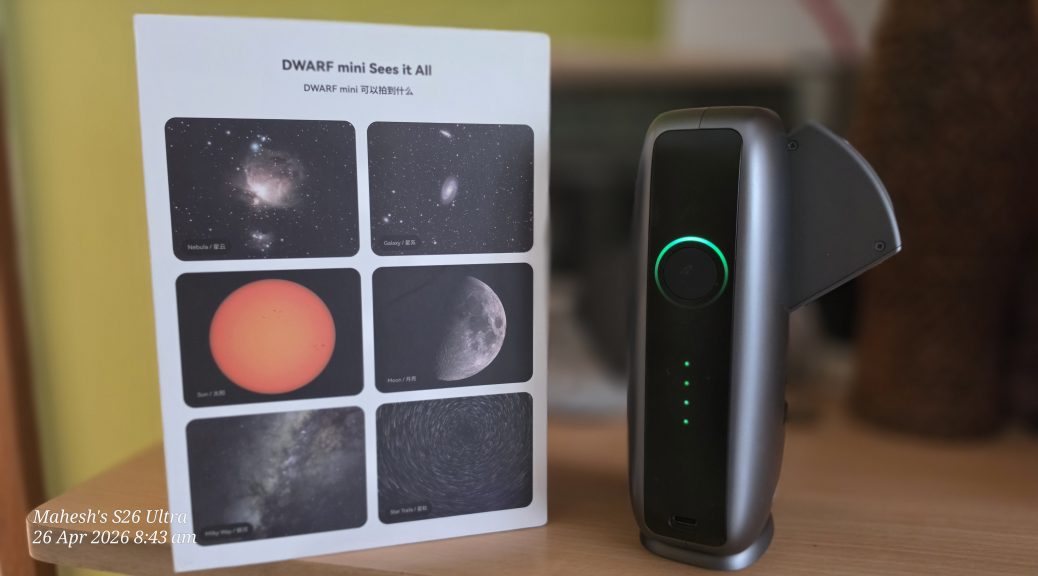
To capture these images, I used the DWARF Mini. It’s an incredible piece of engineering—weighing only about 840 grams (roughly the same as a loaf of bread!), yet it houses a Sony IMX662 sensor and a 150mm telephoto lens. It’s a “smart” telescope, meaning it handles the complex star-tracking and autofocusing via an app, making astrophotography accessible even from a backyard in Bengaluru.

I’m still learning the nuances of this smart tech—figuring out the best stacking times and how to frame these distant wonders. But even in these first “wide” views, the connection to the universe feels more personal than ever.

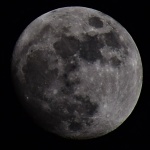
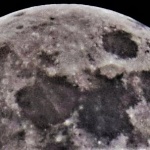
1. The Moon: A Silent Witness
My first target was the Moon. Even at a 0.1s exposure, the detail is breathtaking. Looking at the craters, I’m reminded of how the Moon has been a steady companion in our history—constant yet ever-changing in its phases.


2. M41: A Celestial Gathering
Next, I pointed the DWARF toward M41, an open cluster in Canis Major. To the naked eye, it’s a faint smudge; through the telescope, it’s a brilliant gathering of stars. It reminds me of the concept of Satsang—a community of light-bearers coming together to create something more luminous than they could alone.


3. M104: The Sombrero Galaxy – 30 Million Light Years Away
Finally, I tracked M104, the Sombrero Galaxy. While it appears small in this wide-angle view, the thought that I am capturing light that traveled for 30 million years is humbling. In our fast-paced modern life, looking at a galaxy teaches us the ultimate lesson in patience and scale.

The Might of M104
To put that little “smudge” of light into perspective, here is what we are actually looking at:

The Weight of 800 Billion Suns: NASA estimates that M104 has a mass equivalent to 800 billion suns. It is one of the most massive objects in the Virgo galaxy cluster.

A Billion-Solar-Mass Black Hole: At its very center lies a supermassive black hole. For comparison, the black hole at the center of our Milky Way is about 4 million times the mass of our Sun; M104’s is estimated to be nearly one billion times as massive.

A “Hat” of Dust: The “brim” of the sombrero is actually a massive lane of dust and gas that is a primary site for star formation.

Ancient Neighbors: The galaxy is home to nearly 2,000 globular clusters—ten times more than our own Milky Way. Some of these star clusters are up to 13 billion years old, nearly as old as the universe itself.

Verified References for Further Reading:
NASA’s Hubble Gallery: Messier 104
The Sombrero Galaxy Overview (Wikipedia)

A Journey Across Continents: Words of Thanks
This cosmic journey wouldn’t have been possible without the incredible kindness of a few special people who helped bring the universe a little closer to me.


I want to extend my deepest gratitude to Suchitra and Sanjay Rao. They believed in this vision early on, securing the pre-order all the way back in January 2026. Your foresight and help in navigating the initial steps were the foundation of this project.


I also wish to offer my most sincere heartfelt  thanks, gratitude and regards to Dr. Emmanuelle Voisin.

Despite her demanding schedule as a CEO, she very graciously and kindly agreed to carry this telescope all the way from France specifically for me🙏💐


To both of you: thank you for your generosity and for being the “stars” that helped make this possible.

Your kindness is a reminder that while telescopes help us see the light of distant suns, the brightest light often comes from the people around us.

Thank you for taking the time to read through ☺️

The Sky as an Altar: A 48-Hour Vedic Journey

The Sky as an Altar: A 48-Hour Vedic Journey

In the last two days, my terrace in Bengaluru transformed into an intense night sky viewing altar. With the S26 Ultra acting as my “Modern Drik”—a contemporary lens of divine perception—I tracked the “Jewels” of the cosmos, connecting the dots between the stars above and the profound wisdom of many ancient verses.

Through this lens, the act of photography becomes a ritual, turning a simple observation of the heavens into a bridge between our modern world and the eternal truths of the past.

I. The Sun as the Visible God

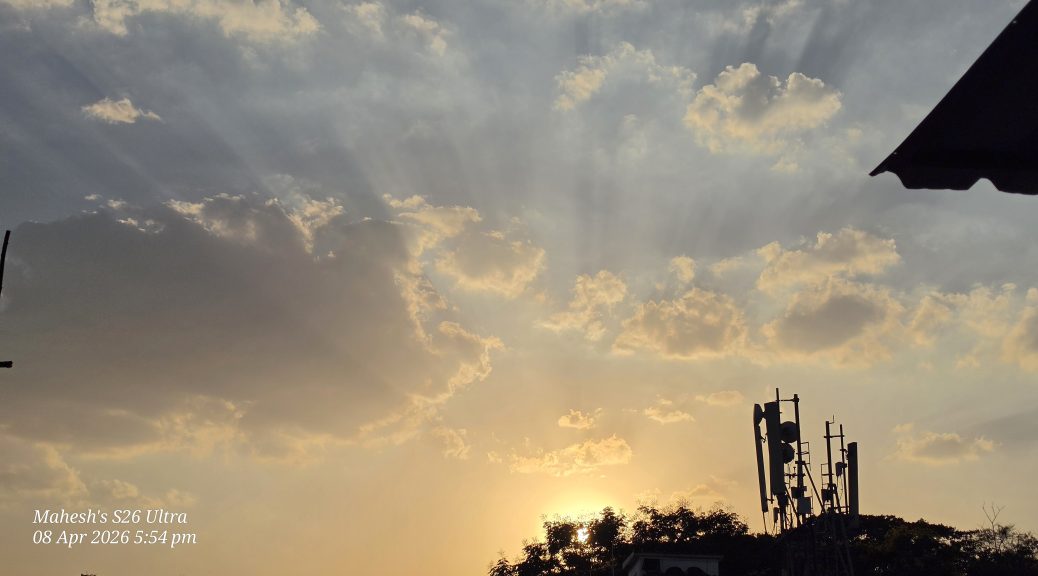
Before the stars emerge, the Sun sets the stage. This evening’s sunset (captured at 5:54 PM) felt like a divine blessing. We often chant āditya‑rūpeṇa śrī‑rudraṁ namāmiI bow to Śrī Rudra, appearing in the form of the Sun.

Seeing those rays pierce the clouds felt like the “kindling” of the cosmic fire, a reminder that the same light in our hearts is the light that fuels the galaxies.

The Aditya Altar: Kindling the evening fire at 5:54 PM.

II. The Guardians of the North: Sapta Rishi & Dhruva

As night fell, the Sapta Rishi Mandala (The Big Dipper) stood tall. These seven sages are the administrators of Rta (Cosmic Order). By tracing the “Pointers,” I found Dhruva (Polaris)—the unmoving anchor. In a world of constant motion, these stars remind us to find our own “Fixed Point” of Truth.

The Celestial Counsel: The Seven Sages keeping watch.

III. The Subtle Threads: Coma Berenices

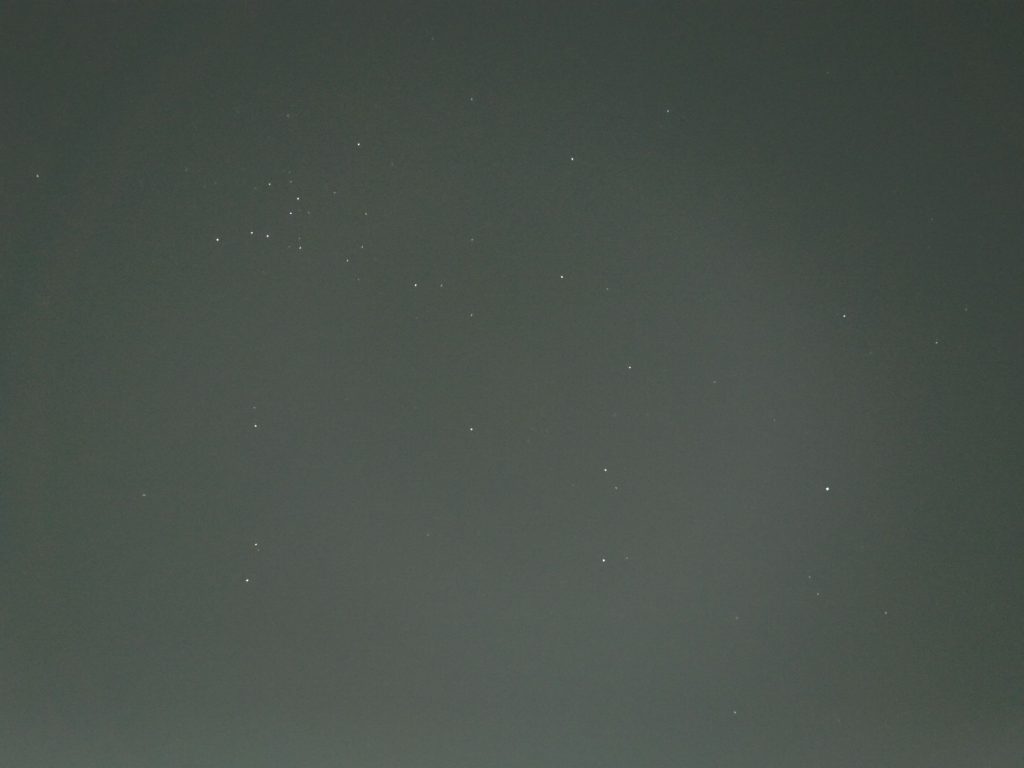
Hidden near the Lion’s tail, I captured the Coma Berenices cluster. This is the “Sukshma” (subtle) side of creation—thousands of stars woven together like a silver braid. It represents the delicate, interconnected threads of energy that hold our lives together, often invisible until we take the time to truly look.

The Subtle Weave: Where a thousand lights become one. Screenshot from Sky Safari app showing the constellation.

IV. The Pillar of the South: The Radiant Crux

Looking toward the South, the Crux (Southern Cross) appeared as a brilliant, steady anchor.  This constellation acts as a celestial compass, providing the foundational light needed to navigate our journey with purpose and grace.

The Southern Pillar: Anchoring our journey across the cosmic ocean.

V. The Beehive: M44

Though clouds played hide-and-seek with its inner jewels, the Beehive Cluster (M44) in the East revealed itself—a literal honeycomb of stars. As the heart of the Pushya Nakshatra, it reminds us of the “Nectar of Knowledge” (Madhu) that nourishes our spiritual growth.

M44 Beehive cluster of stars in the center.

The Nectar of Pushya: A cosmic honeycomb found exactly when nourishment was needed.

VI. The Conclusion: Orion’s Final Bow

Finally, I watched Orion (Mrigashirsha) setting in the West. As this “Giant of Time” dipped below the horizon, it signaled the completion of a cycle. Just as the Vedic rituals conclude with a Purnahuti (final offering), Orion’s setting is a graceful exit, making way for the new dawn.

As I closed my lens and viewed the photos and the experience of seeing the grandeur of the cosmos, I realized we do not just live under the sky; we are a part of its breathing, rhythmic dance.

Images

Archives