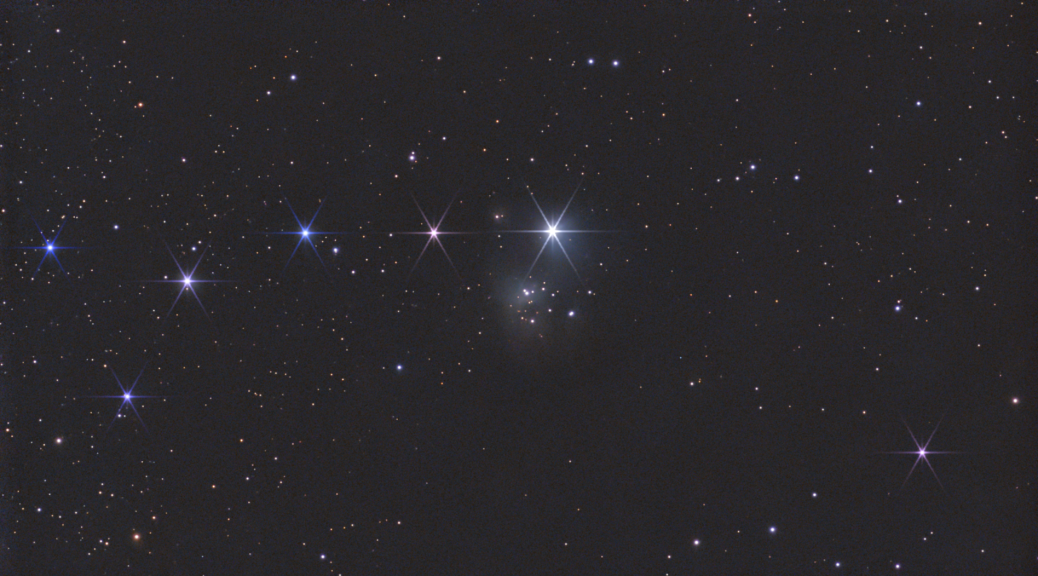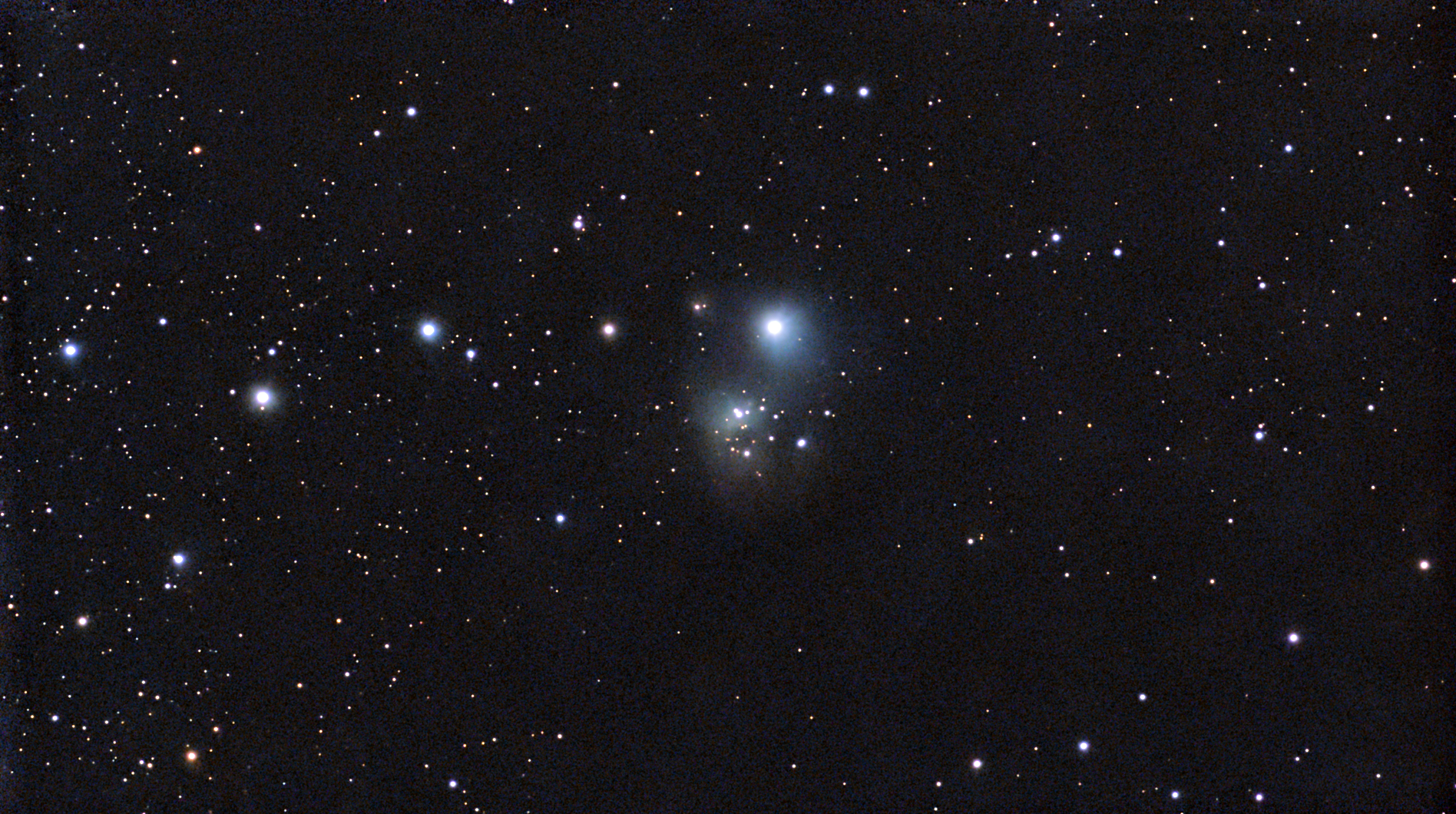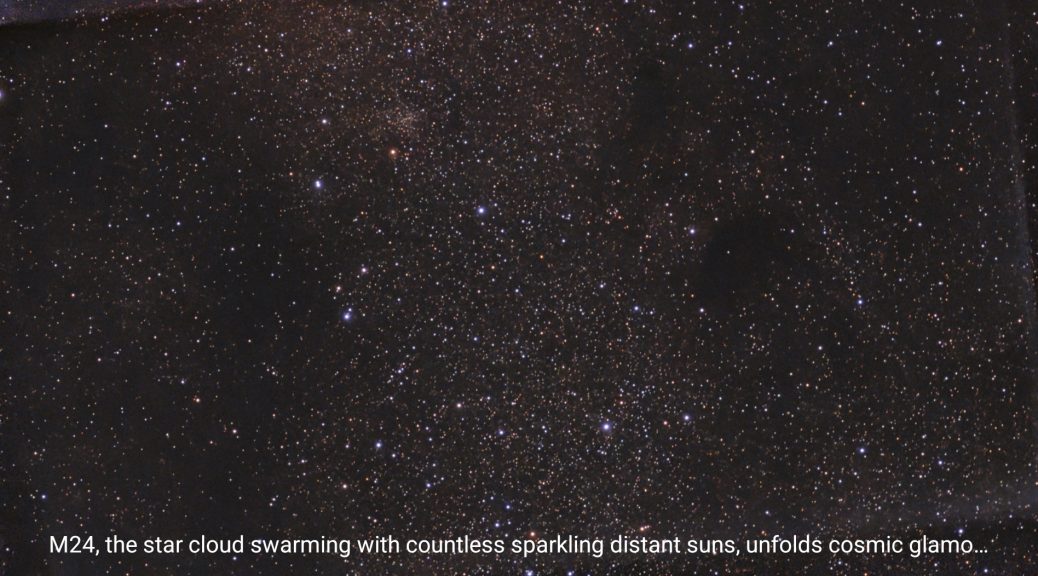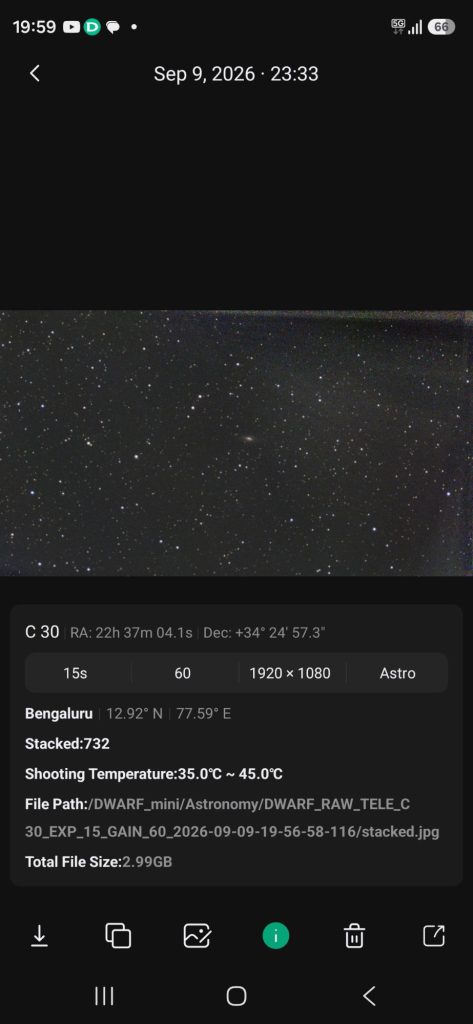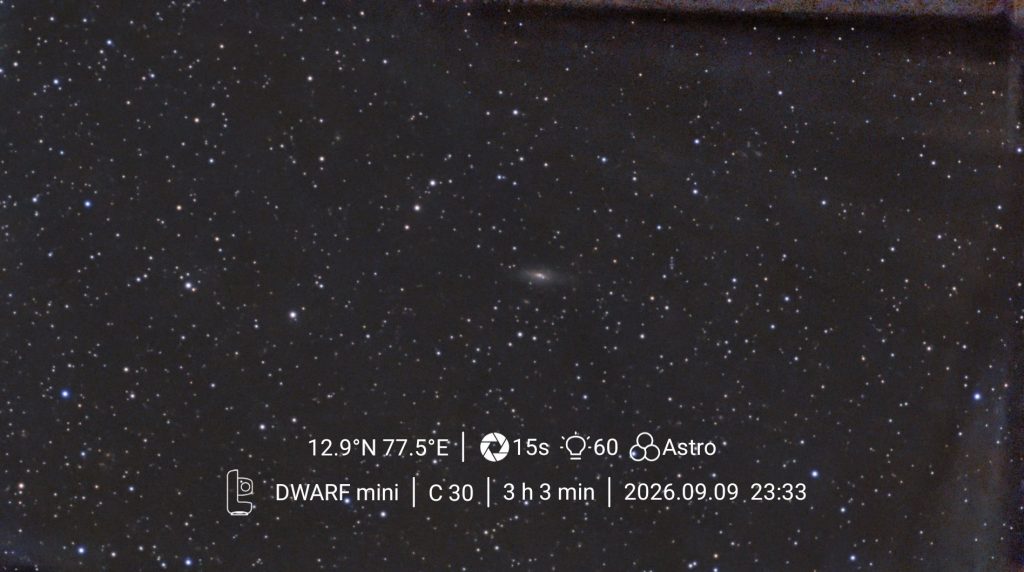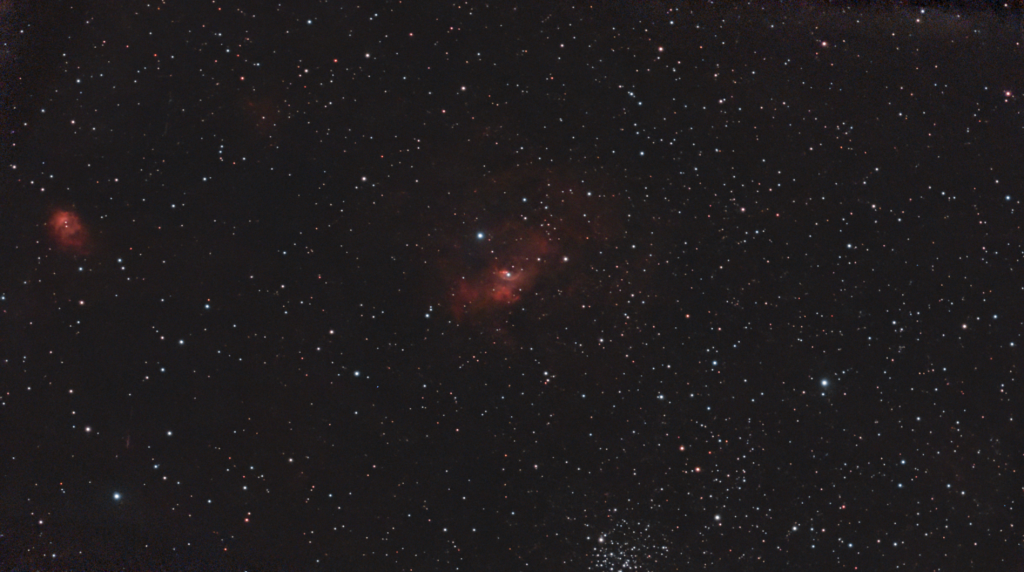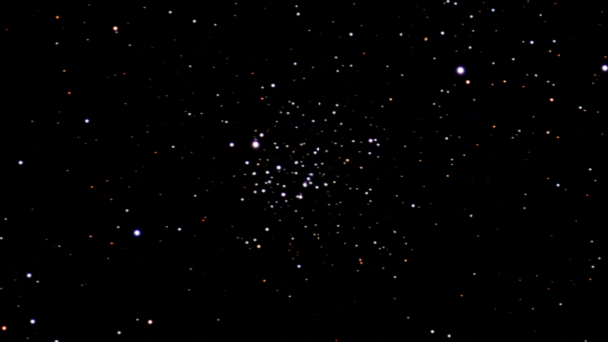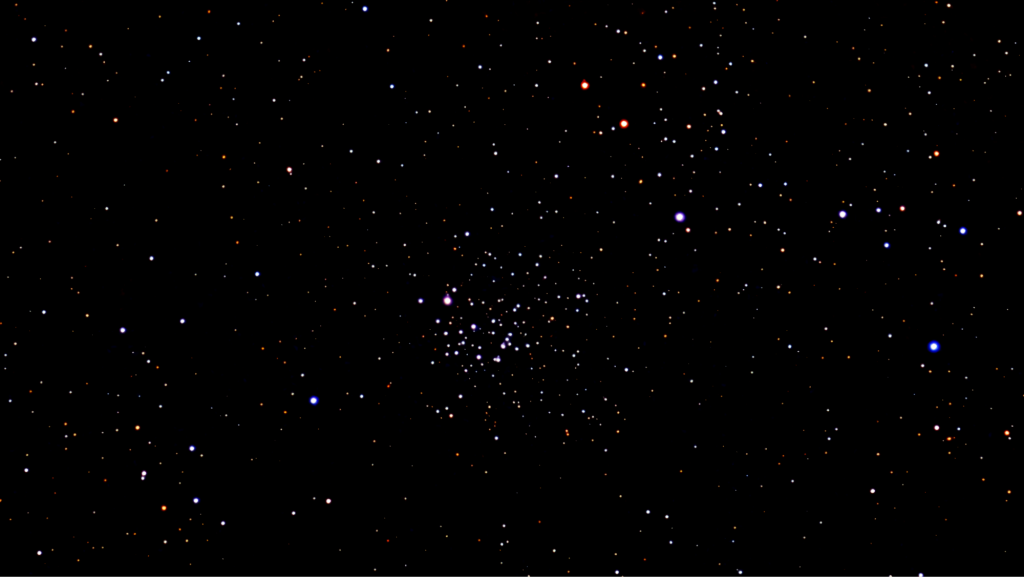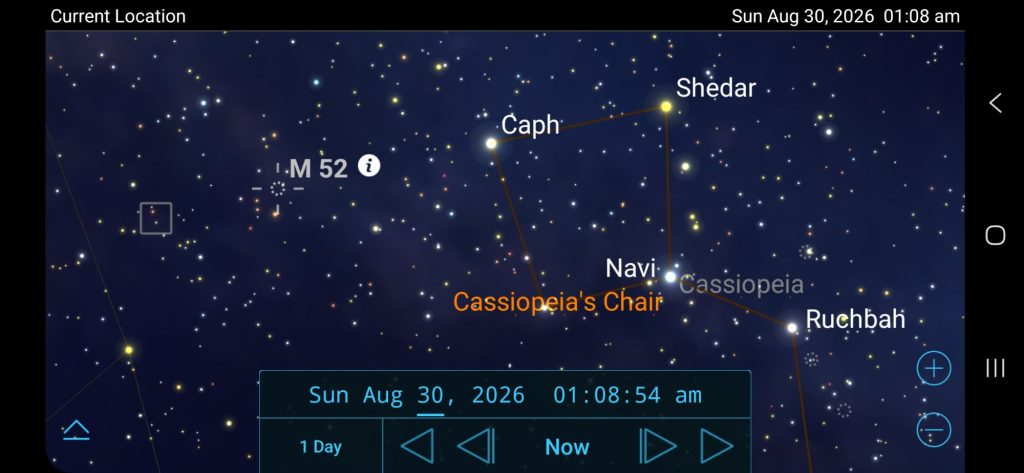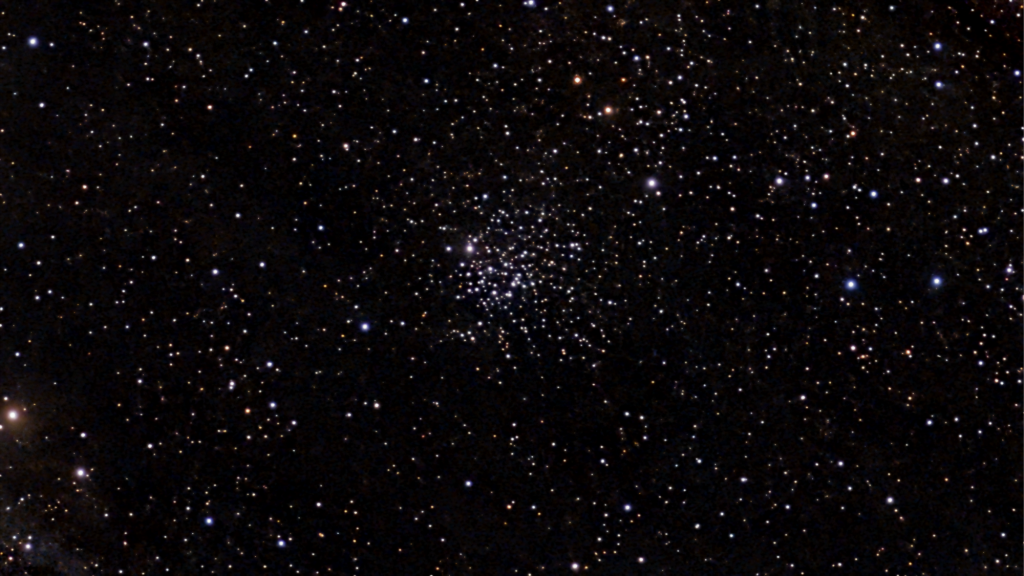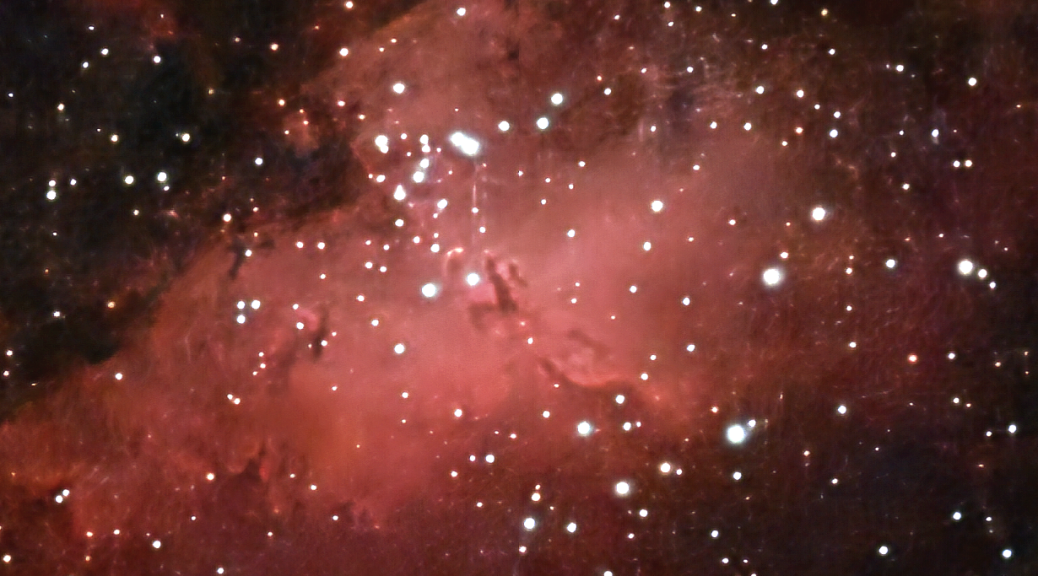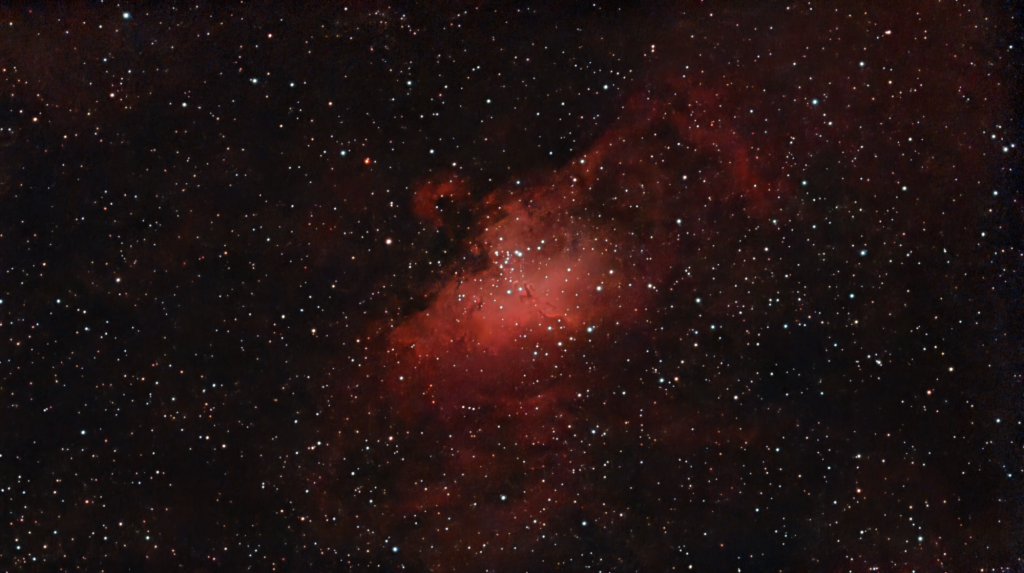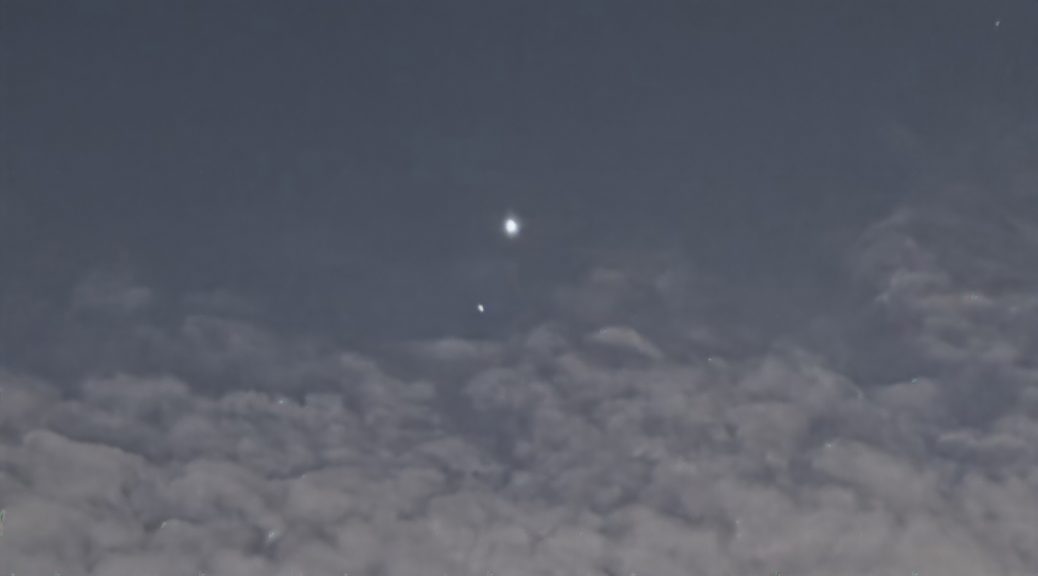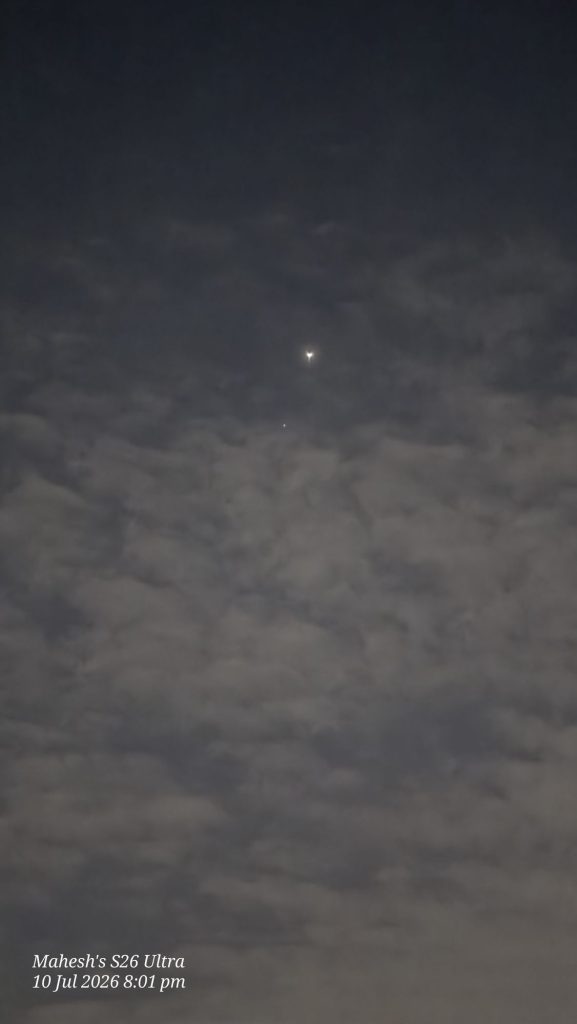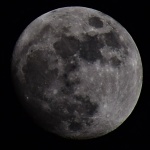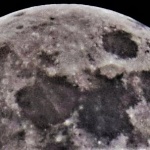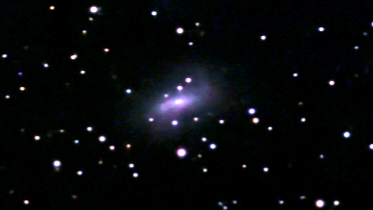
In the last two days, my terrace in Bengaluru transformed into an intense night sky viewing altar. With the S26 Ultra acting as my “Modern Drik”—a contemporary lens of divine perception—I tracked the “Jewels” of the cosmos, connecting the dots between the stars above and the profound wisdom of many ancient verses.
Through this lens, the act of photography becomes a ritual, turning a simple observation of the heavens into a bridge between our modern world and the eternal truths of the past.
I. The Sun as the Visible God
Before the stars emerge, the Sun sets the stage. This evening’s sunset (captured at 5:54 PM) felt like a divine blessing. We often chant “āditya‑rūpeṇa śrī‑rudraṁ namāmi“ – I bow to Śrī Rudra, appearing in the form of the Sun.
Seeing those rays pierce the clouds felt like the “kindling” of the cosmic fire, a reminder that the same light in our hearts is the light that fuels the galaxies.
The Aditya Altar: Kindling the evening fire at 5:54 PM.
II. The Guardians of the North: Sapta Rishi & Dhruva
As night fell, the Sapta Rishi Mandala (The Big Dipper) stood tall. These seven sages are the administrators of Rta (Cosmic Order). By tracing the “Pointers,” I found Dhruva (Polaris)—the unmoving anchor. In a world of constant motion, these stars remind us to find our own “Fixed Point” of Truth.
The Celestial Counsel: The Seven Sages keeping watch.
III. The Subtle Threads: Coma Berenices
Hidden near the Lion’s tail, I captured the Coma Berenices cluster. This is the “Sukshma” (subtle) side of creation—thousands of stars woven together like a silver braid. It represents the delicate, interconnected threads of energy that hold our lives together, often invisible until we take the time to truly look.
The Subtle Weave: Where a thousand lights become one. Screenshot from Sky Safari app showing the constellation.
IV. The Pillar of the South: The Radiant Crux
Looking toward the South, the Crux (Southern Cross) appeared as a brilliant, steady anchor. This constellation acts as a celestial compass, providing the foundational light needed to navigate our journey with purpose and grace.
The Southern Pillar: Anchoring our journey across the cosmic ocean.
V. The Beehive: M44
Though clouds played hide-and-seek with its inner jewels, the Beehive Cluster (M44) in the East revealed itself—a literal honeycomb of stars. As the heart of the Pushya Nakshatra, it reminds us of the “Nectar of Knowledge” (Madhu) that nourishes our spiritual growth.
M44 Beehive cluster of stars in the center.
The Nectar of Pushya: A cosmic honeycomb found exactly when nourishment was needed.
VI. The Conclusion: Orion’s Final Bow
Finally, I watched Orion (Mrigashirsha) setting in the West. As this “Giant of Time” dipped below the horizon, it signaled the completion of a cycle. Just as the Vedic rituals conclude with a Purnahuti (final offering), Orion’s setting is a graceful exit, making way for the new dawn.
As I closed my lens and viewed the photos and the experience of seeing the grandeur of the cosmos, I realized we do not just live under the sky; we are a part of its breathing, rhythmic dance.
Exploring the Moon — Observations from October 4, 2025
Location: Bengaluru, India Telescope: 127mm Maksutov-Cassegrain Camera: ZWO ASI 462MC Lunar Phase: Waxing Moon (~43% illuminated) Seeing Conditions: Good (7/10), thin passing clouds
A Night of Lunar Detail
The Moon was in a perfect position tonight for high-contrast views along the terminator, where sunlight rakes across crater rims and mountain slopes.
Using the 127mm MAK-CAS with the ZWO ASI 462MC camera, I was able to capture both wide-field and close-up views of several craters, mountain ranges, and maria.
Featured Craters
Composite image showing several of the observed craters.
1. Copernicus – ~93 km wide and 3.8 km deep. Bright ray systems and central peaks make it a favorite for lunar observers.
2. Tycho – ~85 km wide and 4.8 km deep. One of the youngest craters, famous for rays extending over 1,500 km.
3. Plato – ~101 km in diameter with a dark, basaltic floor near Mare Imbrium. Smooth and subtle, ideal for testing seeing stability.
4. Archimedes – 83 km wide, with a bright rim and lava-flooded interior.
5. Aristillus – 55 km across, showing sharp walls and a distinct central peak complex.
6. Cassini – 57 km in diameter, with two smaller inner craters (Cassini A and B).
7. Aristoteles – 87 km wide with 3.3 km high terraced walls, bordering Mare Frigoris.
8. Eudoxus – 67 km across, located just south of Aristoteles — together they form one of the Moon’s most picturesque crater pairs.
Mountain Ranges
The Apennine Mountains marking the Imbrium Basin’s rim.
Montes Apenninus – Stretching over 600 km, with peaks rising above 5 km, this range forms a dramatic arc along Mare Imbrium’s southeastern rim.
Montes Caucasus – Extending roughly 445 km, these rugged peaks bridge the Apenninus and Haemus ranges, outlining the Imbrium Basin’s northern boundary.
Lunar Sea
The Sea of Serenity — a vast, smooth lava plain with a soft bluish tint.
Mare Serenitatis (Sea of Serenity) – Roughly 700 km in diameter, this ancient basaltic plain shows a gentle bluish tone through color imaging — a striking contrast to the bright crater rims nearby.
Reflections Even after countless observing sessions, the Moon always feels new.
Tonight’s combination of clear air, steady seeing, and moderate illumination revealed an extraordinary sense of texture — from the razor-sharp crater rims of Copernicus and Tycho to the serene lava plains of Serenitatis.
Each feature is a frozen moment in the Moon’s history — a record of impacts, volcanic floods, and cosmic time, captured from a quiet night here on Earth.
Image Notes Most craters were captured together in a single wide-field image, while a few — including Tycho and Copernicus — have individual close-ups.
All frames were processed with gentle sharpening to retain a natural look.
September is a special month for skywatchers this year—Saturn is at opposition, shining brilliantly in our skies. The official date of opposition falls on September 21, 2025, but tonight (September 20) I had the chance to set up my telescope and enjoy an evening with the ringed giant.
Screenshots from Safari AppImage captured using ZWO ASI 462MC through projection
Setting Up Under a Cloudy Sky
Although the night was cloudy, I managed to get in a solid hour of observing. My instrument of choice was the Orion 127mm Mak-Cas telescope, which continues to amaze me with the clarity it delivers.
I alternated between eyepieces—25mm and 6mm—and paired them with 2x and 3x Barlow lenses to test out different magnifications. Despite the less-than-perfect conditions, the views were superb. Saturn’s iconic rings, currently tilted edge-on, stood out beautifully.
Capturing Saturn on Camera
Visual observing is always rewarding, but I also wanted to preserve the moment. For imaging, I used the ZWO ASI 462MC planetary camera along with the ASI Cap app. I captured Saturn in different resolutions—640×480, 1368×768, and others.
I also recorded a 13-second video to try some later stacking and processing. To cross-reference and document the observation, I used SkySafari app screenshots that showed Saturn’s position in the night sky and a close-up render. Comparing these with my photos confirmed that what I saw through the eyepiece matched the real-time planetary layout.
Night view screenshot from Sky Safari appVideo
The Experience
Even with clouds drifting in and out, Saturn’s presence felt steady and grand. The subtle tilt of the rings, the contrast of the planet’s creamy disk, and the joy of swapping eyepieces to chase detail all added to the experience.
Saturn’s edge on rings
To round out the night, I snapped a couple of photos of the telescope setup itself, and even managed some shots that give a “through-the-eyepiece” perspective—so others can get a feel of what Saturn looks like in real time.
Saturn with Titan (satellite)
Closing Thought
Nights like this are why I love amateur astronomy. A planet 1.4 billion kilometers away, viewed through a modest backyard telescope, can still stir a sense of awe and connection with the cosmos. Opposition makes Saturn brighter and larger in the eyepiece, and I’m glad I caught it right before its peak.
In Vedic times, the heavens were not merely studied for practical reasons of navigation or calendrical keeping; they were revered as a living presence, an eternal expression of the divine. The ṛṣis looked to the night sky not with curiosity alone but with awe, reverence, and devotion. The stars, planets, and constellations were woven into the fabric of yajña and dharma. To them, the cosmos was not an inert expanse but a sacred order — Ṛta — that bound together gods, nature, and mankind.
The Vedas reveal astronomy as a part of the spiritual experience of existence. The same fire that blazes in the yajña-kund glows in the stars above; the same hymns that invoke Agni and Indra also call upon the Nakṣatras. Thus, when the seers gazed upon the heavens, they did not see distant, cold bodies of light, but radiant deities, showering grace upon humankind.
Nāsadīya Sūkta – Hymn of Creation (Ṛg Veda 10.129)
This Rg Veda hymn(10.129), also known as the “Hymn of Creation” or “Hymn of Non-existence,” stands out in the Vedic tradition for its radical philosophical inquiry. Composed in the late Vedic period, it moves beyond mythological narratives to ask fundamental questions about the ultimate reality. It posits a time before existence and non-existence, before the gods, and before any discernible form. The hymn’s power lies in its deep humility, acknowledging that the mystery of creation may be unknowable, even to the gods themselves. It is a contemplative, rather than declarative, text, marking a powerful shift towards philosophical speculation.
Here are the first four verses in transliteration and translation:
Transliteration: nāsad āsīn no sad āsīt tadānīṃ nāsīd rajo no vyomā paro yat kim āvarīvaḥ kuha kasya śarman ambhaḥ kim āsīd gahanaṃ gabhīram
Translation: Then, there was neither non-existence nor existence. There was no realm of air, no sky beyond it. What covered it? Where was it? In whose protection? Was there water, deep and unfathomable?
Commentary: This verse dissolves all dualities—being and non-being, space and sky. It evokes a primordial stillness, where even the concept of “covering” or “protection” is questioned. The mention of water hints at the Vedic motif of undifferentiated waters, yet even that is uncertain. A cosmic koan in poetic form.
Verse 2
न मृत्युरासीदमृतं न तर्हि न रात्र्या अह्न आसीत्प्रकेतः | आनीदवातं स्वधया तदेकं तस्माद्धान्यन्न परः किञ्चनास ॥२॥
Transliteration: na mṛtyur āsīd amṛtaṃ na tarhi na rātryā ahna āsīt praketaḥ ānīd avātaṃ svadhayā tad ekaṃ tasmād dhānyan na paraḥ kiñcanāsa
Translation: There was no death then, nor immortality. No sign of night or day. That One breathed, windless, by its own impulse. Apart from That, nothing else existed.
Commentary: Time and polarity vanish—no death, no immortality, no day or night. “It breathed without air” is a stunning image of self-sustained consciousness. “Svadhayā” suggests divine autonomy. This is not creation from emptiness, but emergence from fullness.
Transliteration: tama āsīt tamasā gūḷham agre apraketaṃ salilaṃ sarvam ā idam tucchyena ābhv api hitaṃ yad āsīt tapasas tan mahinā jāyataikam
Translation: Darkness was hidden in darkness at first. All this was undifferentiated water. That which was void and formless was covered by the void. Through the power of tapas, That One came into being.
Commentary: A paradox of concealment: darkness wrapped in darkness. The world is fluid, unformed, veiled by voidness. But then comes the turning point—through tapas (creative heat, austerity), the One emerges. This is the Vedic Big Bang of consciousness.
Transliteration: kāmas tad agre samavartatādhi manaso retaḥ prathamaṃ yad āsīt sato bandhumasati niravindan hṛdi pratīṣyā kavayo manīṣā
Translation: Desire arose in the beginning—that was the first seed of mind. Sages, searching in their hearts with wisdom, Found the bond of the existent in the non-existent.
Commentary: “Kāma” is not lust, but the primal will to manifest. It’s the first stir of mind, the seed of creation. The “kavayo manīṣā”—wise seers—intuit the link between sat and asat, form and formlessness. This is the birth of cosmic yearning.
From Kāma to “Eko’ham Bahu Syām” The fourth verse is remarkable. It speaks of kāma—desire—as the first stirring within the One, the subtle impulse toward manifestation. This is not passion in a human sense, but the cosmic will that bridges asat (non-being) and sat (being).
While the Ṛg Veda itself remains open and exploratory, later seers of the Upaniṣadic age drew upon this vision to articulate a profound truth: that the One wished to become many.
This is seen clearly in the Chāndogya Upaniṣad, where the primordial Being (Sat) thinks to itself, “bahu syām prajāyeya” (“May I become many, may I grow forth”) (6.2.3) [1].
Similarly, the Taittirīya Upaniṣad echoes this idea in the Brahmānandavallī, verse 6, stating that the Brahman, the Absolute, desired to become manifold [2].
From Creation to Cosmos: The Stars as Divine Beings
If the Nāsadīya Sūkta reveals the mystery of existence, the night sky reveals its sacred order. To the Vedic seers, the heavens were not an accidental scattering of lights. They were a yajña-vedi, a cosmic altar, where every star had its place and its purpose.
The sky was filled with deities: Agni blazed as the sun, Soma shone as the moon, and the Nakṣatras (lunar mansions) were honored as celestial presences. Each Nakṣatra was invoked in yajñas, each associated with a deity—from Agni to Indra, from Varuṇa to the Ādityas. To name a star was not to catalog it but to honor it, to recognize the deity whose energy flowed through its light.
Thus, the ancients did not merely “map” the sky; they sanctified it. The night was not empty darkness but a sacred tapestry of gods. Just as the five elements—Agni, Vāyu, Varuṇa, Pṛthvī, and Ākāśa—were revered as divine, so too were the stars. The heavens themselves were alive, a realm of deities showering their grace upon mankind.
Mapping the Celestial Deities: From Vedic to Western Names
While the Vedic seers saw the stars as living deities, modern astronomy has cataloged them with a different purpose—to create a universal map of the cosmos. This does not diminish the ancient wisdom; rather, it provides a bridge to connect their sacred vision with our modern understanding. The Nakṣatras, or lunar mansions, are the cornerstone of Vedic astronomy. There are 27 (or sometimes 28) of these, and each is a specific sector of the sky with a prominent star at its heart.
Below, we map some of the major Nakṣatras to their well-known Western astronomical names. This is not a one-to-one translation but a correspondence, linking the celestial deity to its physical location in the night sky.
Vedic Nakṣatra
Western Star/Constellation
Ashwini
The star cluster Beta and Gamma Arietis in the constellation Aries.
Krittika
The Pleiades star cluster in the constellation Taurus.
Rohini
Aldebaran, the brightest star in the constellation Taurus.
Mrigashira
Lambda Orionis, the head of the constellation Orion.
Punarvasu
Castor and Pollux, the two brightest stars in the constellation Gemini.
Pushya
Delta Cancri in the constellation Cancer.
Ashlesha
Epsilon Hydrae in the constellation Hydra.
Magha
Regulus, the brightest star in the constellation Leo.
This mapping reveals that the same luminous points in the sky that the Rig Veda referred to as divine beings are the very same celestial bodies we observe today. The difference lies not in the stars themselves, but in the lens through which we view them—as a cosmic dance of deities rather than just a collection of gas and dust.
Prominent Individual Stars: Vedic and Western Equivalents
Beyond the Nakshatras, several prominent stars also held significant importance in both Vedic and Western traditions. Here is a mapping of some well-known Western stars to their commonly associated Vedic names:
Western Star Name
Constellation
Vedic Name / Association
Sirius
Canis Major
Mrigavyadha or Lubdhaka
Canopus
Carina
Agastya
Vega
Lyra
Abhijit (part of a Nakshatra)
Capella
Auriga
Brahma Hridaya
Castor & Pollux
Gemini
Aditi and Diti
Elnath
Taurus
Agni
This simple mapping reveals a shared human connection to the heavens that transcends cultural and temporal boundaries.
The Sapta Rishi Mandala: The Seven Sages and Dhruva
One of the most revered and easily recognizable constellations in the Northern Hemisphere is the Big Dipper, which holds a special and sacred place in Vedic astronomy. It is known as the Sapta Rishi Mandala, or “The Circle of the Seven Sages.” These seven stars are believed to be the cosmic forms of the seven great sages (Maharishis) who received and transmitted the sacred knowledge of the Vedas.
Each star in this constellation is a divine presence, honored for its wisdom and spiritual power. Here is the mapping of the seven stars and their corresponding rishis:
Dubhe (Alpha Ursae Majoris) – Marichi
Merak (Beta Ursae Majoris) – Vashistha (often accompanied by the faint star Alcor, known as Arundhati, Vashistha’s wife, a binary companion visible to the naked eye)
Phecda (Gamma Ursae Majoris) – Angiras
Megrez (Delta Ursae Majoris) – Atri
Alioth (Epsilon Ursae Majoris) – Pulastya
Mizar (Zeta Ursae Majoris) – Pulaha
Alkaid (Eta Ursae Majoris) – Kratu
This constellation served as a vital directional guide for ancient seers, with the two stars at the bowl’s outer edge (Dubhe and Merak) always pointing towards Dhruva (Polaris), the North Star. Dhruva is a symbol of steadfastness, eternal truth, and unwavering resolve in Vedic tradition, representing a fixed point around which the cosmos revolves.
Here is an image depicting the Sapta Rishi Mandala (Big Dipper) and Dhruva highlighting the connection between these celestial guides.
Reflections and Closing Thoughts
The journey from the Nāsadīya Sūkta’s questions on cosmic origins to the systematic mapping of stars reveals a timeless human quest for meaning. The Vedic seers didn’t simply observe the heavens; they engaged in a sacred relationship with them. They saw the night sky not as a distant, indifferent void, but as a direct expression of the divine, a celestial blueprint for life on Earth.
In our modern world, filled with scientific explanations and light pollution that obscures the stars, we can still learn from this ancient wisdom. The stars remind us that we are part of a grander, sacred order. They invite us to find our own “Dhruva,” a fixed point of purpose and truth that can guide us through life’s uncertainties. They encourage us to seek wisdom, just as the Sapta Rishis are said to embody.
By looking up at the night sky with a renewed sense of wonder and reverence, we can reconnect with a profound tradition that binds us to our past, to the universe, and to a higher purpose. The cosmos is not just a subject for study; it is a canvas for contemplation, inviting us to reflect on our place within its infinite, sacred tapestry.
September 7th, 2025, the skies revealed a breathtaking sight: the full moon transforming into a deep, blood-red orb during the eclipse.
After a cloudy day, I was lucky to catch a few clear moments and capture this rare celestial spectacle with my mobile and mirrorless camera..
The eclipse began at 9:58 pm, and the moon reached its maximum phase at 11:41 pm, slowly shifting from bright silver to fiery red. The sky seemed to hold its breath as light gave way to shadow, leaving behind a glowing crimson reminder of the universe’s magic.
Even in these fleeting moments, the lunar eclipse left an unforgettable impression—a perfect blend of wonder, mystery, and the awe-inspiring cycles of nature.
“The moon turns red, and the world pauses”.
Below are a few photos taken a minute apart. The full moon is completely covered and is fully red in colour.
Star chart showing the red-moon and nearby star
The star Hydor can be seen clearly in the photo directly above the moon, as seen in the star chart.
After the earths shadow started receding, the white crescent started appearing..
This evening, September 7th, 2025, the skies gifted us with a radiant full moon just before the eclipse.
Though the clouds kept playing hide and seek, there were a few magical moments when the sky cleared—just enough to catch a glimpse of the moon shining in all glory.
Captured around 8:08 pm, just under two hours before the eclipse begins its journey across the night sky at 9:58 pm, these moments felt special.
Even from behind the clouds, the moon’s presence was powerful and calming, a reminder of cycles, change, and light breaking through the veil.
Here are some photos captured using a mobile.
Extremely cloudy skiesImage cropped and repositioned to center in frame using Samsung AIImage enhanced to show surface details
This evening in Bengaluru, between 7:00 and 7:15 PM, I stepped outside and saw the waxing crescent moon hanging low in the western sky. At first glance, only the slender silver arc of the crescent was bright. But what made the sight truly enchanting was the faint outline of the entire lunar disc — softly visible thanks to earthshine.
What is Earthshine?
Earthshine occurs when sunlight reflected off Earth’s surface and clouds bounces back onto the Moon, gently illuminating its night side. Leonardo da Vinci first explained this phenomenon in the early 1500s, calling it the “Moon’s secondary light.”
Today’s Lunar Details (Bengaluru, Aug 25, 2025)
Moon phase: Waxing crescent
Moon age: ~2.4 days since new moon
Illumination: ~6% of the lunar disc
Position: Low in the west, setting about 8:15 PM IST
Next major phase: First Quarter on Aug 30, 2025
Reflections
The young crescent always feels like a symbol of new beginnings. Seeing it tonight, glowing faintly with earthshine, was a reminder of the delicate balance between Sun, Earth, and Moon. The light of our own planet made the Moon’s darkened face visible — a quiet, humbling reflection of how deeply interconnected we are with the cosmos.
Here are a few photos
The above is a screen shot using the Safari app showing how the moon would be visible this evening.
Wide angle view of the crescent moon showing the size of the crescent
Partially zoomed in view, the earthshine becomes visible now.
Photo captured by reducing ISO and shutter speed, to highlight only the crescent
Zoomed in view showing the earth shine clearly.
It was a splendid 15 minutes, after that the clouds moved in. All photos were captured using Samsung S25 Ultra
Awaiting the Blaze: Capturing Corona Borealis Before the Nova
On the evening of June 17, 2024, armed with my Samsung S 24 Note Ultra, I embarked on a unique stargazing journey from the heart of Bangalore, India. My mission was not just to admire the night sky, but to capture a moment that would soon etch itself into the annals of astronomical history.
My gaze was fixed on the constellation Corona Borealis, also known as the Northern Crown. This semi-circular constellation (shown below), reminiscent of a regal crown, has been a part of numerous mythologies and now, it is set to be part of a rare celestial event.
Corona Borealis as captured (after cropping) using the Samsung Note 24 Ultra
The star of the show is T Coronae Borealis, popularly known as the Blaze Star. This star has a recurring nova and is expected to dramatically increase in brightness, a phenomenon known as going nova, sometime between now and September 2024.
Although the Blaze Star, currently at a magnitude of 10.4, is not visible to the naked eye, I used the Sky Safari app to pinpoint its location within the constellation (see above). I captured a few photos of the complete Corona Borealis constellation, with the invisible Blaze Star waiting in the wings for its grand spectacle.
These images, captured with the impressive camera of the Samsung S 24 Note Ultra, will serve as a ‘before’ snapshot of this celestial event. A silent testament to the calm before the storm.
As we wait for the Blaze Star to light up the night sky, these images and this blog post will serve as a reminder of the tranquil beauty of the night sky before the event. Once the star goes nova, I plan to capture the ‘after’ images and share the dramatic transformation of the Blaze Star with you all.
One of the stars in the Corona Borealis constellation, Alphecca (see below), shines brightly at a magnitude of 2.0. This star, also known as Gemma, is the brightest star in the constellation and is easily visible to the naked eye.
Cropped image of the Corona Borealis to show the stars clearly
The fascinating part is that once the Blaze Star goes nova, it’s expected to match the brightness of Alphecca. For a few days, the Blaze Star will be visible to the naked eye, shining as brightly as Alphecca. This will truly be a rare and spectacular event, as we witness a usually faint star transform into one of the brightest objects in the night sky.
Here’s to the anticipation of a rare celestial event, the joy of stargazing, and the marvels of modern technology that allow us to capture these moments. So, keep your eyes on the sky and don’t miss this celestial spectacle. I’ll be back with the ‘after’ images and the story of the Blaze Star’s transformation. Until then, clear skies and happy stargazing!
The above is a brief time-lapse video of the constellation moving before clouds started to appear.