Divine Choreography!
There is a quiet magic that happens in the brief window between sunset and nightfall. While the bustling streets of Bengaluru hum with the usual evening rush, a completely different kind of rush hour takes place if you look upward into the skies above.
On the evening of June 17, 2026, the sky cleared just enough to grant a spectacular front-row seat to a rare, fleeting celestial dance: a four-body alignment featuring Venus, Jupiter, Mercury, and a slender crescent Moon.
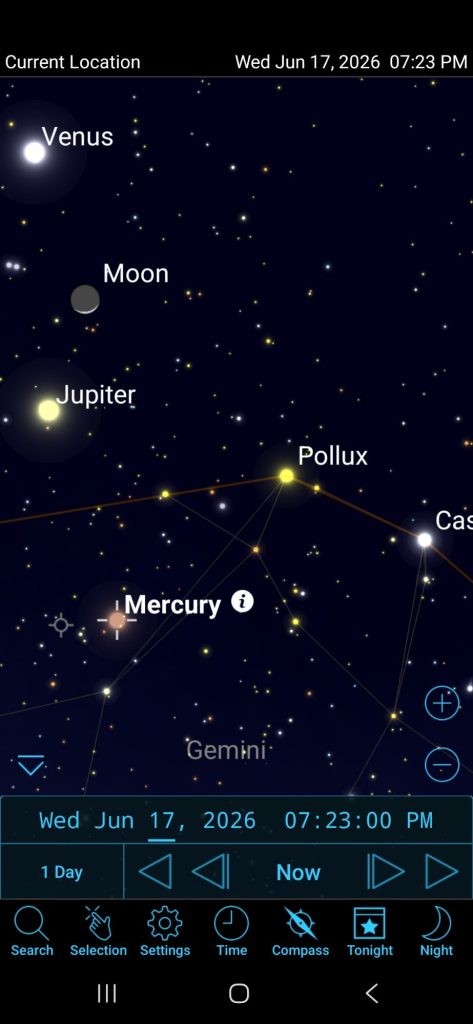
Armed with a smartphone camera, a tripod, the Sky Safari App and a clear western horizon, I tracked these cosmic wanderers as they chased the sun below the tree line.
This is the minute-by-minute chronicle of how the twilight faded, how an elusive planet was won, and how a technical photography session transformed into a deeply divine experience.
The Sunset Timeline
As the day concludes, the sun begins its graceful descent. Its golden rays lengthen, casting a warm, soft glow across the landscape. The sky transforms into a canvas of breathtaking colors, blending oranges, pinks, and purples. Each moment of this spectacle is a fleeting masterpiece, a gentle reminder of nature’s beauty.
Capturing a planetary alignment at dusk is a race against a ticking clock. As twilight deepens, the sky acts like a developing photograph—revealing dimmer objects piece by piece, even as the horizon rises to swallow them whole.
7:14 PM – The Early Lineup
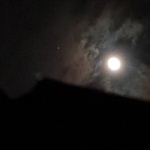
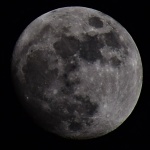
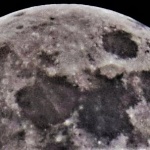
The session began just as dusk settled. Looking up, three of the major players were immediately striking. High in the sky, Venus blazed fiercely at a brilliant magnitude of roughly -4.0, acting as the anchor of the parade. Below it hung a beautiful, slender waxing crescent Moon, about 12% illuminated. Anchoring the vertical line directly beneath the curve of the crescent was Jupiter. Click the images to open in a new browser tab.
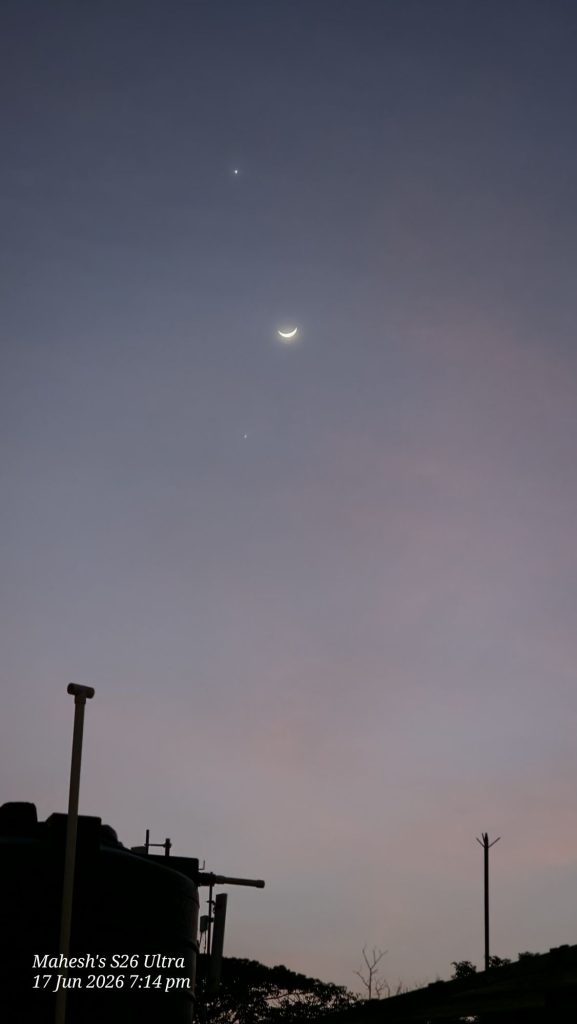
At this stage, however, Mercury was entirely missing—buried completely inside the thick, bright orange-pink glare of the sun’s twilight twilight curtain.
7:18 PM – Mercury Emerges
As the minutes ticked by and the ambient glare dropped, the sky began to give up its secrets. By 7:18 PM, looking closely at the camera sensor through the twilight gradient, a tiny, incredibly faint speck of light finally broke through.
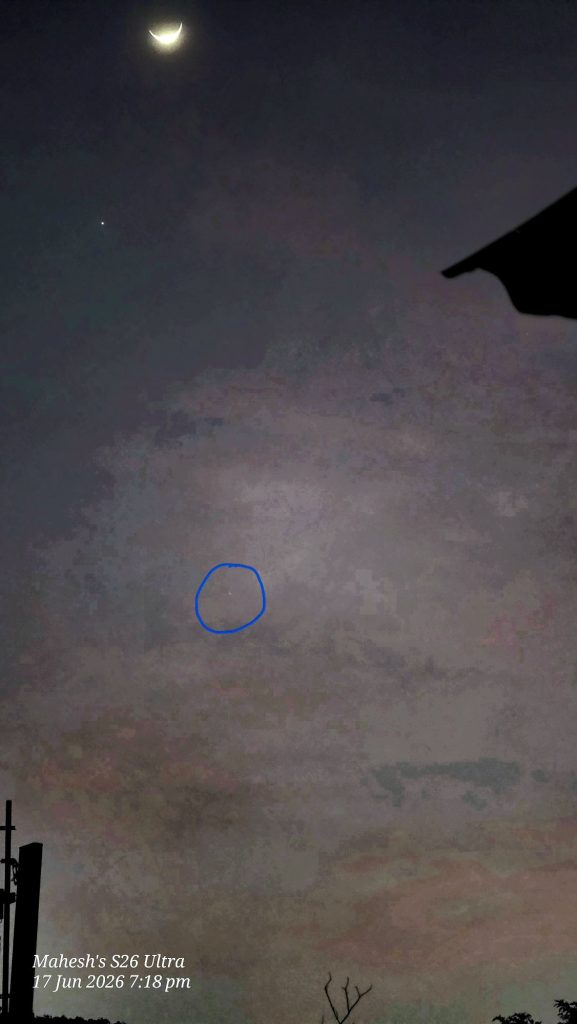
Sitting at a faint +0.6 magnitude to the lower right of Jupiter, Mercury had officially joined the parade, fighting through the heavy atmospheric haze of the city horizon.
7:21 PM – Cutting the Noise with Astro Mode
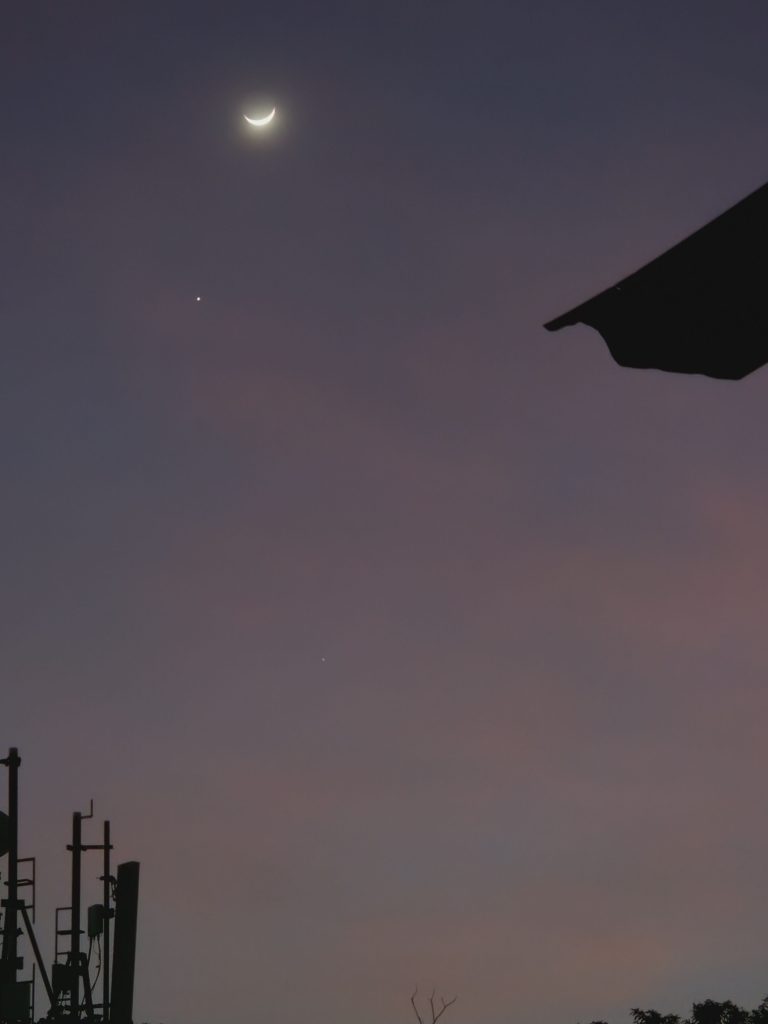
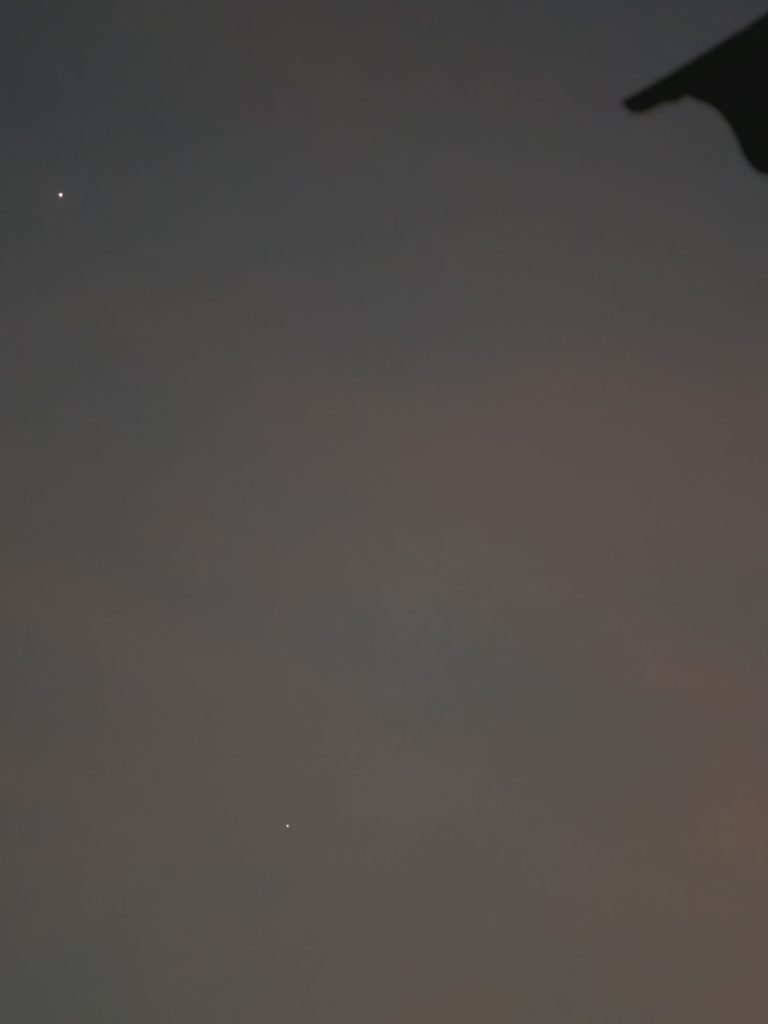
By 7:21 PM, I switched over to Samsung’s Expert RAW Astro Photo mode to utilize its multi-frame auto-stacking capabilities. The difference was night and day. The computational stacking completely smoothed out the background atmospheric noise, turning a tricky twilight shot into a crisp portrait. The crescent Moon’s shape sharpened, Jupiter anchored the center-left cleanly, and Mercury—now freed from the muddy sky-glow—stood out as a natural, steady point of light.
7:28 PM to 7:34 PM – The Sky Deepens
As the clock passed 7:28 PM, the true layout of the night sky bared itself. With the darkness intensifying, a new object pierced through the mid-right side of the frame—the bright star Pollux from the Gemini constellation, forming a wide, cosmic triangle with the Moon and Jupiter.
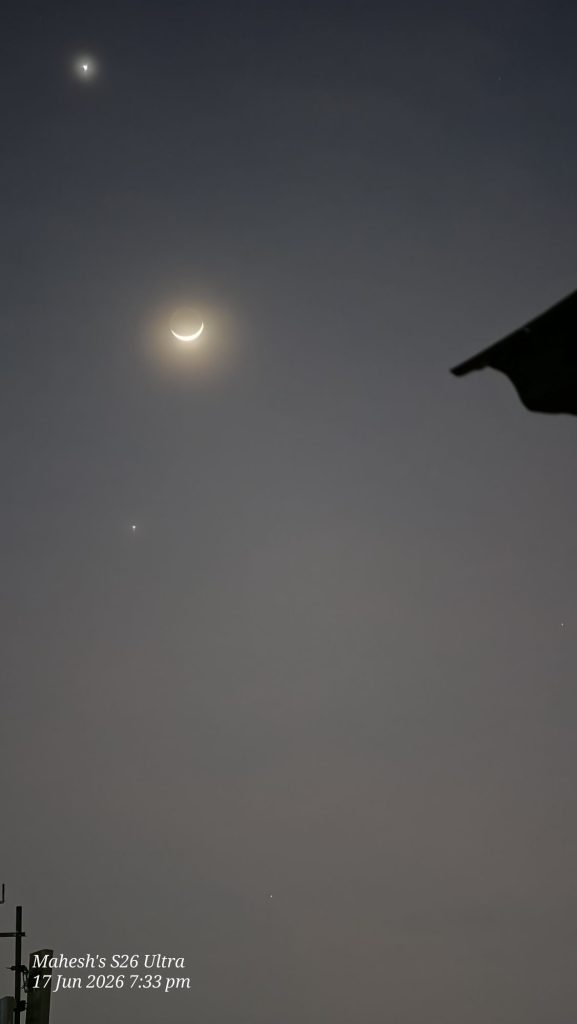
By 7:34 PM, the dark sky allowed the camera to capture a masterclass in Earthshine—where sunlight reflecting off Earth’s own oceans and clouds softly illuminated the dark, unlit shadow of the lunar disk, showing the complete circle of the Moon. Low on the bottom right, Mercury was still holding on, dropping visibly lower by the minute.

7:46 PM – The Slate-Blue Shift
To capture the mood of the deep dusk, I manually tweaked the Auto White Balance, dropping the color temperature down to around 4300 Kelvin. This stripped away the last remnants of warm city light pollution, casting the entire sky in an otherworldly, cinematic slate-blue hue.
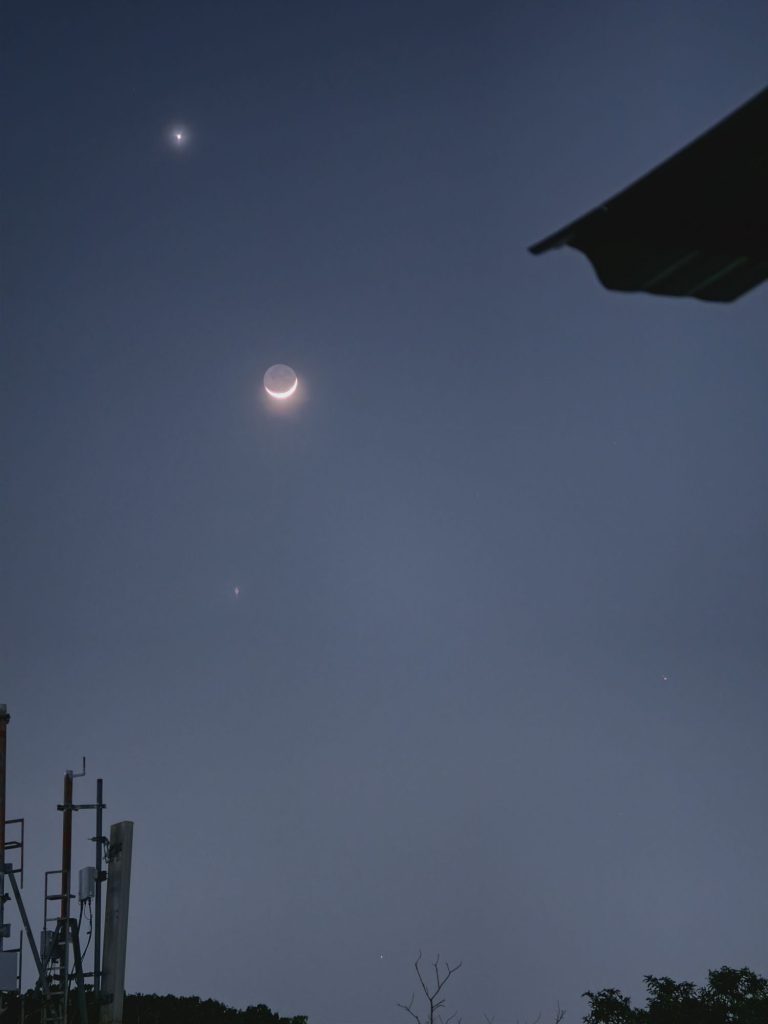
In this frame, the entire house was visible: Venus at the peak, the glowing cradle of the Moon, Jupiter below it, Pollux to the right, and Mercury just skirting the top of the dark horizon line, next to the bald tree..
7:50 PM – The Final Second
The chase concluded right at the absolute brink of horizon extinction.
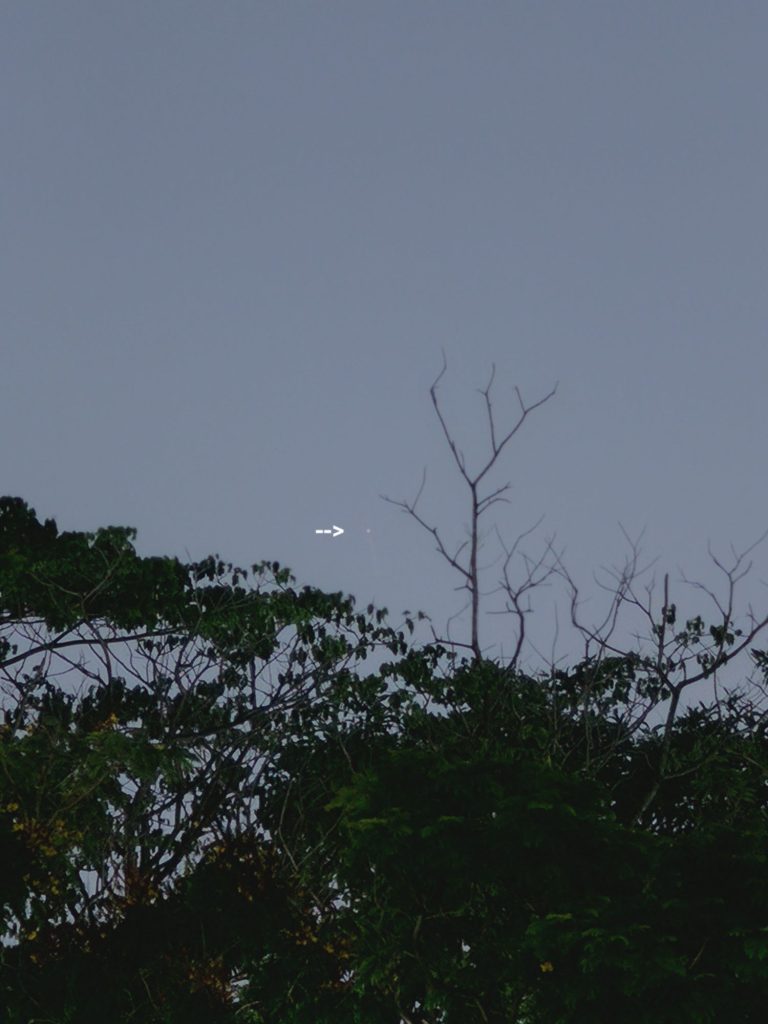
At 7:50 PM, Mercury had plummeted to the very edge of the sky. I managed to capture it one last time, nestled perfectly as a sharp, tiny pinprick in a small gap just to the left of a silhouetted, bald tree branch, a split second before it vanished into the horizon vegetation for the night.
The Motion: 23 Minutes in 19 Seconds
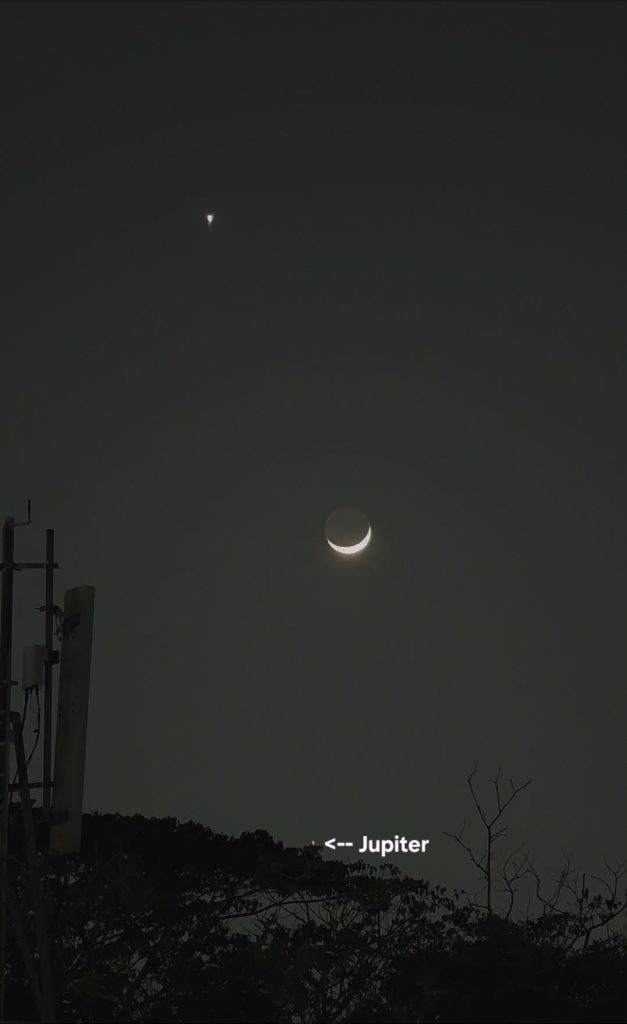
To truly understand how fast these inner worlds move relative to our local horizon, I set up a hyperlapse video to lock onto the alignment. The camera captured 23 minutes of continuous cosmic descent, compressing it into a rapid burst of raw motion, which I then slowed down to a 19-second clip to appreciate every detail.
Refereing to the above video, the planetary descent is mesmerizing:
- You watch the crescent Moon dipping below the heavy silhouette of the trees.
- Venus, sitting incredibly high in its orbit, holds its ground stubbornly at the top of the frame.
- If you keep your eyes on the tree line around the 0 to 3-second mark, Jupiter makes a brief, dramatic cameo, blinking just over the branches before it is entirely cut off by the horizon.
The Transcending Lens: A Divine Choreography
Standing on the roof in the quiet night air after the camera stopped clicking, the entire experience transcended mere physics, focal lengths, or sensor capabilities.
Watching those massive worlds glide along their paths in absolute silence didn’t make me feel small—it felt like witnessing a silent, Divine Choreography.
In ancient traditions, these celestial movements weren’t viewed as random, clinical clockwork, but as the visible expression of a higher, cosmic order(Rtam).
There is a profound spiritual awakening and an experience of awe that happens when you witness such perfect harmony up close. It’s blissfully divine – Ananda! ✨️