Ganapati-Blessings
Ganesh Chaturthi Blessings: Wisdom from the Atharva Śīrṣa
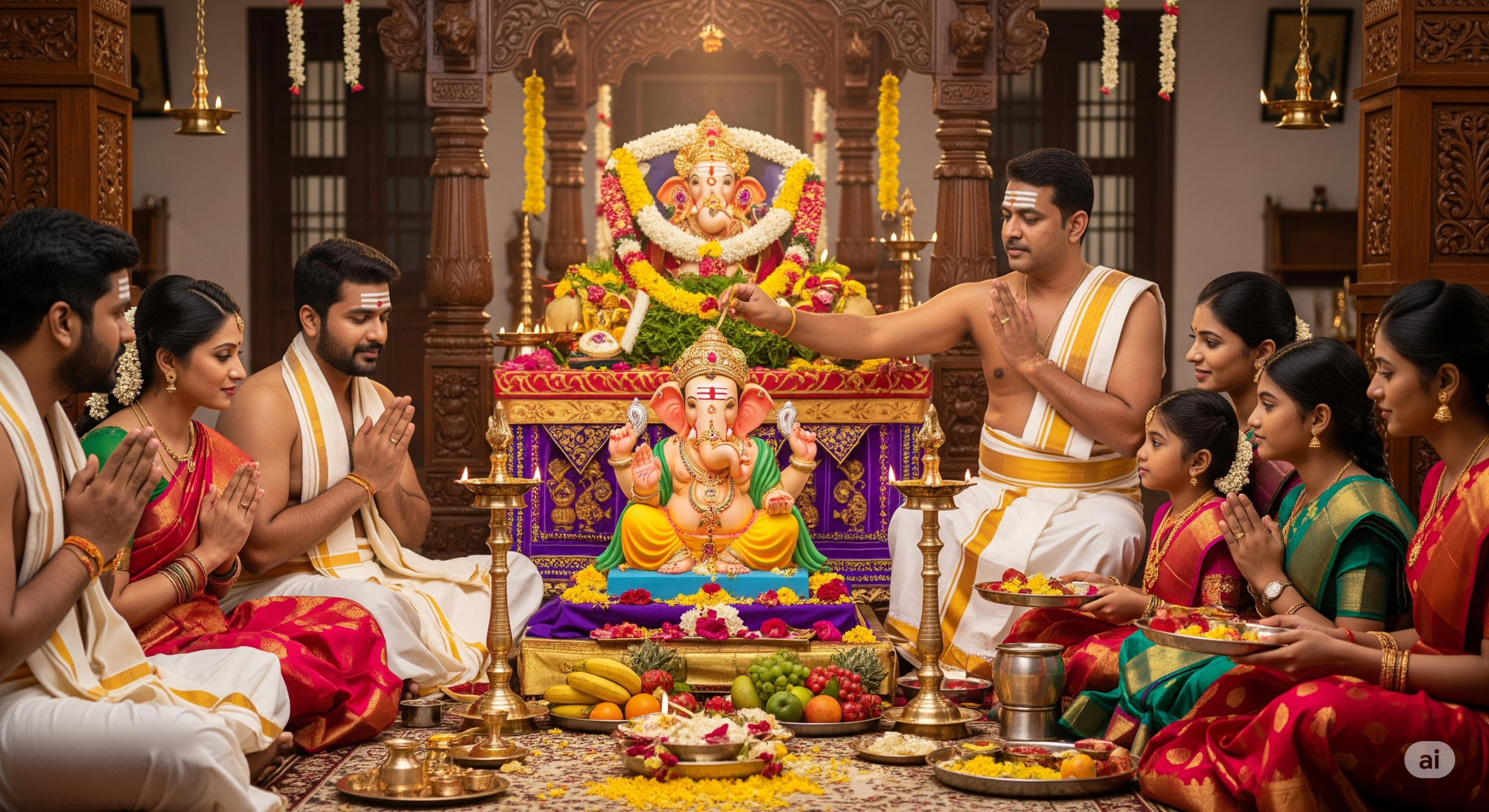
As the sacred day of Ganesh Chaturthi dawns today Wednesday, 27th August 2025, we bow to the remover of obstacles, the patron of wisdom, and the embodiment of auspicious beginnings—Śrī Gaṇapati.
The joyous chants of “Ganpati Bappa Morya!” fill the air and the sweet aroma of modaks wafts from our homes, we welcome Lord Ganesha—the remover of obstacles, the patron of arts, and the beacon of intellect—into our hearts and lives. Ganesh Chaturthi is more than a festival; it is a profound opportunity for renewal, reflection, and spiritual reconnection.
This year, let’s deepen our celebrations by immersing ourselves in the timeless wisdom of the Ganesh Atharvashirsha Upanishad. These ancient verses are not just hymns of praise but are powerful capsules of knowledge that can guide us toward a more meaningful existence.
This post offers four luminous verses from the Śrī Gaṇapatyatharvaśīrṣa Upaniṣad, each a gateway to deeper devotion and spiritual insight. May they guide your celebration from ritual to realization.
Verse 14: The Invocation of Names

Sanskrit: नमो व्रातपतये नमो गणपतये नमः प्रमथपतये। नमस्तेऽस्तु लम्बोदरायैकदन्ताय विघ्ननाशिने शिवसुताय वरदमूर्तये नमः॥
Transliteration: Namo vrātapataye namo gaṇapataye namaḥ pramathapataye। Namaste’stu lambodarāyaika-dantāya vighna-nāśine śiva-sutāya varada-mūrtaye namaḥ॥
Translation: Salutations to the Lord of groups (vrāta), to Gaṇapati, to the leader of divine hosts (pramatha). Obeisance to the pot-bellied, single-tusked remover of obstacles, son of Śiva, embodiment of boons.
Explanation: This verse is a garland of divine epithets—each name revealing a facet of Gaṇapati’s cosmic role. Vrātapati evokes his leadership over spiritual seekers; Pramathapati hints at his command over fierce protectors. The physical attributes—lambodara and eka-danta—are not mere descriptions but symbols of inner fullness and singular focus. The verse culminates in varadamūrti, the form that bestows blessings unconditionally. He is the one who clears the path, not just around us, but within us, allowing our truest desires to manifest.
Verse 15: The Fruit of Study

Sanskrit: एतदथर्वशीर्षं योऽधीते स ब्रह्मभूयाय कल्पते। स सर्वविघ्नैर्न बाध्यते। स सर्वत्र सुखमेधते॥
Transliteration: Etad-atharvaśīrṣaṁ yo’dhīte sa brahmabhūyāya kalpate। Sa sarva-vighnair na bādhyate। Sa sarvatra sukham edhate॥
Translation: Whoever studies this Atharva Śīrṣa becomes fit to attain Brahman. He is not afflicted by obstacles and finds happiness everywhere.
Explanation: This verse affirms the Upaniṣad’s transformative power. The devotee becomes brahmabhūya—eligible for union with the Absolute. Obstacles dissolve, not merely externally but within the mind and heart. The phrase sarvatra sukham edhate suggests a state of pervasive joy, born of spiritual alignment.
Here lies the promise of meditation and sincere study. The Upanishad tells us that by focusing our minds on the divine essence of Ganesha, we transcend the daily struggles and obstacles that cloud our vision. True, lasting happiness becomes accessible to us, no matter where we are.
Verse 23: Worship with Durvā Grass

Sanskrit: यो दूर्वाङ्कुरैर्जपति स वैश्रवणोपमो भवति॥
Transliteration: Yo dūrvāṅkurair japati sa vaiśravaṇopamo bhavati॥
Translation: He who worships with sprigs of durvā grass becomes like Kubera, the lord of wealth.
Explanation: Durvā grass, simple and sacred, becomes a conduit for invoking prosperity. The comparison to Vaiśravaṇa (Kubera) is not just material—it suggests abundance in dharma, wisdom, and generosity. The verse reminds us that devotion need not be elaborate; sincerity sanctifies simplicity.
Verse 24: Worship with Lāja (Popped Rice)

Sanskrit: यो लाजैर्जपति स यशोवान् भवति। स मेधावान् भवति॥
Transliteration: Yo lājair japati sa yaśovān bhavati। Sa medhāvān bhavati॥
Translation: He who worships with parched rice becomes renowned and wise.
Explanation: Lāja, offered with reverence, yields yaśas (fame) and medhā (intellect). These fruits are not for egoic display but for service. Wisdom and recognition, when rooted in devotion, become tools for uplifting others.
These offerings, parched grains and modaks, are symbolic. The grains represent simplicity, humility, and the fruits of the earth. Offering them signifies a pure, grounded devotion that leads to wisdom and recognition.
Reflections and Closing Thoughts

On this Ganesh Chaturthi, let us not only celebrate with modakas and mantras, but also contemplate the deeper truths these verses unveil. Gaṇapati is not merely the deity of beginnings—he is the guardian of our inner journey, the one who clears the path toward self-realization.
Whether you offer durvā or lāja, chant or meditate, may your worship be infused with sincerity and joy. And may the blessings of Śrī Gaṇapati guide you toward wisdom, abundance, and bliss.
These verses teach us that both simple acts of faith and grand offerings of love are beautiful ways to connect with the divine and receive blessings in return.
Wishing you and your loved ones a sacred, joyful, and transformative Ganesh Chaturthi.
Jaya Gaṇeśa!

Samastha Lokah Sukhino Bhavanthu
May all the beings in all the worlds be happy!

Jai Sai Ram!