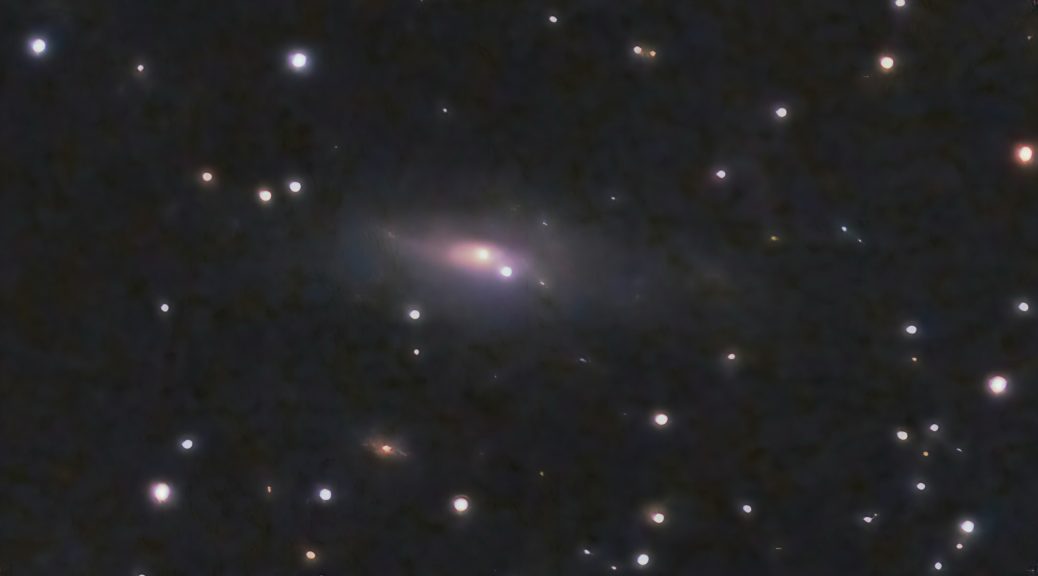
The Supernova I Didn’t Know I Had Photographed
“The universe stayed open late, so I did too.”
Sometimes the most memorable astrophotography sessions are not the ones where everything goes according to plan. They are the ones where the universe quietly places something extraordinary in the frame, and you only discover it later.
That is exactly what happened to me on the night of 9 September 2026.
Click on any image below to open in a separate tab.
An Evening with Caldwell 30

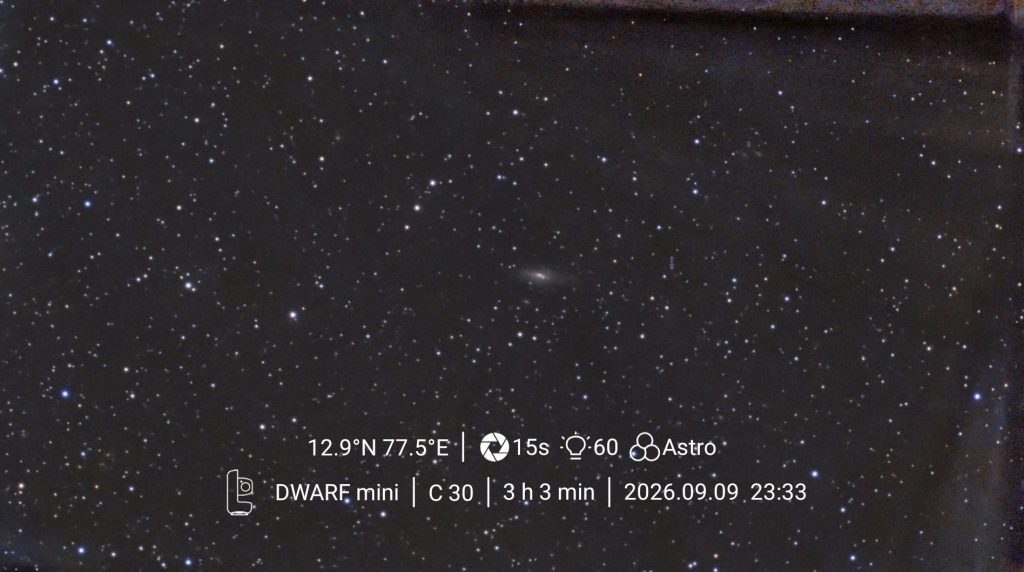
I had set up my Dwarf Mini Smart Telescope to image Caldwell 30 (NGC 7331), the magnificent spiral galaxy in Pegasus. Along with it, I hoped to capture members of the Deer Lick Group, a collection of distant galaxies that appear near NGC 7331 from our perspective on Earth.
After more than three hours of imaging, I reviewed the results and was delighted to see the familiar elongated shape of NGC 7331 standing out against a rich star field. Near the edge of the frame, I could also make out a faint fuzzy patch that appeared to be Stephan’s Quintet, one of the most famous galaxy groups in the sky.
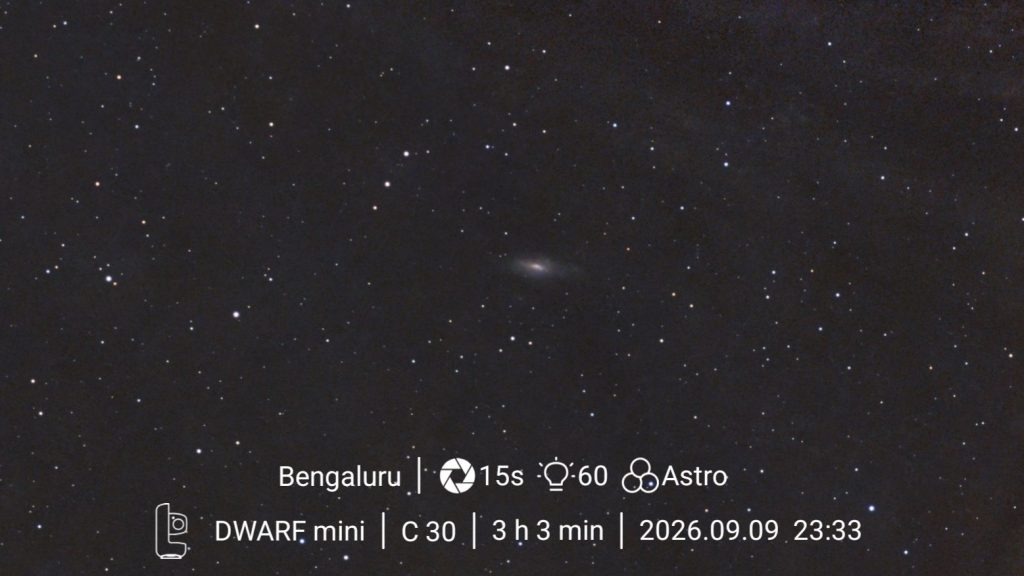
I considered the session a success.
At that point, I had no reason to think there was anything unusual about the image.
The Discovery Came Days Later
A few days later, while revisiting the image and examining the field more carefully, I noticed an unusually bright stellar point embedded within NGC 7331.

At first, I assumed it was simply a foreground star aligned with the galaxy.
But the position seemed curious.
After comparing the image with recent astronomy reports and using AI-assisted identification tools to investigate the field, I realised that the bright point was not an ordinary star at all.
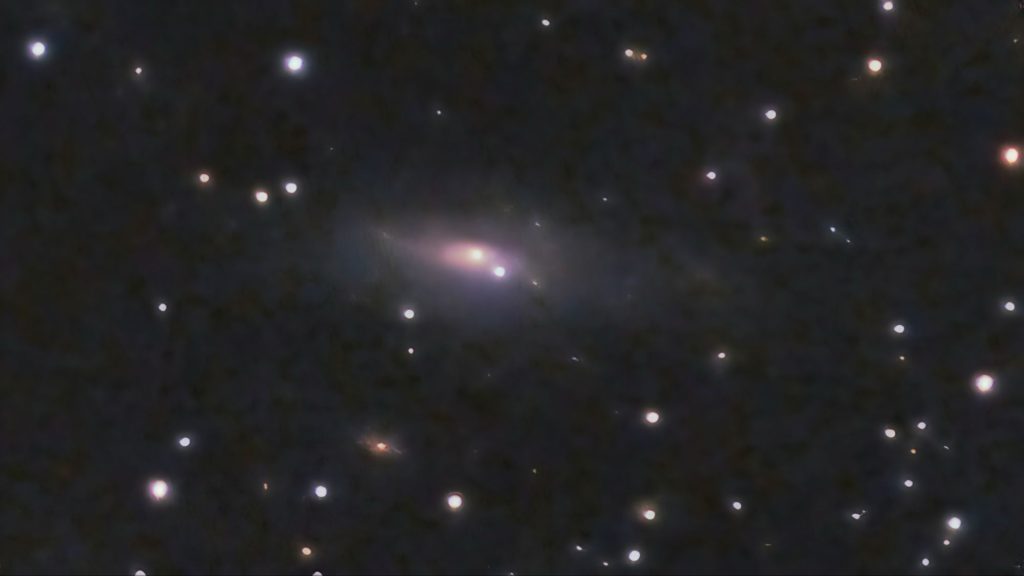
It was SN 2026aaiv, a recently discovered Type Ia supernova in NGC 7331.
Suddenly, the image became something far more special than I had originally thought.
A Star That Wasn’t There Before
Unlike the countless stars visible in an astrophotograph, this point of light was not part of the scene a few weeks earlier.
Somewhere in NGC 7331, approximately 40 million light-years away, a white dwarf star had reached a catastrophic tipping point and exploded in a thermonuclear event. The light from that explosion travelled across intergalactic space for millions of years before finally reaching Earth.
And on the night of 9 September 2026, some of those photons ended their journey on the sensor of my Dwarf Mini.
When I started the imaging session, I had absolutely no idea I was recording the aftermath of a stellar explosion.
The discovery only came later.
Caldwell 30: The Main Attraction
Even without the supernova, NGC 7331 is a spectacular target.
Often described as one of the spiral galaxies most similar in appearance to our own Milky Way, it features a bright central bulge surrounded by an extensive disk of stars, dust and gas.
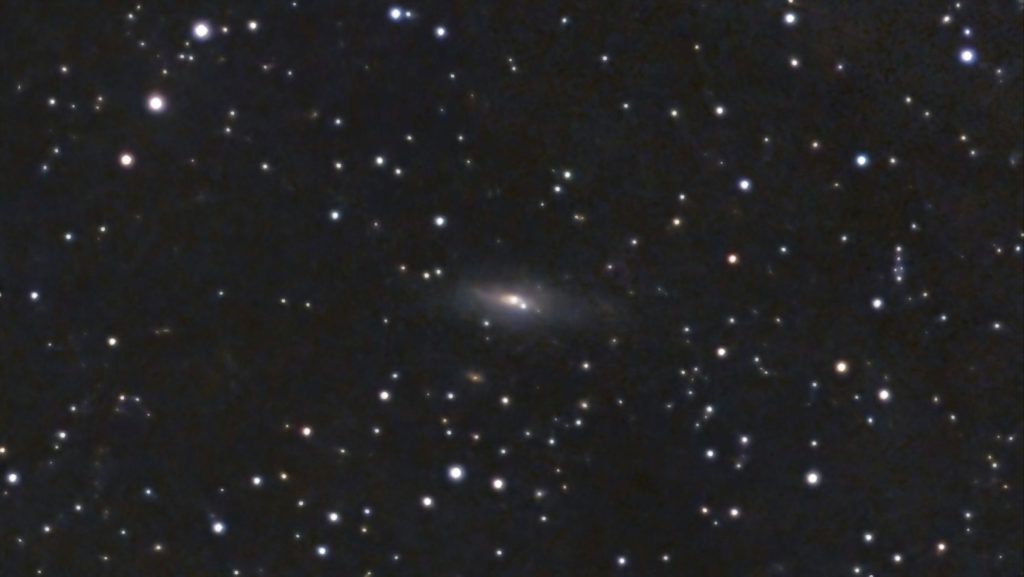
For amateur astrophotographers, it is one of the finest galaxy targets of the autumn sky.
In my image, the galaxy’s central core is clearly visible, and its elongated structure stands out despite being tens of millions of light-years away.
What I did not realise at the time was that a supernova had quietly stolen the spotlight.
Stephan’s Quintet: A Tiny Smudge with a Big Story
Another unexpected pleasure was finding Stephan’s Quintet in the same field.
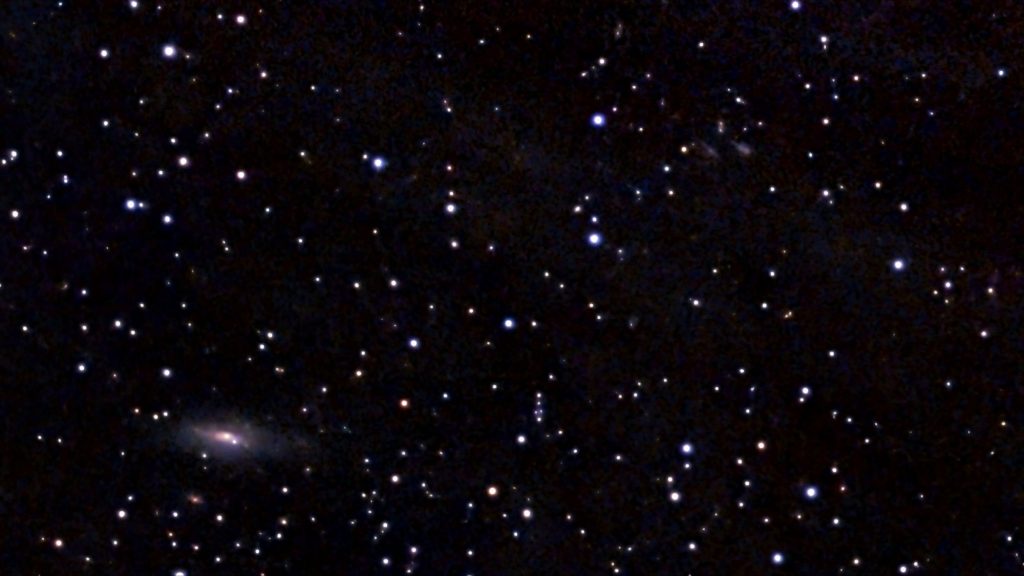
Located near the upper-right region of the image, it appears only as a faint and delicate smudge. Yet its characteristic shape is still recognisable.
That faint smudge represents one of the most studied compact galaxy groups in astronomy.
To many people, it might look insignificant.
To an astronomer, it represents billions of stars spread across multiple interacting galaxies.
The fact that NGC 7331 and Stephan’s Quintet can be captured together is one of the reasons this area of Pegasus is so popular among astrophotographers.
Captured with a Dwarf Mini Smart Telescope
One of the most remarkable aspects of this image is the equipment used.
The entire observation was captured using a Dwarf Mini Smart Telescope, a compact telescope small enough to fit into a backpack.
Modern smart telescopes have made deep-sky imaging more accessible than ever. They combine tracking, image stacking and computational photography into a highly portable package, allowing amateur astronomers to record objects that once required far larger and more expensive equipment.
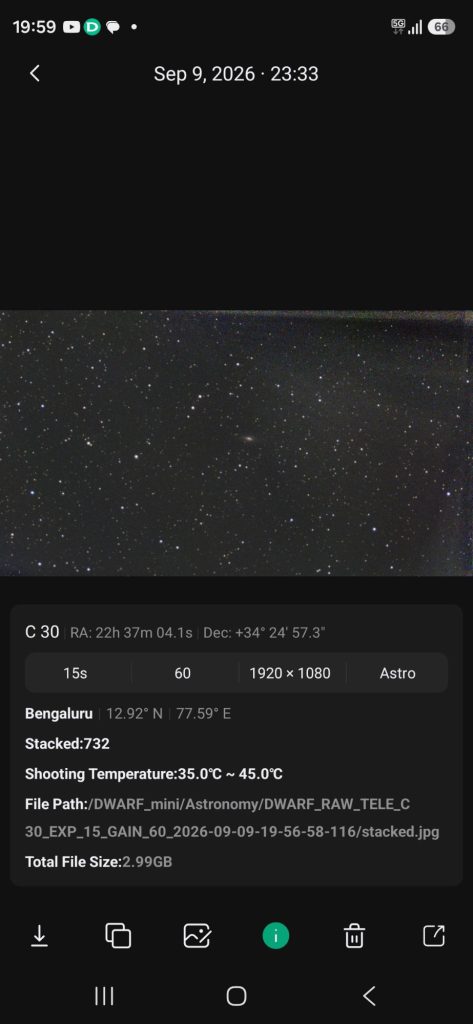
Capture Details
Target: Caldwell 30 (NGC 7331)
Date: 9 September 2026
Location: Bengaluru, India
Coordinates: 12.92° N, 77.59° E
Equipment
- Dwarf Mini Smart Telescope
- Astro Mode
Exposure Settings
- Exposure Time: 15 seconds
- Gain: 60
- Resolution: 1920 × 1080
Integration
- Frames Stacked: 732
- Total Integration Time: Approximately 3 hours 3 minutes
Environmental Conditions
- Shooting Temperature: 35°C to 45°C
- Cloudy night
Considering the urban environment of Bengaluru and the compact size of the telescope, the result exceeded my expectations. Post processing done on android mobile using gallery app.
A Frame Full of Perspective
What fascinates me most about this photograph is the scale it contains.

In a single image are:
- Stars belonging to our own Milky Way.
- NGC 7331, roughly 40 million light-years away.
- A supernova that briefly became bright enough to stand out within its host galaxy.
- Stephan’s Quintet, one of the most famous galaxy groups ever observed.
At first glance, it looks like a field of stars with a few faint smudges.
But every one of those smudges is a galaxy.
And one of those bright points is the explosion of a star.
The Universe Will Not Wait
Looking back at the image now, I no longer see just Caldwell 30.
I see a spiral galaxy.
I see Stephan’s Quintet.
I see the light from a stellar explosion that travelled for millions of years before reaching a small telescope in Bengaluru.
Most importantly, I see a reminder that the universe is constantly changing, whether we notice it or not.
I did not set out to photograph a supernova.
I simply pointed a telescope at a beautiful galaxy and collected photons.
Only days later did I realise that hidden within those photons was a story far bigger than I had imagined.
The universe will not wait.
But sometimes, if we’re paying attention, it leaves us a postcard!