Mindful Guide
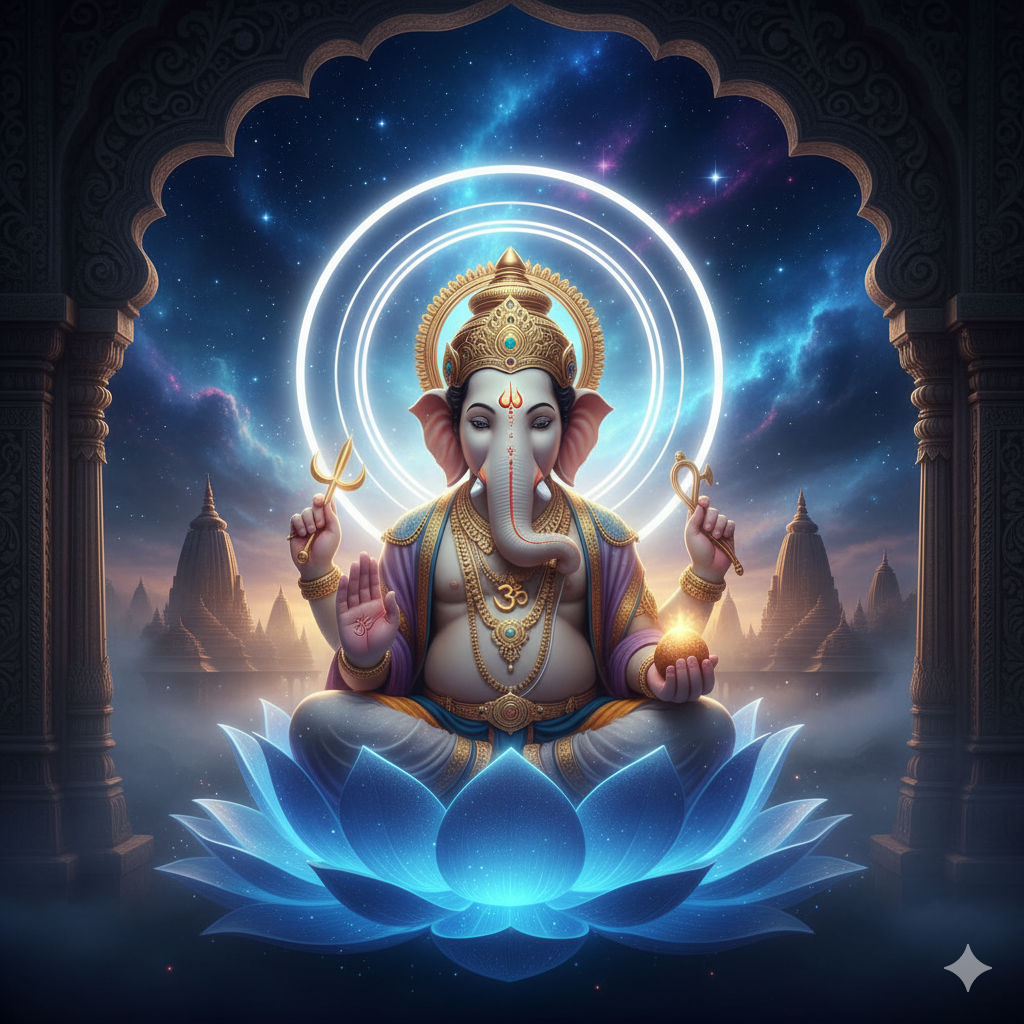
In our journey to discover purpose and peace, ancient wisdom often illuminates the most profound truths. Last week, we explored the Mudgala Purana as a guide to understanding Ganesha as the Supreme Brahman, the ultimate reality that helps us transcend inner obstacles. This week, we delve into the first and arguably most foundational of Ganesha’s eight incarnations: Vakratunda.
The name Vakratunda itself holds deep meaning, translating to “twisted trunk.” This seemingly unusual form is not a flaw but a symbol of the divine’s ability to navigate and straighten the complexities of the material world. Vakratunda embodies the absolute, the very aggregate of all bodies, and represents the form of Brahman from which all creation originates. He descends to conquer the demon Matsaryāsura, a powerful personification of envy and jealousy.
The Birth of Envy: Matsaryāsura and His Sons
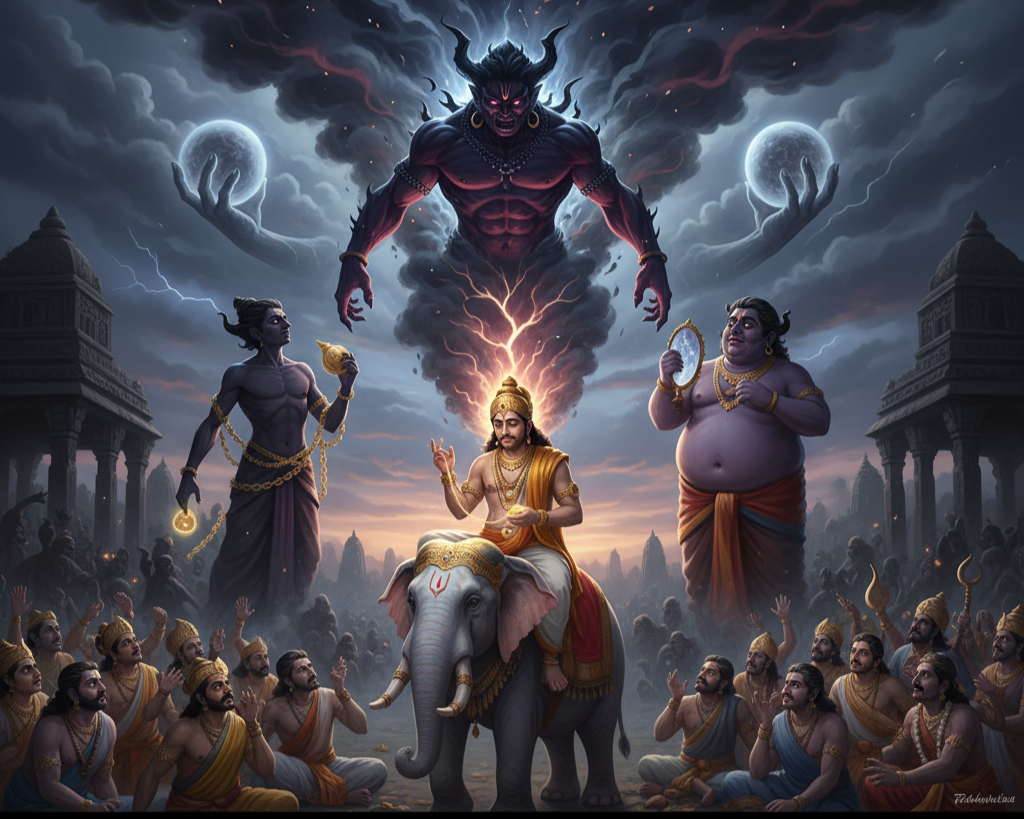
The story of Matsaryāsura begins with the heedlessness (pramada) of Indra, the king of the gods. From this single act of inattention, a formidable demon was born – Matsaryāsura, the embodiment of envy. This origin story is a profound lesson in itself: even minor slips in our mindfulness can give rise to powerful inner vices.
Matsaryāsura, driven by his inherent nature, sought power. He performed severe austerities and gained a powerful boon from Shiva – the gift of fearlessness. With this impenetrable shield, he, along with his two formidable sons, Vishaypriya (representing attachment to worldly pleasures) and Priya (representing self-indulgence or extreme fondness for oneself), conquered all three worlds. Gods, sages, and mortals alike found themselves under the dominion of envy, attachment, and self-serving desires.
Dattatreya’s Guidance and the Advent of Vakratunda
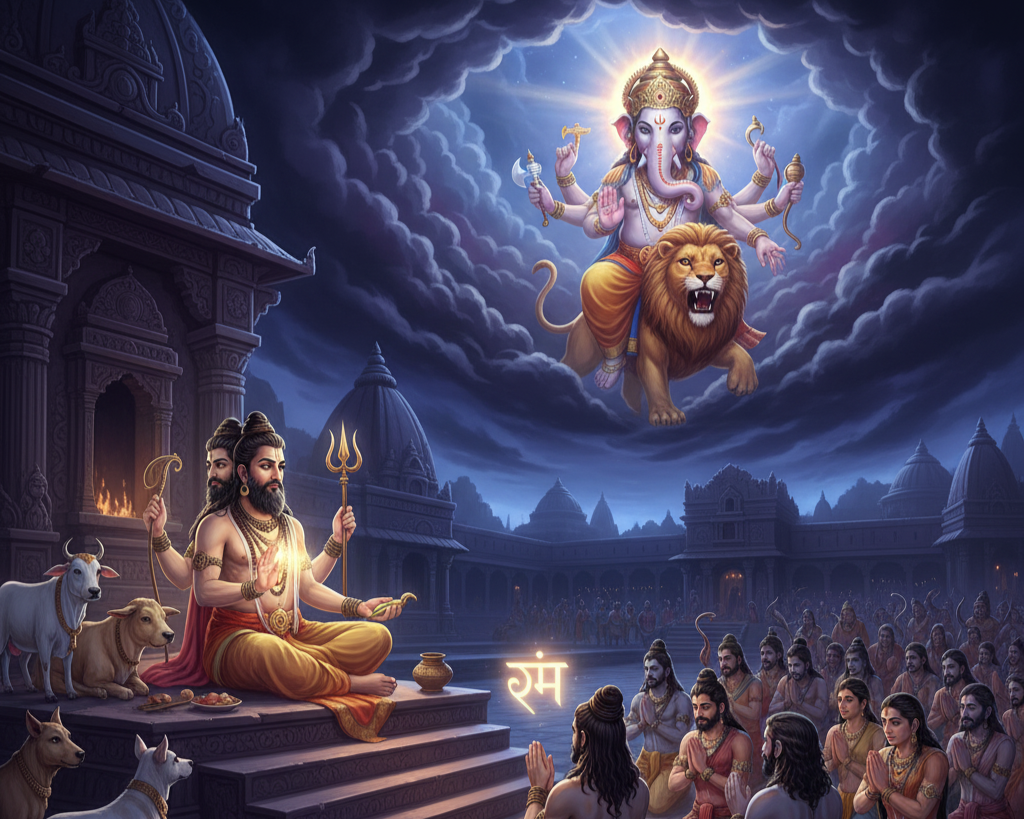
Defeated and desperate, the gods sought counsel from the great sage Dattatreya, the divine incarnation of the Trinity (Brahma, Vishnu, and Shiva). Dattatreya, with his profound spiritual insight, recognized the true nature of their predicament. He advised them that their deliverance lay in appealing to the ultimate source of all power – Ganesha. He imparted the powerful monosyllabic mantra “Gam” and instructed them to pray with unwavering devotion.
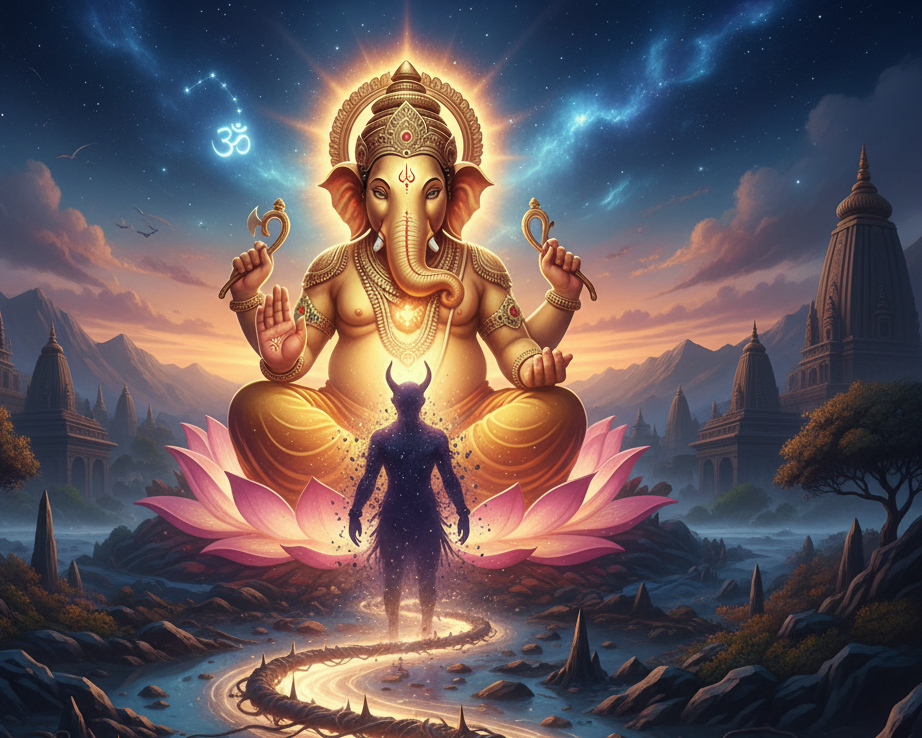
As the gods chanted, Ganesha manifested in his majestic form as Vakratunda, radiant and riding upon his mighty lion. The battlefield was set for a confrontation not just between divine and demonic forces, but between self-mastery and inner chaos.
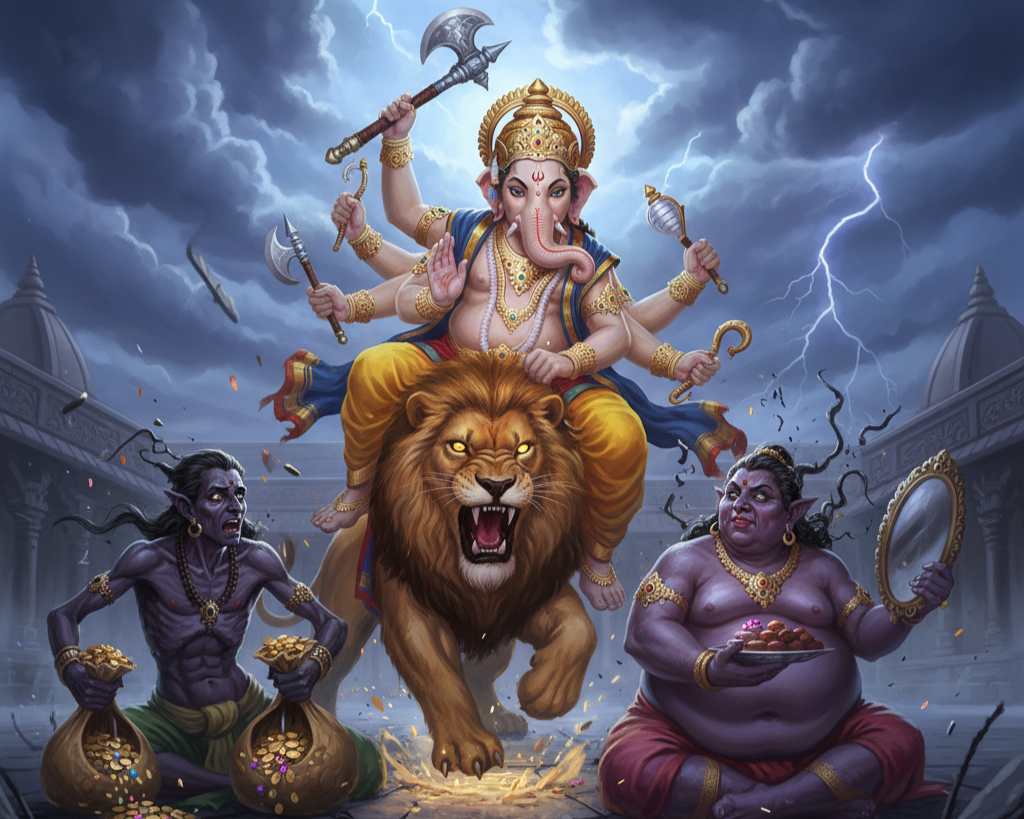
Vakratunda first engaged Matsaryāsura’s sons, Vishaypriya and Priya. These two, representing the insidious offshoots of envy – attachment to fleeting pleasures and excessive self-love – were decisively defeated and slain. Their demise signifies the initial, crucial step in our own spiritual battles: confronting and overcoming the immediate, often tempting, manifestations of our core vices.
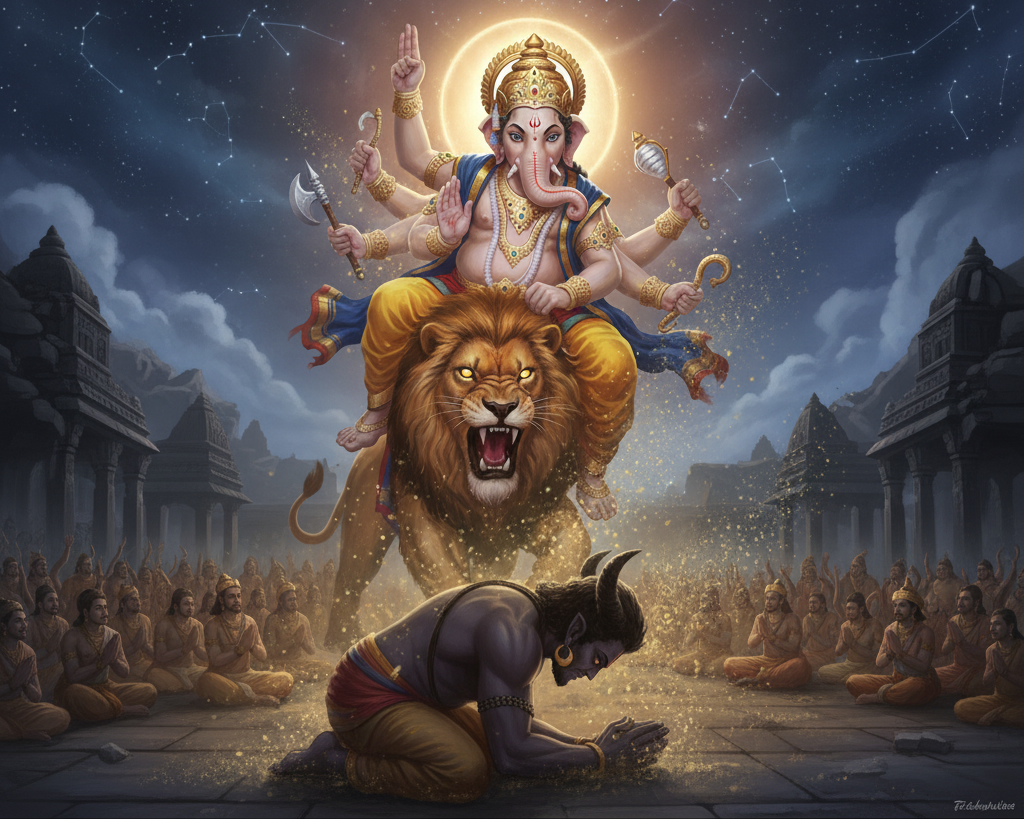
Witnessing the destruction of his sons, Matsaryāsura was overcome not by rage, but by sheer terror. His fearlessness, granted by Shiva, proved useless against the cosmic power of Vakratunda. Realizing the futility of resistance, the demon of envy surrendered completely to Lord Ganesha. Vakratunda, ever compassionate, accepted his surrender, restoring order to the cosmos.
Lessons for Modern Life: Conquering Our Inner Matsaryāsura
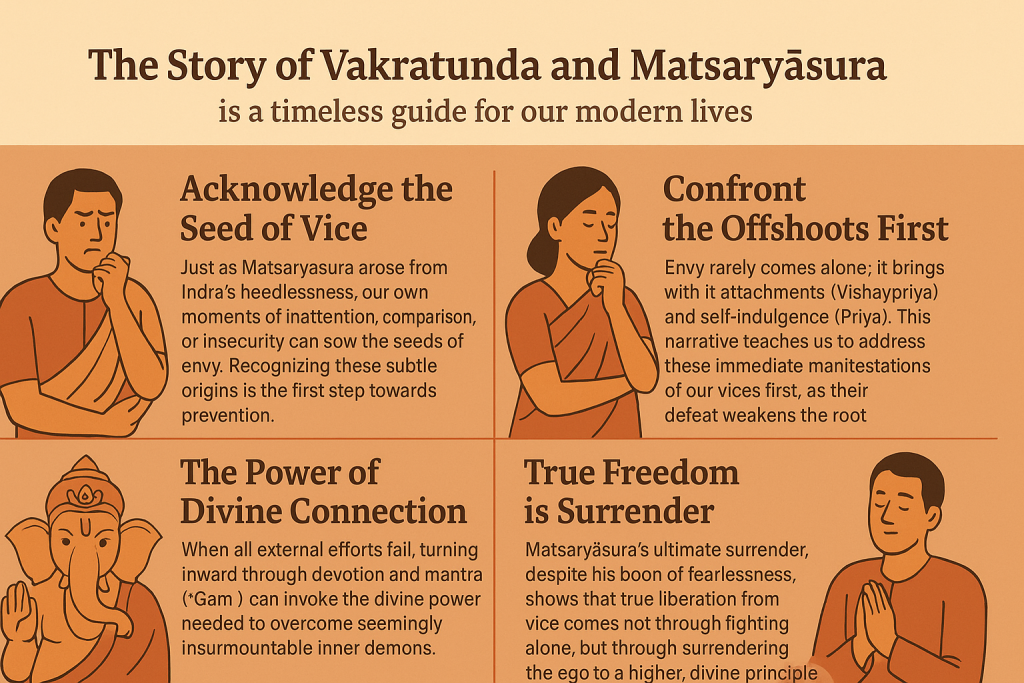
By meditating on Vakratunda’s triumph, we are inspired to identify the envy and jealousy within ourselves. We learn that true strength lies not in suppressing these emotions, but in confronting them with the wisdom and grace symbolized by Ganesha. Embracing the spirit of Vakratunda means straightening the “twisted” paths of our minds and aligning ourselves with our higher purpose, free from the chains of envy.
References
- Mudgala Purana (Sanskrit): An open-source, digital archive of the complete text. https://archive.org/details/mudgala-purana-s
- Mudgala Purana (Wikipedia): A comprehensive summary of the Purana’s contents and philosophical themes. https://en.wikipedia.org/wiki/Mudgala_Purana
Samastah Lokah Sukhino Bhavanthu
May all the beings in all the worlds be happy!

Jai Sai Ram!
Please note all images and content generated using AI Tools