Sifting Cosmic Dust: Piercing Cassiopeia’s Clouds to Capture M52
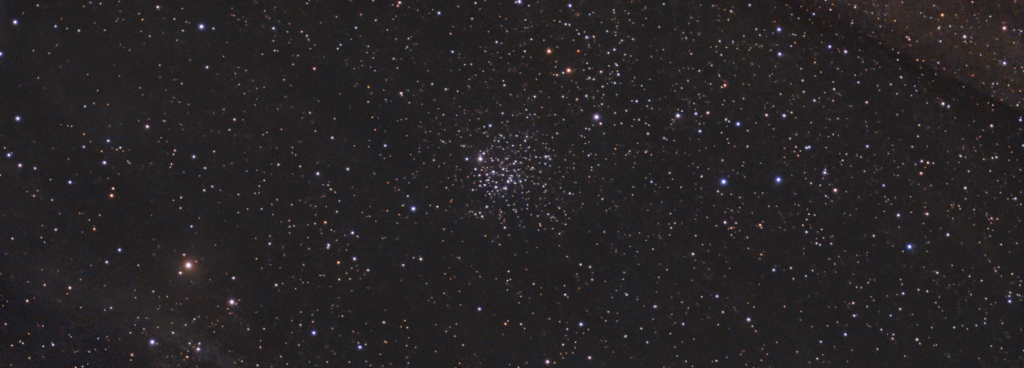
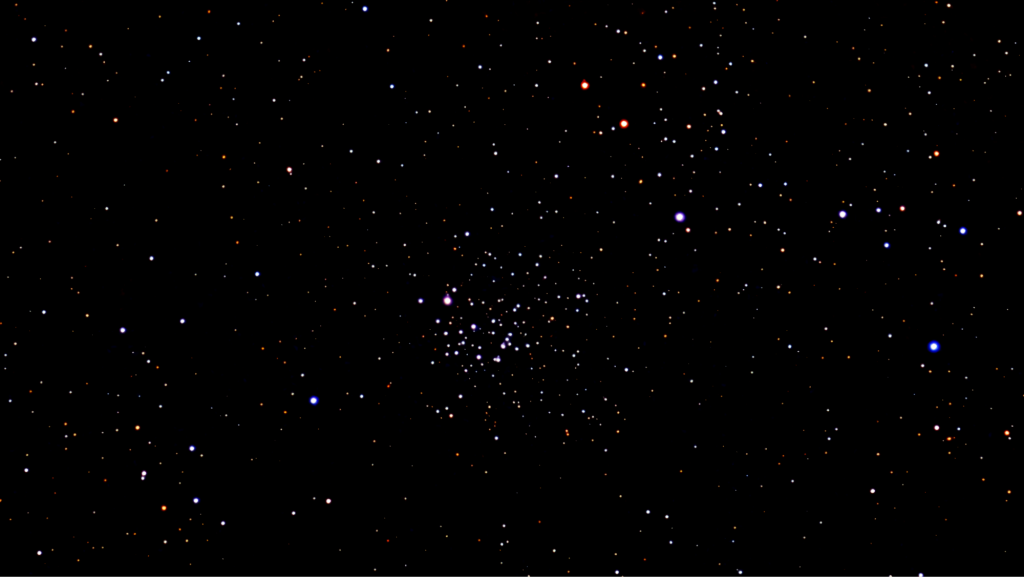
There is a unique thrill in set-and-forget deep-sky imaging—especially when nature tries to interject. Fighting rolling cloud cover and variable atmospheric extinction, I managed to stack light integration on one of the northern sky’s finest open clusters: Messier 52 (NGC 7654).
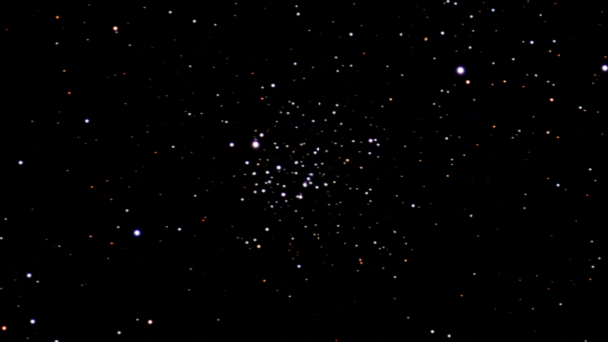
Often referred to as a “salt and pepper” cluster for its dense, granular sprinkling of faint stars across the field, M52 is an astrophysical powerhouse hiding in plain sight along the plane of the Milky Way.
Standing under the night sky, watching these quiet pinpricks of light slice through drifting cloud cover, serves as a gentle reminder of the enduring harmony operating just beyond our everyday vision—an invitation to connect with the timeless cosmos.
The Science Behind the Target Location & Distance:
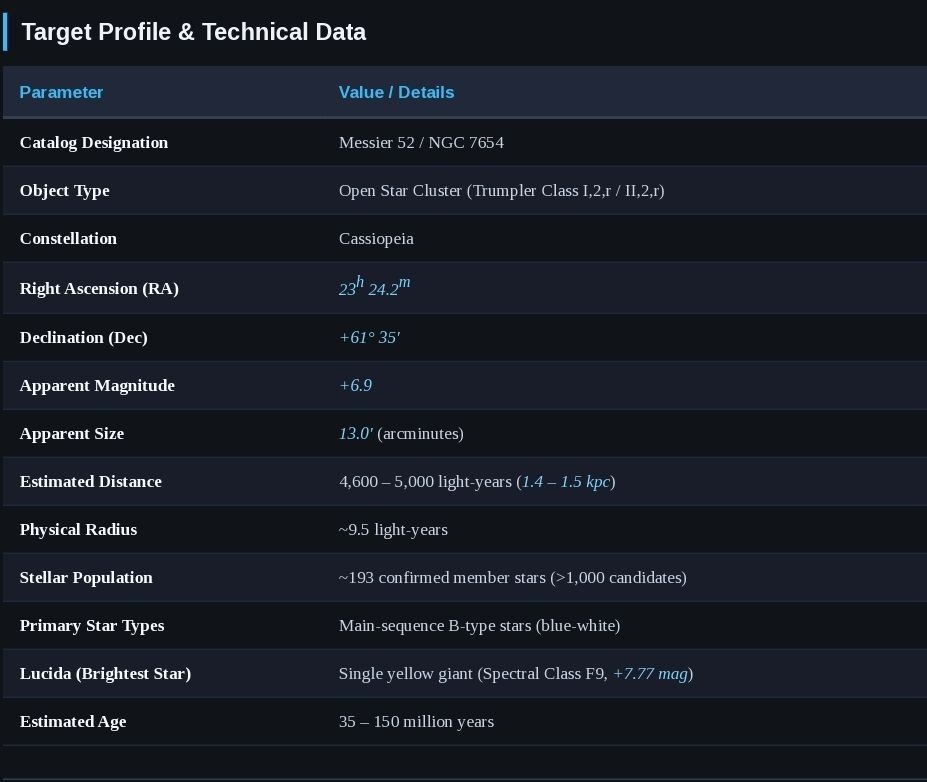
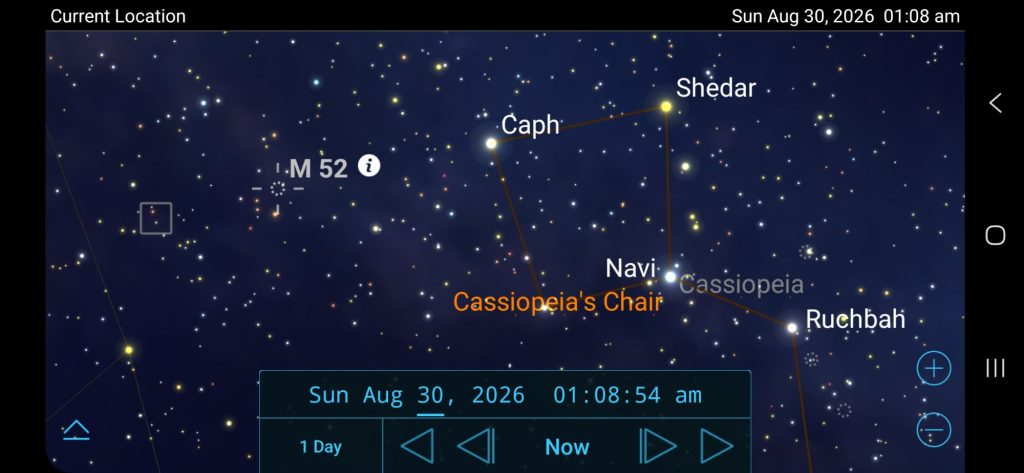
Resting in the constellation Cassiopeia, M52 lies roughly 4,600 to 5,000 light-years away in the Perseus Arm of our galaxy. Because its light travels through dense lanes of interstellar dust, calculating its exact distance has historically been challenging due to heavy extinction—a classic problem when imaging targets right along the Galactic equator.
Stellar Population & Evolution: M52 spans about 19 light-years across and contains around 200 resolved cluster members.
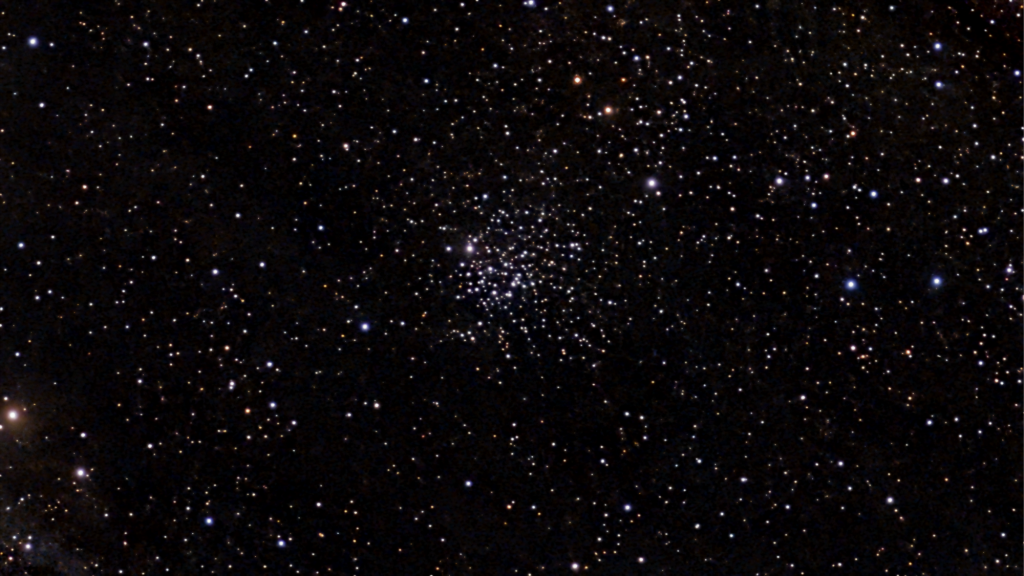
Structurally, it is dominated by hot, young, main-sequence B-type stars.
The Bright Yellow Outlier: Visually, the cluster is anchored by a prominent magnitude +7.77 yellow giant (spectral class F9) sitting near its edge. This evolved star provides a striking color contrast against the swarm of blue-white stellar youth surrounding it.
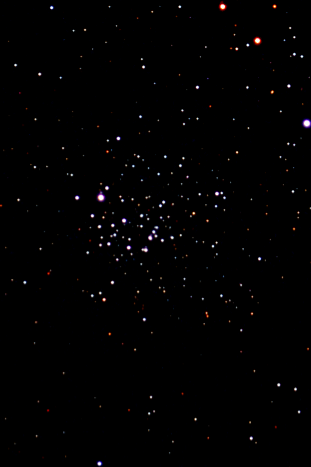
Cluster Dynamics: Estimated to be roughly 35 to 150 million years old, M52 is relatively young on cosmic scales. Intriguingly, spectral analysis of the cluster core reveals a noticeable lack of residual interstellar gas—suggesting early supernova events or strong radiation pressure from its massive stars swept the birth-cloud clean millions of years ago.
Framing & Context
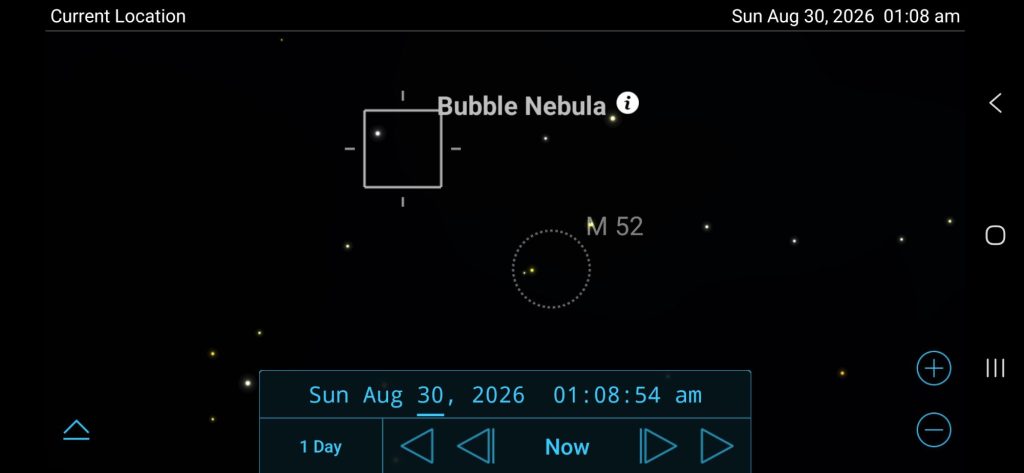
Framing M52 also places you directly in the neighborhood of NGC 7635 (The Bubble Nebula), located just 35 arcminutes to the southwest. While the open cluster resolves cleanly through brief integration windows, bringing out the faint H-alpha emission shell of the Bubble usually requires tight narrowband filtering or aggressive stretched integration to pull the nebula out from the background Milky Way star fields.
Despite the cloud passages cutting into optical transparency, the integration delivered sharp point-spread functions (PSFs) across the cluster core and yielded crisp color separation between the main-sequence blue population and the foreground red/yellow giants.