M15: A 12-Billion-Year-Old Star Cluster in Pegasus
“M15 glows like a cosmic honeycomb, a tightly packed metropolis of ancient suns suspended in the autumn sky.”
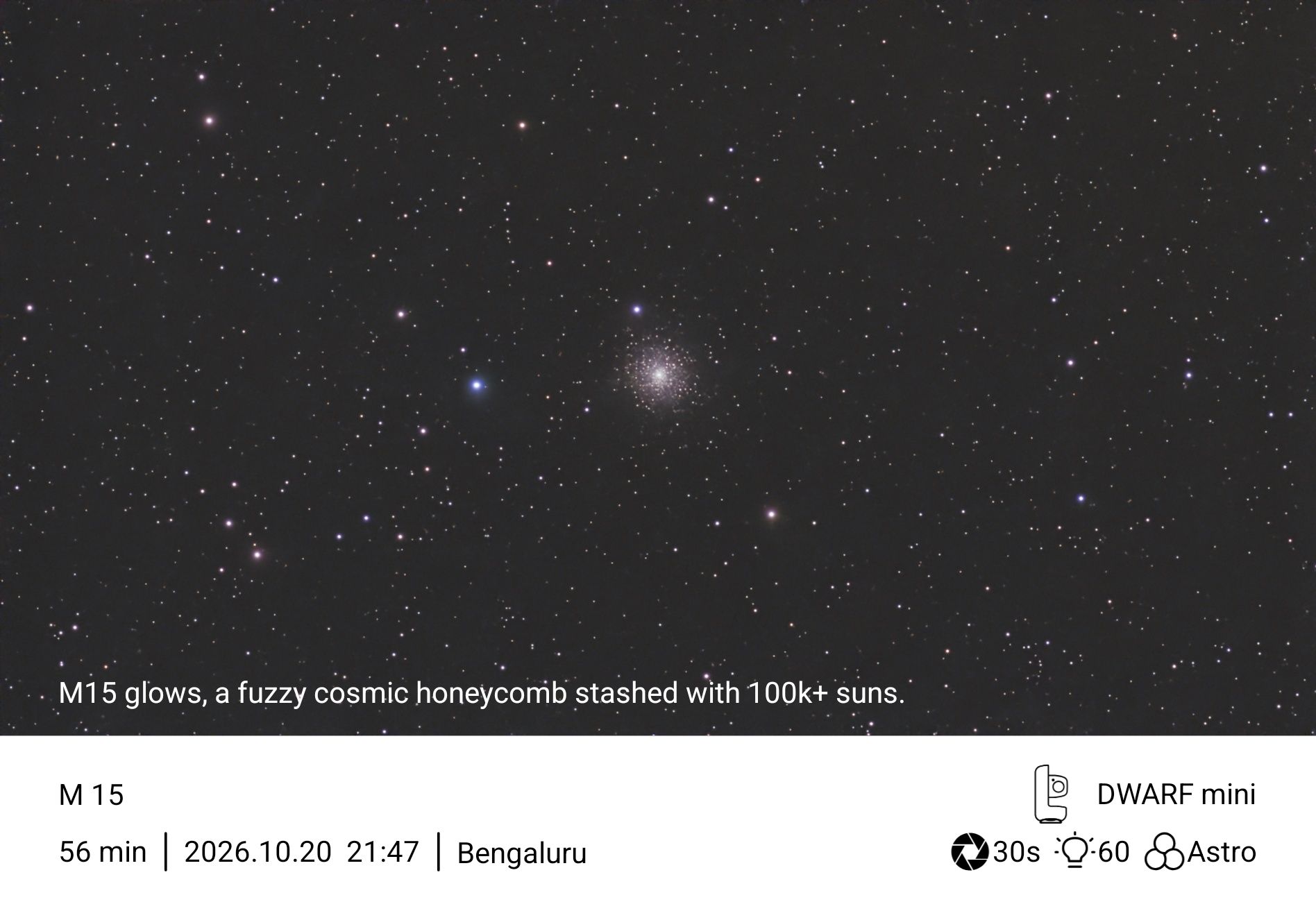
On the evening of 20 October 2026, a small fuzzy patch in Pegasus became the target of another deep-sky imaging session from Bengaluru.
At first glance, Messier 15 (M15) looks almost insignificant among the countless stars surrounding it. In a wide-field view, it appears as a tiny glow, easily mistaken for an out-of-focus star. Yet hidden within that faint patch of light lies one of the oldest and densest stellar systems in the Milky Way.
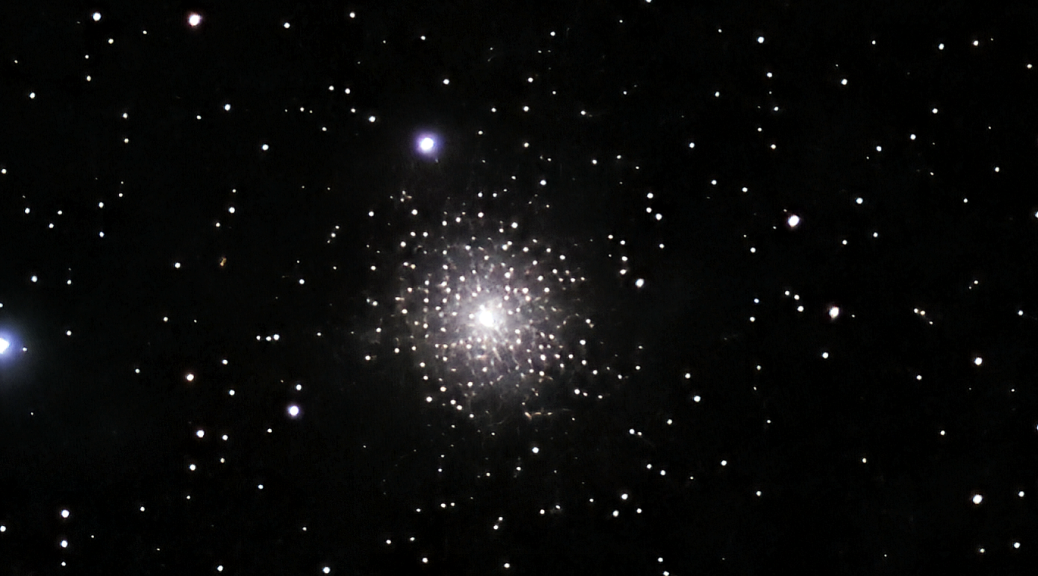
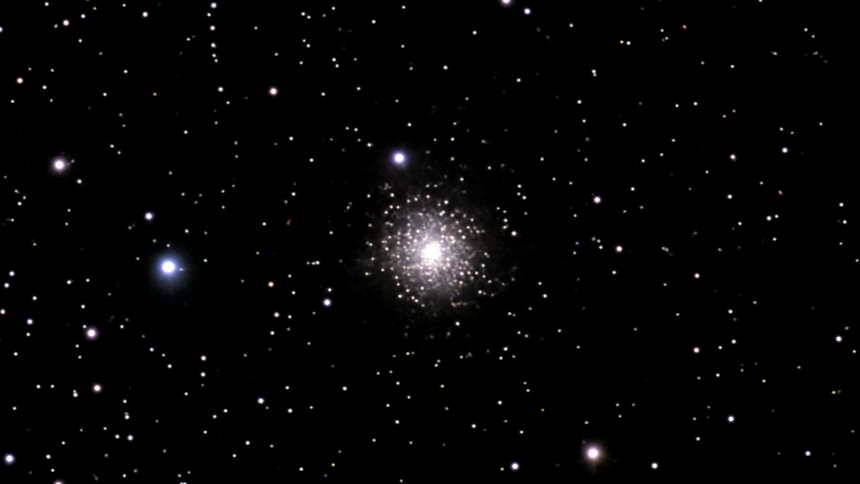
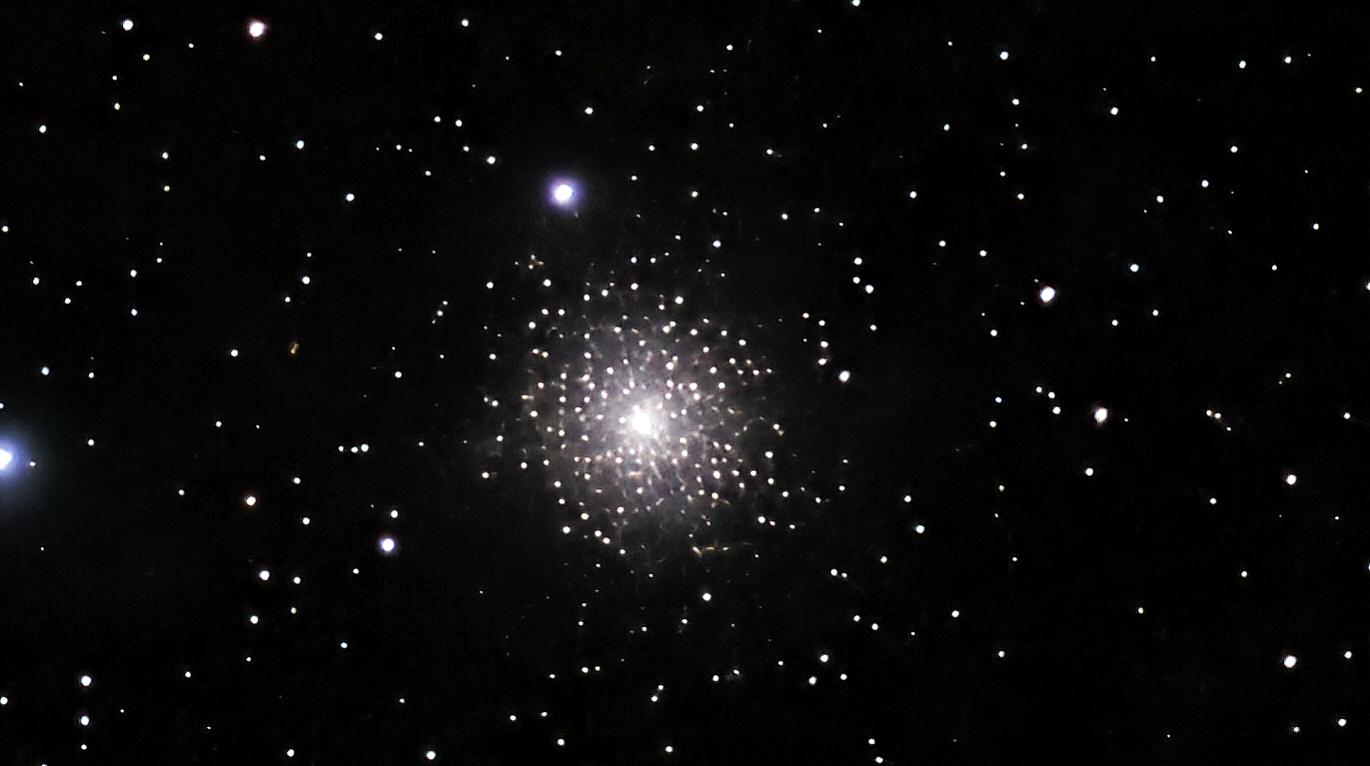
The sequence of images from this session tells a remarkable story. The wide-angle frame reveals M15’s place within the rich star fields of Pegasus. Zooming closer transforms the faint glow into a densely packed sphere of stars. At higher magnification, the cluster’s brilliant core emerges, exposing an ancient stellar city that has survived for nearly the age of the Universe itself.
Meet M15: One of the Milky Way’s Oldest Stellar Communities
Messier 15, also known as NGC 7078, is a globular cluster located in the constellation Pegasus. It lies approximately 33,600 light-years from Earth and shines with an apparent magnitude of 6.2, making it visible through binoculars under dark skies.
Astronomers estimate the cluster to be around 12 billion years old, placing it among the oldest known globular clusters in our galaxy. Unlike open clusters, which contain relatively young stars and gradually disperse over time, globular clusters are massive spherical systems containing ancient stars tightly bound by gravity.
M15 is not an active star-forming region. The gas and dust required for new stellar birth disappeared billions of years ago. Instead, the cluster acts as a living fossil, preserving some of the earliest generations of stars formed in the Milky Way.
🌟 Cosmic Perspective
The Sun, Earth, Moon and planets would not appear until roughly 7.5 billion years later.
By the time our Solar System was born about 4.6 billion years ago, M15 had already spent billions of years orbiting the Milky Way.
M15 was ancient before the Sun was born.
That perspective transforms M15 from a simple astronomical target into something much more profound. Every star in the cluster belongs to a system that was already old when the cloud of gas and dust that eventually became our Sun began to collapse.
Finding M15 in Pegasus
One of the most rewarding aspects of observing M15 is witnessing its transformation as magnification increases.
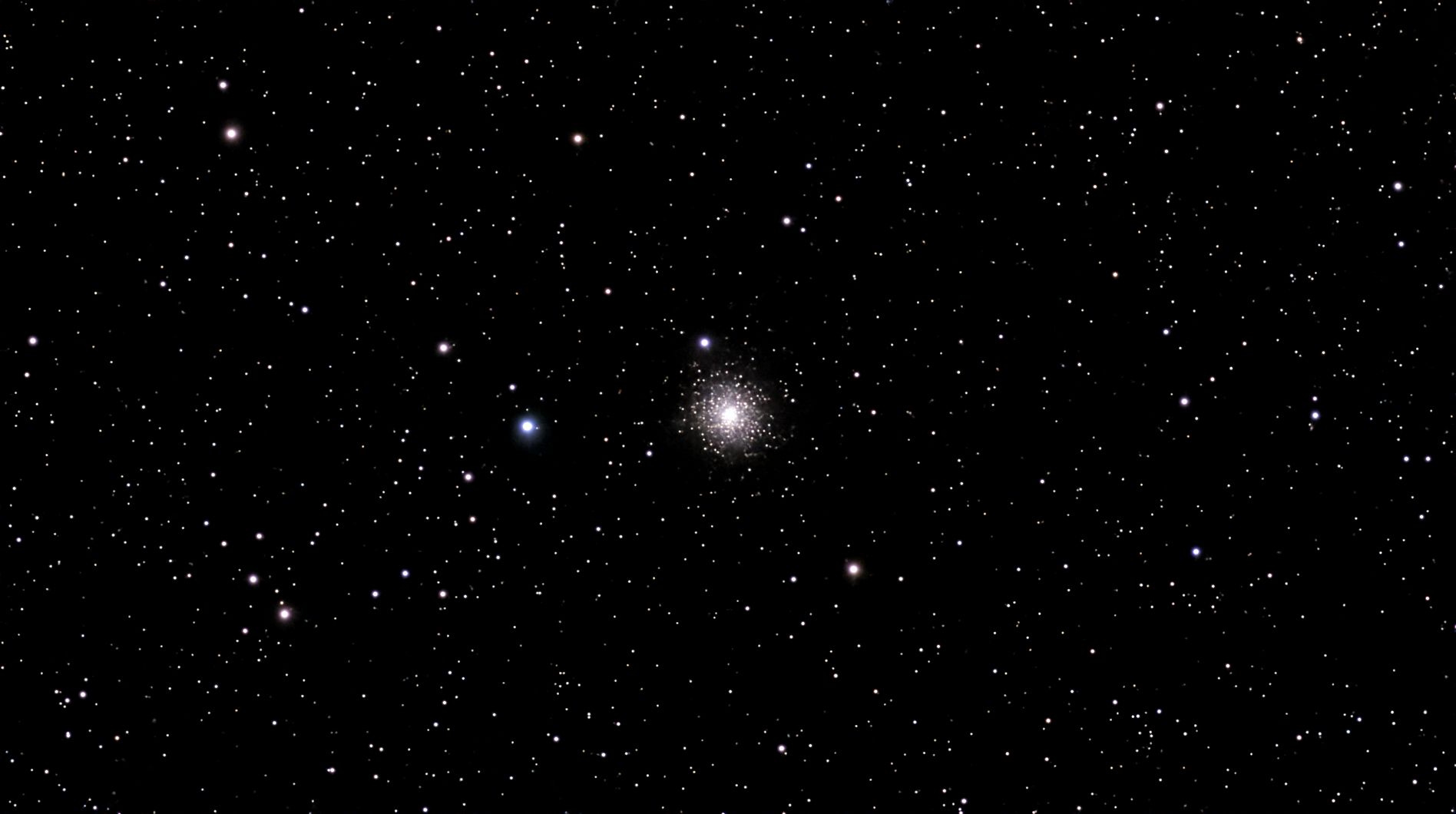
In the wide-field image, the cluster appears as a subtle circular glow among hundreds of surrounding stars. It does not immediately draw attention to itself. However, as the view narrows, individual stars begin to emerge around the cluster’s outskirts.
The final close-up reveals the true nature of M15: a densely populated sphere where thousands of stars are compressed into a relatively small volume of space. What first appeared as a faint smudge is revealed to be a vast stellar metropolis.
A Cosmic Hive of Ancient Suns
M15 is among the most remarkable globular clusters in the Milky Way.
Containing more than 100,000 stars, it packs an extraordinary amount of mass into a region approximately 175 light-years across. Near the centre, stars crowd together in one of the densest stellar environments known in our galaxy.
Astronomers classify M15 as a core-collapsed globular cluster. Over billions of years, gravitational interactions gradually drew stars inward, producing the intensely concentrated core visible in modern images.
The cluster is also famous for hosting:
- A candidate intermediate-mass black hole near its centre.
- More than 100 known variable stars.
- Several pulsars and exotic stellar remnants.
- Pease 1, the first planetary nebula ever discovered within a globular cluster.
Quick Facts
| Designation | M15 / NGC 7078 |
| Object Type | Globular Cluster |
| Constellation | Pegasus |
| Distance | ~33,600 light-years |
| Age | ~12 billion years |
| Apparent Magnitude | 6.2 |
| Diameter | ~175 light-years |
| Estimated Stars | 100,000+ |
| Special Feature | Possible Intermediate-Mass Black Hole |
Observation Session Details
| Target | Messier 15 (M15) |
| Catalogue Name | NGC 7078 |
| Object Type | Globular Cluster |
| Constellation | Pegasus |
| Location | Bengaluru, India |
| Date | 20 October 2026 |
| Time | 21:47 IST |
| Telescope | DWARF Mini |
| Exposure Length | 30 seconds |
| Frames Captured | 60 |
| Total Integration | 56 minutes |
| Imaging Mode | Astro Mode |
Reflections Under an Ancient Sky
Most deep-sky objects inspire wonder because of their immense distance.
M15 inspires wonder because of its immense age.
When we observe a galaxy such as NGC 925, we naturally think in terms of light-years and cosmic scale. When we observe M15, we begin thinking in terms of billions of years.
The photons captured during this session travelled more than 33,000 years before reaching Earth. Yet the stars that emitted those photons were already ancient by then.
M15 is not merely a cluster. It is a surviving elder of the Milky Way.
As I captured M15 from Bengaluru, the incoming light carried a story that began long before the Earth existed and long before the Sun ignited. Observing this remarkable cluster feels less like looking across space and more like looking back into a forgotten chapter of our galaxy’s history.
What begins as a faint fuzzy patch in Pegasus ultimately reveals itself as a cosmic great-grandfather: a densely packed city of stars that has endured for nearly 12 billion years and continues to shine as one of the Milky Way’s oldest surviving treasures.