Sri’s Blessings
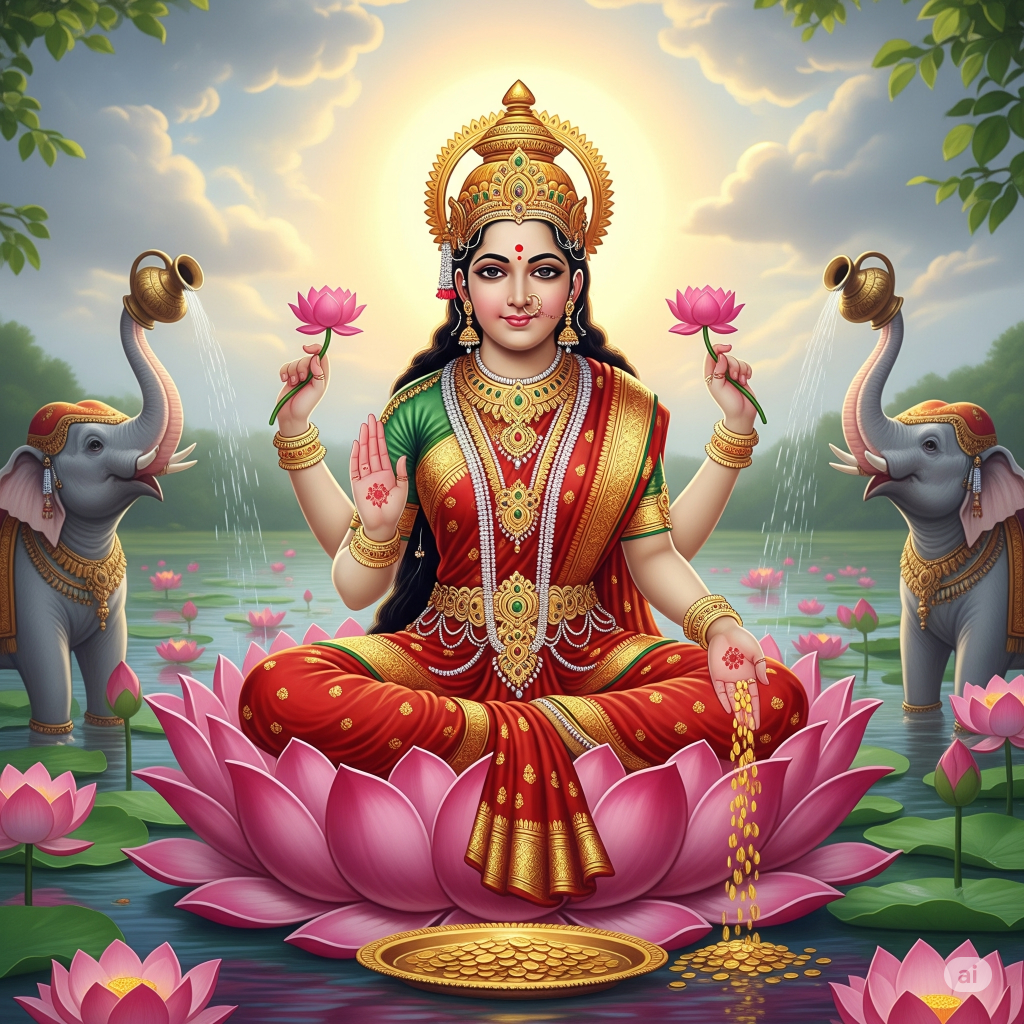
Welcome to another edition of “Friday’s Fountain of Wisdom,” where we delve into timeless spiritual texts to find inspiration and guidance for our modern lives. This week, we are exceptionally delighted to explore the profound beauty and philosophical depth of Sri Stuti, a magnificent hymn composed by the illustrious philosopher-saint, Vedanta Desika.
Vedanta Desika was a remarkable 13th-century spiritual master in the Sri Vaishnava tradition. Known by the title “Kavi-Tarkika-Simha,” or “Lion among poets and logicians,” he was a brilliant polymath—a master of many different fields of study—who authored over a hundred works in Sanskrit, Tamil, and other languages. His most significant contribution was his ability to systematize and popularize the Vishishtadvaita philosophy of Ramanuja. He masterfully blended rigorous logic and profound devotion, creating works that not only clarified complex spiritual truths but also inspired sincere devotion, securing his place as a pivotal figure in Indian philosophy and spiritual thought.
Join us as we uncover the wisdom embedded in selected verses from this sacred text, perfect for reflection and transformation this weekend.
The Composition of Śrī Stuti
The Śrī Stuti is a concise yet profound hymn composed of 25 verses, crafted to serve as a complete prayer to Goddess Śrī (Lakṣmī). It guides the devotee through a spiritual journey, beginning with verses that praise her general auspiciousness and divine attributes, moving through her compassionate nature and her role as the bestower of all prosperity, and concluding with heartfelt pleas for grace and a reflection on her ultimate power. The hymn beautifully balances cosmic grandeur, devotional intimacy, and practical guidance for a life of auspiciousness, making it relevant for both spiritual practice and daily reflection.
For this post, we have selected four verses that exemplify this spiritual flow and convey a focused message: they illuminate Śrī’s ability to grant both ultimate spiritual and material blessings, her role as the universal mother and protector, and the way she bestows contentment—the highest form of spiritual wealth—to her devotees. These verses beautifully capture Vedānta Deśika’s intent, connecting the pursuit of divine grace to a life of holistic fulfillment. They highlight the inseparable link between devotion, grace, and the cultivation of inner and outer prosperity, showing how the pursuit of Śrī’s blessings naturally leads to a balanced and auspicious life.
Thematic Summary of Śrī Stutiḥ (25 Verses)
The Śrī Stutiḥ hymn beautifully glorifies Goddess Lakshmi in 25 verses. For ease of understanding, the hymn can be grouped thematically:
1. Invocation and Surrender (Verses 1–2)
The devotee begins by invoking the divine presence of Goddess Lakshmi, acknowledging her supreme qualities and expressing a heartfelt surrender to her will.
Key Themes: Invocation, Surrender, Divine Presence
2. Divine Attributes and Cosmic Role (Verses 3–5)
These verses describe the goddess’s transcendental nature, her omnipresence in the cosmos, and her role in creation, sustenance, and dissolution of the universe.
Key Themes: Omnipresence, Cosmic Role, Divine Attributes
3. The Goddess as the Ultimate Refuge (Verses 6–10)
The hymn emphasizes that Goddess Lakshmi is the ultimate refuge for all beings. Worshiping her surpasses all other forms of devotion.
Key Themes: Refuge, Supreme Deity, Devotion
4. Manifestation and Grace (Verses 11–15)
These verses highlight her multiple manifestations and boundless grace, which bestows auspiciousness and fulfills the desires of devotees.
Key Themes: Manifestation, Grace, Fulfillment of Desires
5. Conclusion and Benediction (Verses 16–25)
The hymn concludes with a benediction, invoking her blessings of prosperity, wisdom, and spiritual liberation for all beings, reaffirming her as the ultimate source of auspiciousness.
Key Themes: Benediction, Prosperity, Spiritual Liberation
Śrī Stutiḥ – Selected Verses
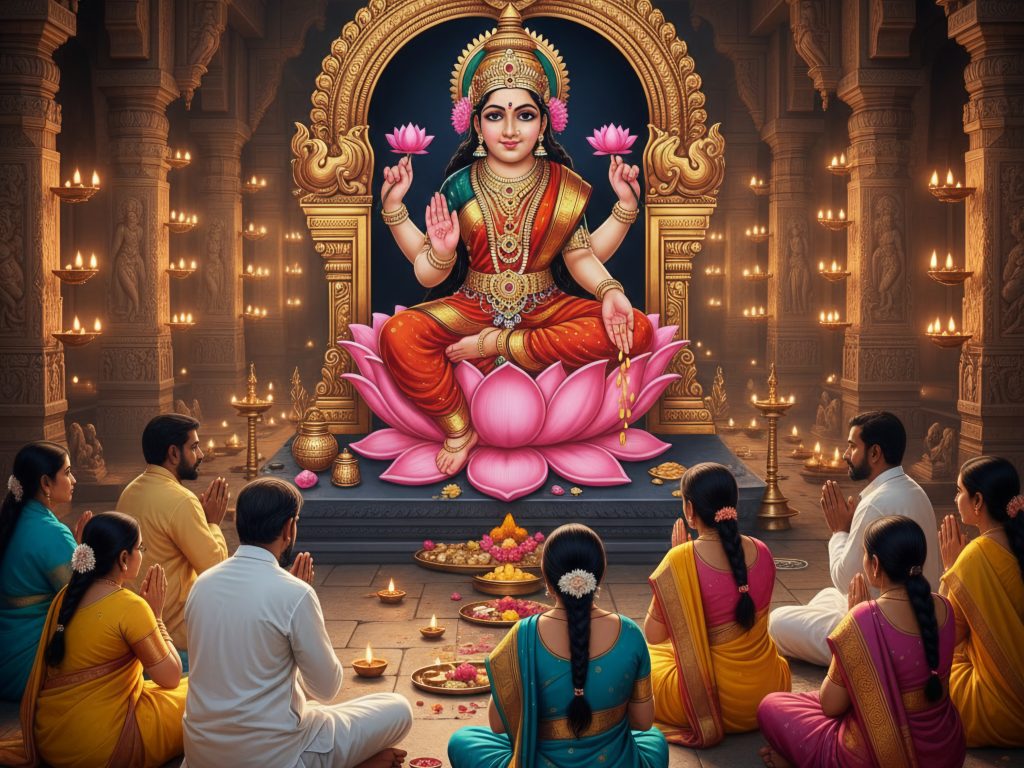
The verses selected for this post offer a profound journey into the spiritual and philosophical core of the Sri Stuti. The hymn begins with a foundational invocatory verse, a heartfelt salutation to the master, Vedānta Deśika, seeking his guidance to unlock the hymn’s wisdom.
The subsequent verses unfold to guide us on a path of understanding and devotion. They first establish Goddess Lakshmi as the ultimate refuge and the embodiment of all auspiciousness. They then expand our perspective, illustrating her vast, all-encompassing nature that resides in the cosmos and beyond, a greatness that surpasses human comprehension. Finally, the verses culminate in a powerful message: the purest and most fulfilling spiritual path is one of surrender and devotion to her divine feet. They show us that serving her is the highest pursuit, a path where every noble desire is fulfilled and the ultimate object of meditation is revealed.
Invocatory Verse
Sanskrit:
श्रीमाण्वेङ्कटनाथार्यः कवितार्किककेसरी।
वेदान्ताचार्यवर्यो मे सन्निधत्तां सदा हृदि॥
Transliteration:
śrīmān veṅkaṭanāthāryaḥ kavitārkikakesarī |
vedāntācāryavaryo me sannidhattāṁ sadā hr̥di ||
Translation:
“May the illustrious Vedānta Deśika, the lion among poets and the foremost of Vedānta teachers, always reside in my heart.”
Commentary: An opening salutation invoking Śrī Vedānta Deśika for guidance, wisdom, and spiritual upliftment.
Verse 1
Sanskrit:
मानातीतप्रथितविभवं मङ्गलं मङ्गलानां वक्षःपीठीं मधुविजयिनो भूषयन्तीं स्वकान्त्या प्रत्यक्षानुश्रविकमहिमाप्रार्थिनीनां प्रजानां श्रेयोमूर्तिं श्रियमशरणं त्वां शरण्यां प्रपद्ये॥
Transliteration:
mānātīta-prathita-vibhavaṁ maṅgalaṁ maṅgalānāṁ vakṣaḥ-pīṭhīṁ madhu-vijayino bhūṣayantīṁ svakāntyā pratyakṣānuśravika-mahimā-prārthinīnāṁ prajānāṁ śreyomūrtiṁ śriyaṁ aśaraṇaṁ tvāṁ śaraṇyāṁ prapadye ||
Translation:
“You are beyond all honor, the most renowned, the embodiment of all auspiciousness, and the source of all wealth. You adorn the chest of Lord Madhusudana, the beloved consort of the Goddess. I surrender to You, the refuge of all beings and the ultimate source of all that is auspicious.”
Commentary: This verse highlights Goddess Lakshmi’s divine grace, her presence with Lord Vishnu, and her role as the ultimate refuge and source of all auspiciousness.
Verse 2
Sanskrit:
आविर्भावः कलशजलधौ अध्वरे वा अपि यस्याः। स्थानं यस्याः सरसिजवनं विष्णुवक्षःस्थलं वा। भूमा यस्याः भुवनमखिलं देवी दिव्यं पदं वा। स्तोकप्रज्ञैरनवधिगुणा स्तूयसे सा कथं त्वम्॥ २॥
Transliteration:
Āvirbhāvaḥ kalaśajaladhau adhvare vā api yasyāḥ | sthānaṁ yasyāḥ sarasijavanaṁ viṣṇuvakṣaḥsthalaṁ vā | bhūmā yasyāḥ bhuvanamakhilaṁ devī divyaṁ padaṁ vā | stokaprajñairanavadhiguṇā stūyasē sā kathaṁ tvam || 2 ||
Translation:
“She who manifests in the sacrificial waters, who resides in the lotus forest or on the chest of Lord Vishnu, who encompasses the entire universe and resides in the divine abode — how can She be praised by those of limited intellect?”
Commentary: This verse emphasizes the vastness and grandeur of Goddess Lakshmi. Her presence is beyond comprehension, manifesting in sacred rituals, divine realms, and the cosmos.
Verse 3
Sanskrit:
स्तोतव्यत्वं दिशति भवती देहिभिः स्तूयमाना तामेव त्वामनितरगतिः स्तोतुमाशंसमानः । सिद्धारम्भः सकलभुवनश्लाघनीयो भवेयं सेवापेक्षा तव चरणयोः श्रेयसे कस्य न स्यात् ॥ ३॥
Transliteration:
Stotavyatvaṁ diśati bhavatī dehibhiḥ stūyamānā tāmeva tvāmanitaragatiḥ stotumāśaṁsamānaḥ | Siddhārambhaḥ sakala-bhuvana-ślāghanīyo bhaveyaṁ sevāpekṣā tava caraṇayoḥ śreyase kasya na syāt || 3 ||
Translation:
“Your very form inspires praise by embodied beings. Those eager to worship You, even from the beginning of their spiritual endeavors and throughout all the worlds, cannot find anything better than service at Your feet.”
Commentary: This verse portrays the supreme importance of devotion to Goddess Lakshmi. Worshiping her feet surpasses all other pursuits, highlighting her as the ultimate focus of reverence for all beings.
Verse 4 – Yat Sankalpa
Sanskrit:
यत्सङ्कल्पाद्भवति कमले यत्र देहिन्यमीषां जन्मस्थेमप्रलयरचना जङ्गमाजङ्गमानाम् । तत्कल्याणं किमपि यमिनामेकलक्ष्यं समाधौ पूर्णं तेजः स्फुरति भवतीपादलाक्षारसाङ्कम् ॥ ४॥
Transliteration:
Yat saṅkalpād bhavati kamale yatra dehinyam īṣām janmasthema pralaya-racanā jaṅgama-ajaṅgamānām | Tat-kalyāṇaṁ kimapi yamina-meka-lakṣyaṁ samādhau pūrṇaṁ tejaḥ sphurati bhavatī-pāda-lākṣāra-sāṅkam || 4 ||
Translation:
“From whatever desire arises in the heart of a devotee, in that lotus where beings take birth, dwell, and dissolve, all auspiciousness manifests. The brilliance of the Goddess’s lotus feet shines fully as the ultimate goal of meditation.”
Commentary: This verse highlights the all-gracious nature of Goddess Lakshmi. Every noble desire of a devotee is fulfilled through her divine presence. She illuminates the spiritual path and embodies the ultimate object of meditation.
Closing Thoughts: Bringing Ancient Wisdom to Modern Life
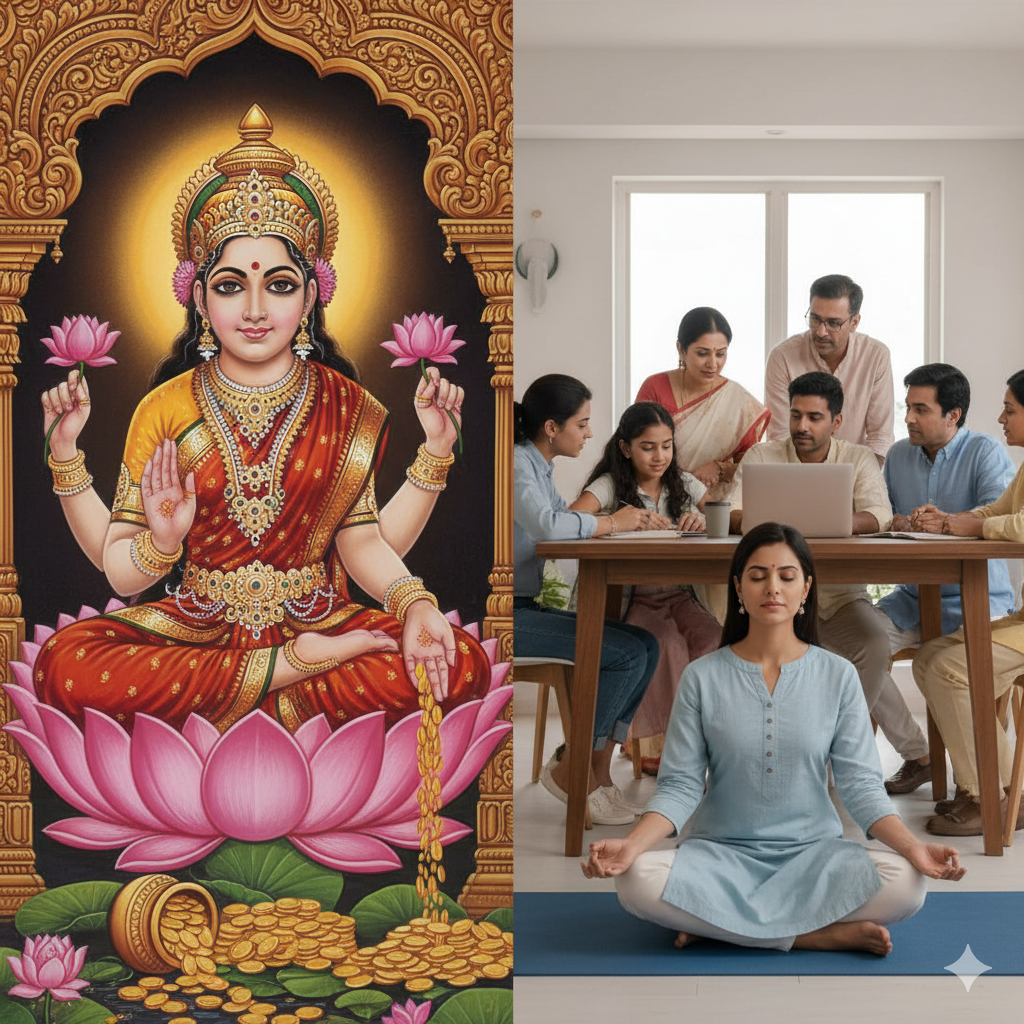
The Śrī Stuti is far more than a hymn; it is a profound spiritual guide wrapped in poetic devotion. Through its verses, Vedānta Deśika teaches us that true prosperity (Iśwarya) is not merely material accumulation but a holistic state of being, encompassing spiritual, mental, and emotional well-being. The hymn emphasizes that devotion, surrender, and service to Goddess Śrī cultivate both inner fulfillment and auspiciousness in life.
The core message for our modern lives is this: the greatest wealth we can seek is inner contentment (Tuṣṭi), a mind free from fear (Abhaya), and a heart aligned with divine grace. By cultivating a mindset of gratitude and reverence for the divine (as seen in verses 1–2), recognizing the goddess’s cosmic presence and her power to protect all beings (verses 2–3), surrendering to her guidance (verse 3), and focusing on spiritual fulfillment over mere material desire (verse 4), we invite the all-encompassing blessings of the divine into our lives.
This ancient wisdom reminds us that the path to a truly prosperous life lies not in endless acquisition, but in devotion, surrender, and alignment with the ultimate source of grace. By internalizing these teachings, we can cultivate peace, fulfillment, and holistic prosperity, integrating the timeless guidance of Vedānta Deśika into the rhythms of modern living.
References
- Vedanta Desika. “Sri Stuti.” Stotra Nidhi. Retrieved from: https://stotranidhi.com/en/sri-stuti-in-english/
- Sanskrit text https://sanskritdocuments.org/doc_devii/shriistuti.html
Samastah Lokah Sukhino Bhavanthu
May all the beings in all the worlds be happy!

Jai Sai Ram!
Please note all the images and content are generated using AI Tools