Auspicious Gaze
Introduction
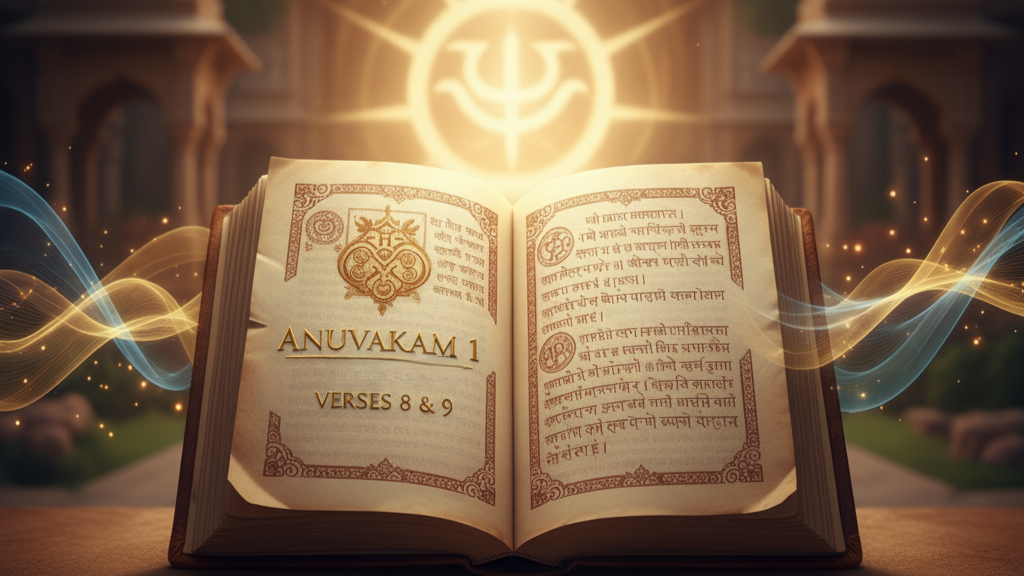
In our continuing journey through the Sri Rudram Namakam, we now enter deeper into the first Anuvaka with two mantras that beautifully expand the vision of Rudra. If last week’s verses reminded us of Rudra’s cosmic majesty and nearness, these two mantras reveal him in more vivid, personal, and inclusive terms.
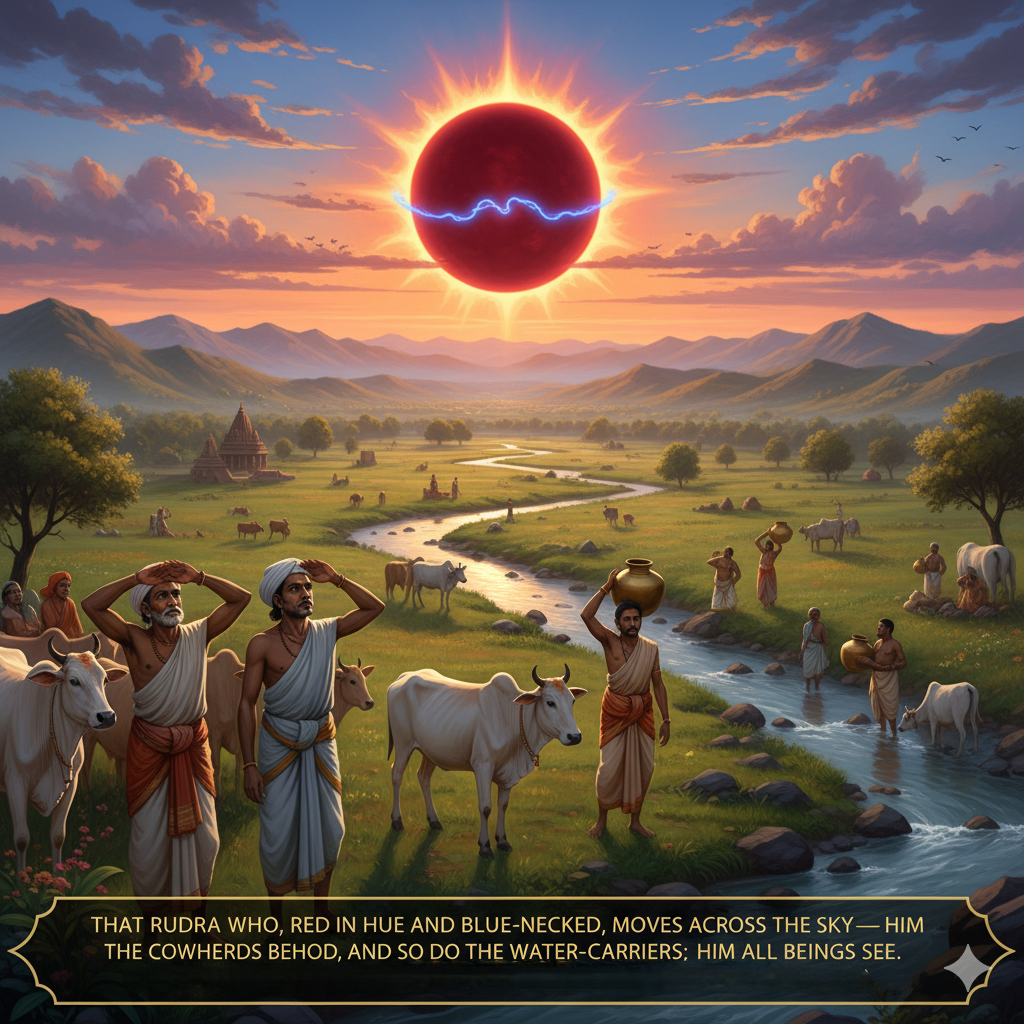
The first mantra (verse 8) presents Rudra as the blazing Sun — seen by cowherds, water-carriers, and indeed all beings. Here the sacred is not hidden away in esoteric rituals; it is woven into the fabric of daily life, shining above us every day.
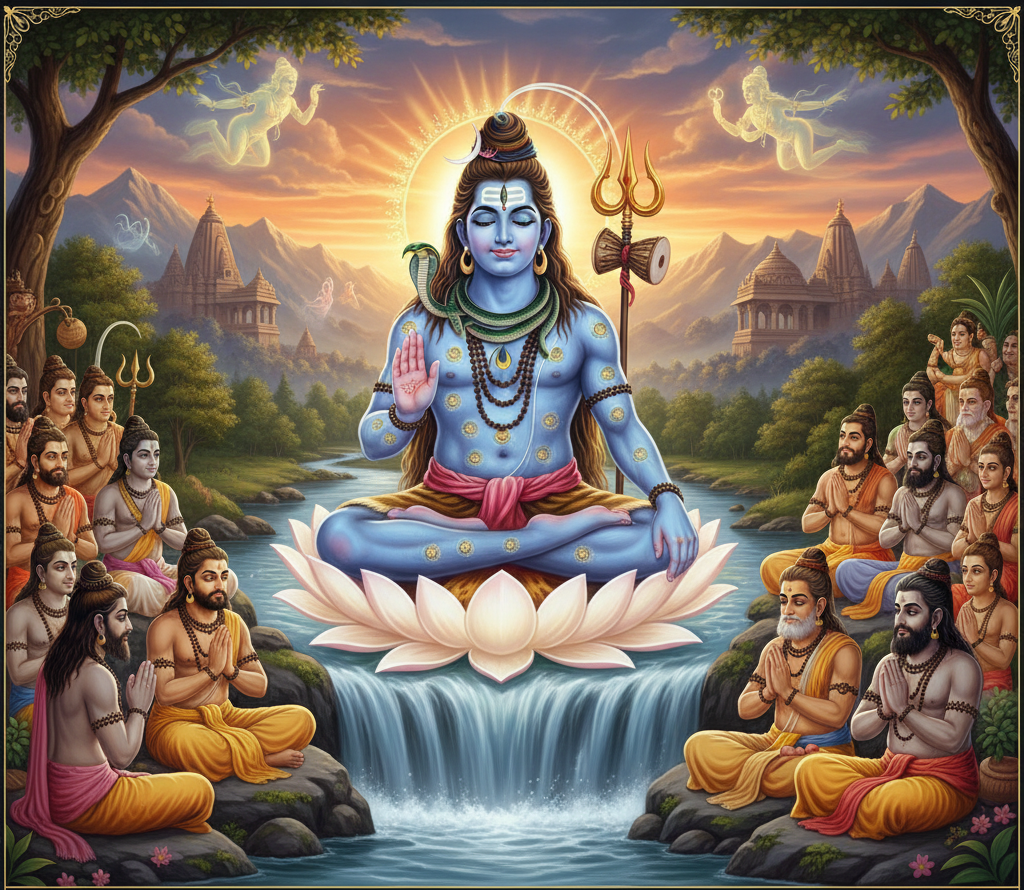
The second mantra (verse 9) broadens this vision even further. Rudra is praised as the blue-necked lord surrounded by his countless hosts, forces, and manifestations. This hymn acknowledges the fierce, the manifold, and the awe-inspiring dimensions of the divine, teaching us to bow not only to the serene but also to the wild and untamed.
Together, these verses invite us into a richer awareness of divinity: one that is cosmic yet intimate, universal yet deeply present in every aspect of creation.
Verse 1: Asau yo vasarpati (Namakam, 1st Anuvakam, verse 8)
Sanskrit
असौ योऽवसर्पति नीलग्रीवो विलोहितः ।
उतैनं गोपा अदृशन्नदृशन्नुदहार्यः ।
उतैनं विश्वा भूतानि स दृष्टो मृडयाति नः ॥
Transliteration
asau yo’vasarpati nīlagrīvo vilohitaḥ ।
utainaṃ gopā adṛśannadṛśannudahāryaḥ ।
utainaṃ viśvā bhūtāni sa dṛṣṭo mṛḍayāti naḥ ॥
Translation
“That Rudra who, red in hue and blue-necked, moves across the sky—
Him the cowherds behold, and so do the water-carriers;
Him all beings see. May that vision of him be auspicious to us.”
(Translation source: Vignanam.org)
Commentary
This mantra paints a striking image of Rudra as the fiery Sun traversing the heavens—nīlagrīvaḥ (blue-necked) and vilohitaḥ (red-hued). His presence is not distant or abstract: utainaṃ gopā adṛśan — even the humble cowherds see him daily in the open fields. Adṛśannudahāryaḥ — so too the water-carriers, those engaged in life’s simplest labors, lift their gaze to him.
The hymn here emphasizes an important Vedic truth: the divine is not reserved for sages or priests alone. Rudra, blazing in the sky, is visible to all — to villagers, laborers, and indeed to all beings (viśvā bhūtāni). The democratization of the sacred is clear: the same Sun that sustains life is the radiant Rudra, and his vision (sa dṛṣṭaḥ) is a blessing that grants auspiciousness (mṛḍayāti naḥ).
Philosophically, the verse bridges the transcendent and the immanent. Rudra is the cosmic force moving across the heavens, yet he is also the accessible deity encountered in the most ordinary rhythms of human life. In this way, the verse invites us to recognize divinity not only in rare moments of mystical insight but also in the everyday experience of seeing the Sun.
Verse 2: Namo astu nīligrīvāya (Namakam, 1st Anuvakam, verse 9)
Sanskrit
नमो अस्तु नीलग्रीवाय सहस्राक्षाय मीढुषे ।
अथो ये अस्य सत्त्वानोऽहं तेभ्योऽकरं नमः ॥
Transliteration
namo astu nīligrīvāya sahasrākṣāya mīḍhuṣe ।
atho ye asya sattvāno’ham tebhyo’karaṃ namaḥ ॥
Translation
“Salutations be to the blue-necked, thousand-eyed, ever-bountiful Rudra.
And to his myriad attendants, his forces and beings — to them too I offer my reverent salutations.”
(Translation source: Vignanam.org)
Commentary
This mantra shifts the focus from Rudra as the cosmic Sun to Rudra as the mighty Lord surrounded by his hosts. He is nīligrīva — the blue-necked one, recalling the mythic image of Rudra consuming the poison during the cosmic churning. He is sahasrākṣa — thousand-eyed, the all-seeing, who beholds all directions and realms. He is mīḍhuṣe — ever-generous, showering blessings.
Yet the mantra does not stop with Rudra alone. It explicitly includes his sattvānāḥ — the beings, powers, attendants, and forces that move with him. This reflects a profound Vedic insight: the divine is not isolated, but ever-manifesting through innumerable forms. To honor Rudra is also to honor his hosts — the seen and unseen energies that sustain and govern creation.
Spiritually, this verse expands our understanding of worship. To salute Rudra is to salute the totality of life’s forces, acknowledging that every aspect of the world — from the protective to the fearsome — is suffused with divinity. It is an invitation to humility and inclusiveness, recognizing that the sacred expresses itself in countless ways beyond our limited perception.
Reflection
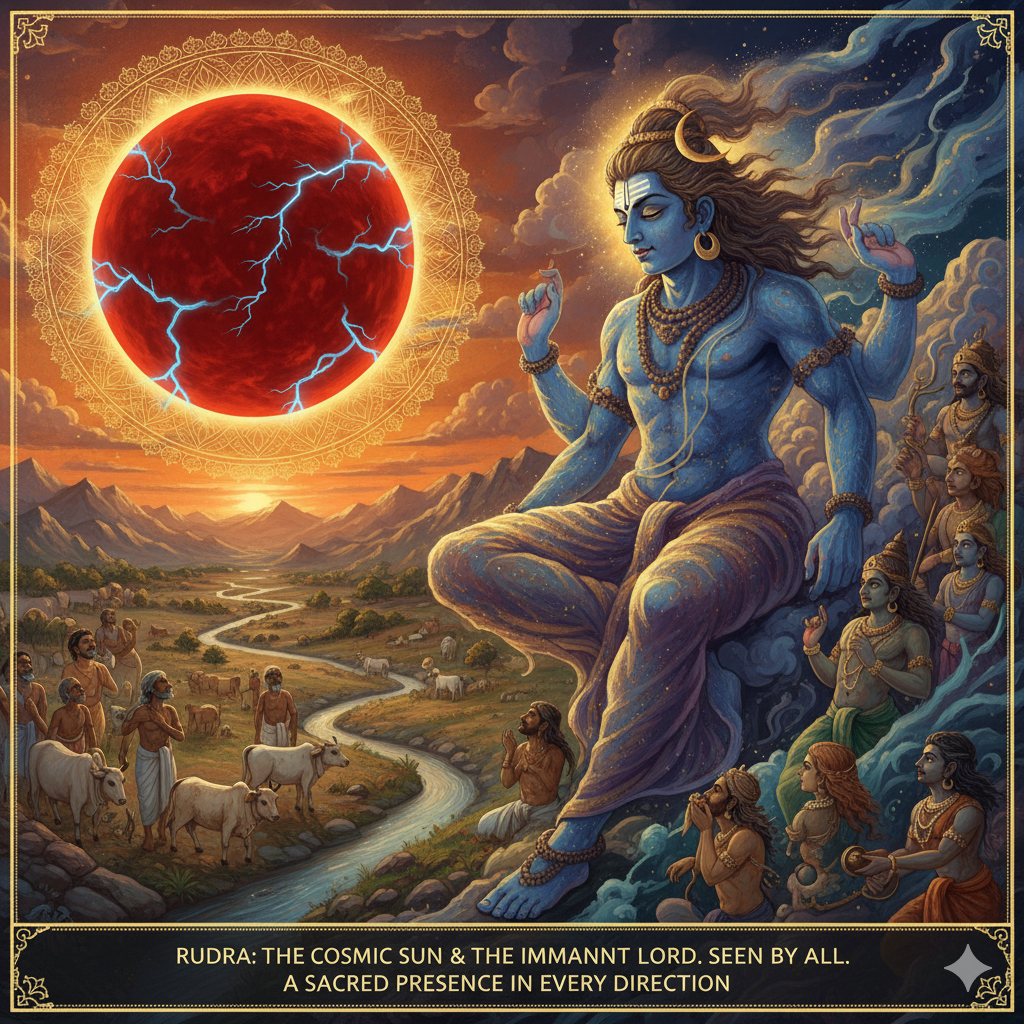
Together, these two mantras expand our vision of Rudra in complementary ways:
- In the cosmos, he is the blazing Sun (asau yo vasarpati), rising and setting before the eyes of all beings. The mantra is careful to emphasize that not only sages but even cowherds in the fields and water-carriers at the well see him. In other words, divine vision is not a privilege — it is woven into daily life, accessible to anyone who looks up and recognizes the sacred in the ordinary.
- In the world around us, he appears as the blue-necked, thousand-eyed lord surrounded by countless forces (namo astu nīligrīvāya). Here Rudra is not just a distant cosmic principle but a living presence moving among his hosts — the powers of nature, the energies of creation and destruction, the guardians and wild forces alike. By acknowledging them, the hymn teaches that nothing in creation is outside the sphere of the divine.
Together, these verses cultivate a spiritual attitude of both reverence and inclusiveness. They remind us that Rudra is to be found not only in the highest heavens but also in the humblest circumstances, not only in his serene blessings but also in his fierce and untamed forms. To walk with such awareness is to live with a sense of sacred presence in every direction we turn.
Closing Thought
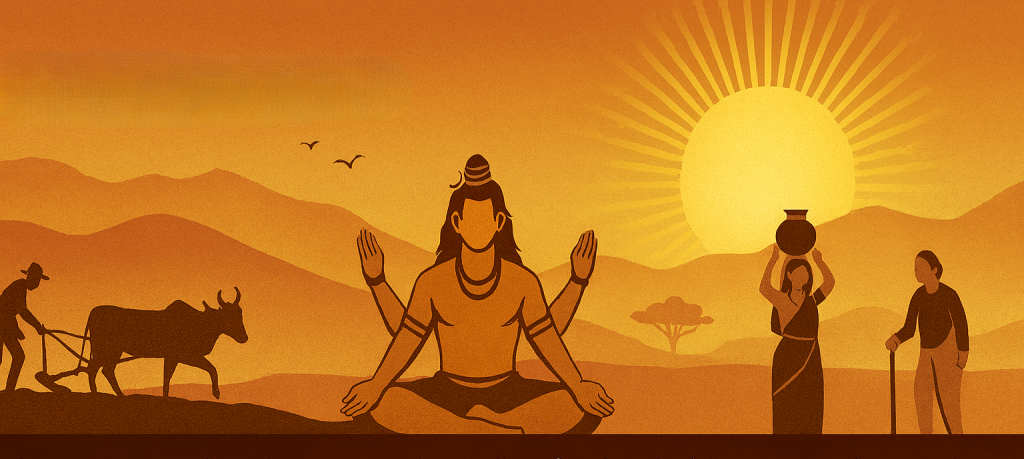
With these verses, Sri Rudram deepens our understanding of Rudra as both immanent and transcendent. The seeker learns to see divinity in the blazing Sun above, in the labors of everyday people, and in the multitude of forces that animate the world. It is a vision that does not shy away from the fierce and awesome but instead embraces it as part of the whole.
This inclusiveness is the hallmark of Vedic spirituality: the divine is not confined to temples or rituals but permeates the entire universe, from the shining heavens to the bustle of earthly life. By saluting Rudra in both his cosmic radiance and his manifold forms, the hymn prepares us to enter the next verses, where the presence of Rudra will be invoked in every direction and every element of existence.
References
Samastah Lokah Sukhino Bhavanthu
May all The Beings be Happy in All Worlds

Jai Sai Ram!
Please note all images and content created using AI Tools