The Pillars of Creation: A Personal Journey into M16
The universe speaks in whispers of light, and sometimes, those whispers travel thousands of years to reach our lens.

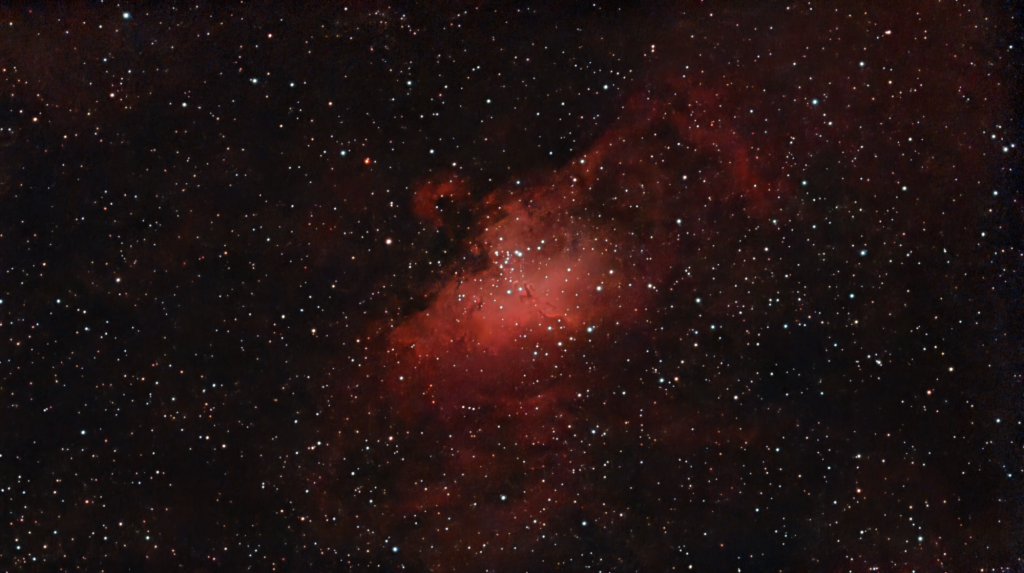
Located approximately 7,000 light-years away in the constellation Serpens, the Eagle Nebula (M16) serves as a profound reminder of the creative power hidden within our own Milky Way galaxy.
The Eagle Nebula and Its Cosmic Neighborhood
Often mentioned in the same breath by stargazers, the Eagle Nebula (M16) and the Omega Nebula (M17) are prominent features of the Sagittarius Arm of the Milky Way. While they appear as neighbors in our night sky, they are distinct, active star-forming regions.
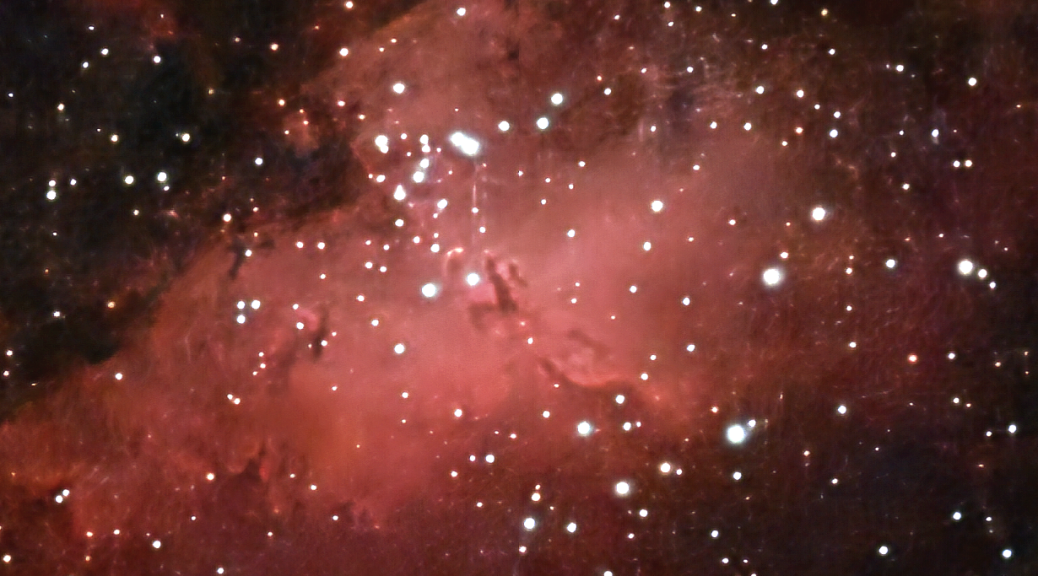
The Eagle Nebula is a massive, glowing expanse of interstellar gas and dust, illuminated by the intense radiation of a young open star cluster, NGC 6611, at its heart.
The Pillars of Creation: Sculpting the Stars
Deep within the Eagle Nebula lie the “Pillars of Creation”—a series of towering, dense columns of interstellar gas and dust. While they appear as delicate features in our imagery, they are gargantuan in scale.

Quantitative Scale: The pillars themselves are remarkably large, stretching roughly 4 to 5 light-years in height. To put that into perspective, our own Solar System (out to the orbit of Neptune) is only about 0.0006 light-years across. These pillars are essentially vast interstellar cathedrals, dwarfing the scale of our local neighborhood.

A “Small” Feature: Despite their monumental size, the pillars are actually just a small, southern feature within the much larger Eagle Nebula, which itself spans roughly 70 by 55 light-years.
Dynamic Evolution: Astronomers are particularly drawn to them because they are active “stellar nurseries.” Intense ultraviolet radiation from massive stars located just off the top of the structures is eroding the gas, a process scientists call photoevaporation. This process is carving out the “fingers” we see, revealing newborn stars hidden within.
Personal Insight: From the DWARF Mini
Capturing this detail with the DWARF Mini has been a transformative experience. With an integration time of 1 hour and 56 minutes, the DWARF Mini demonstrated its remarkable ability to peel back the veil of the night, bringing the ethereal structure of the Eagle Nebula into clear view.


This capture confirms that the wonders of the cosmos are not just the domain of massive observatories; they are accessible to anyone with the patience to watch the stars.
Further Exploration:
NASA Video- Zooming into M16
NASA Science: The Pillars of Creation – Official NASA page
ESA/Hubble: The Pillars of Creation (Visible Light) – The iconic, classic high-resolution view of the structure.