Purifying Wisdom
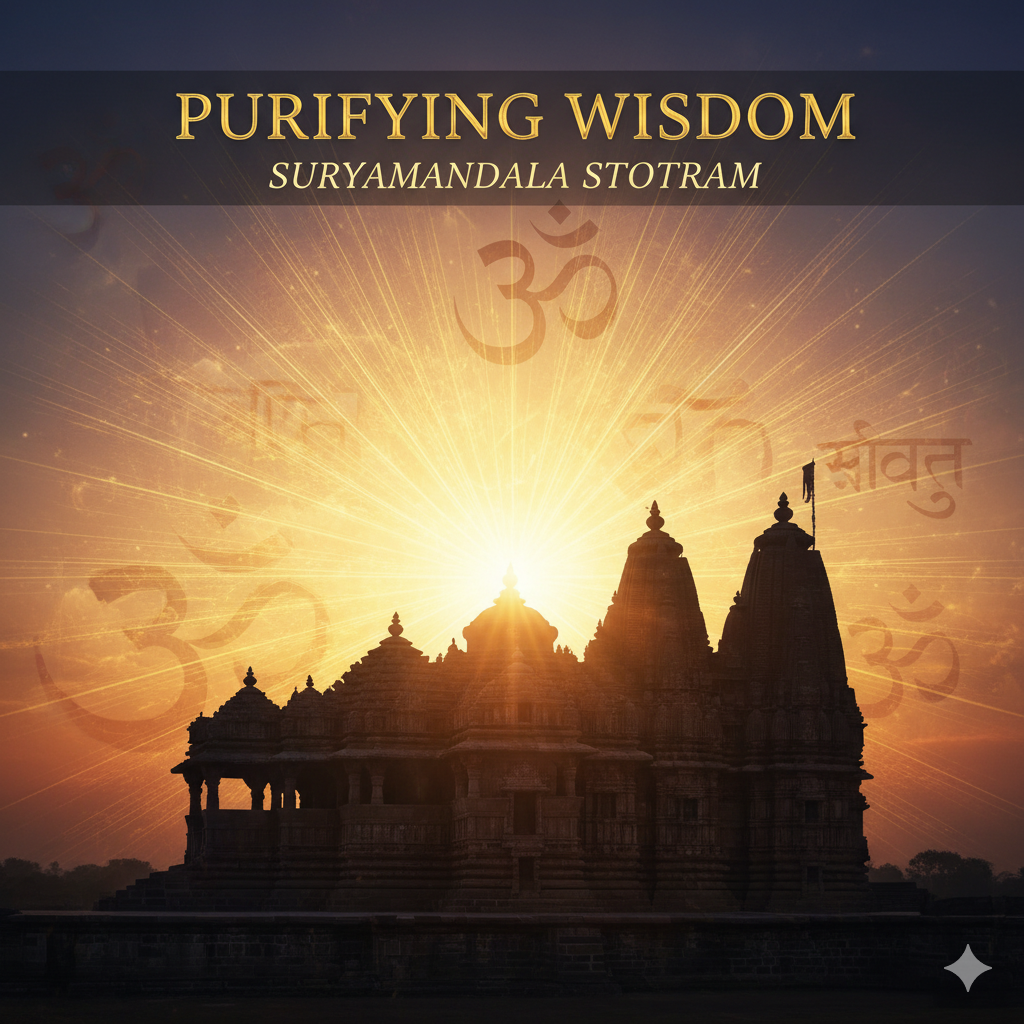
Introduction (continuing from last week)
Last week we began exploring the Sūryamaṇḍala Aṣṭakam, a hymn of eight verses that venerates the Sun (Sūrya) as the cosmic principle, the illuminator, and remover of darkness and ignorance. Verses 1 & 2 set up themes of praise, light, and benefaction: the Sun’s brilliance, purity, majesty, and the power to dispel suffering.
Context

This week we move on to verses 3 & 4, which deepen the depiction: invoking the Sun as worshipped by the gods and sages, imbued with wisdom, present in all cosmos, and embodying creation, sustenance, dissolution (the three guṇas), among other qualities. We’ll see more about its universality, its salvific power, and how it is perceived by those who seek liberation (mokṣa).
Verse 3
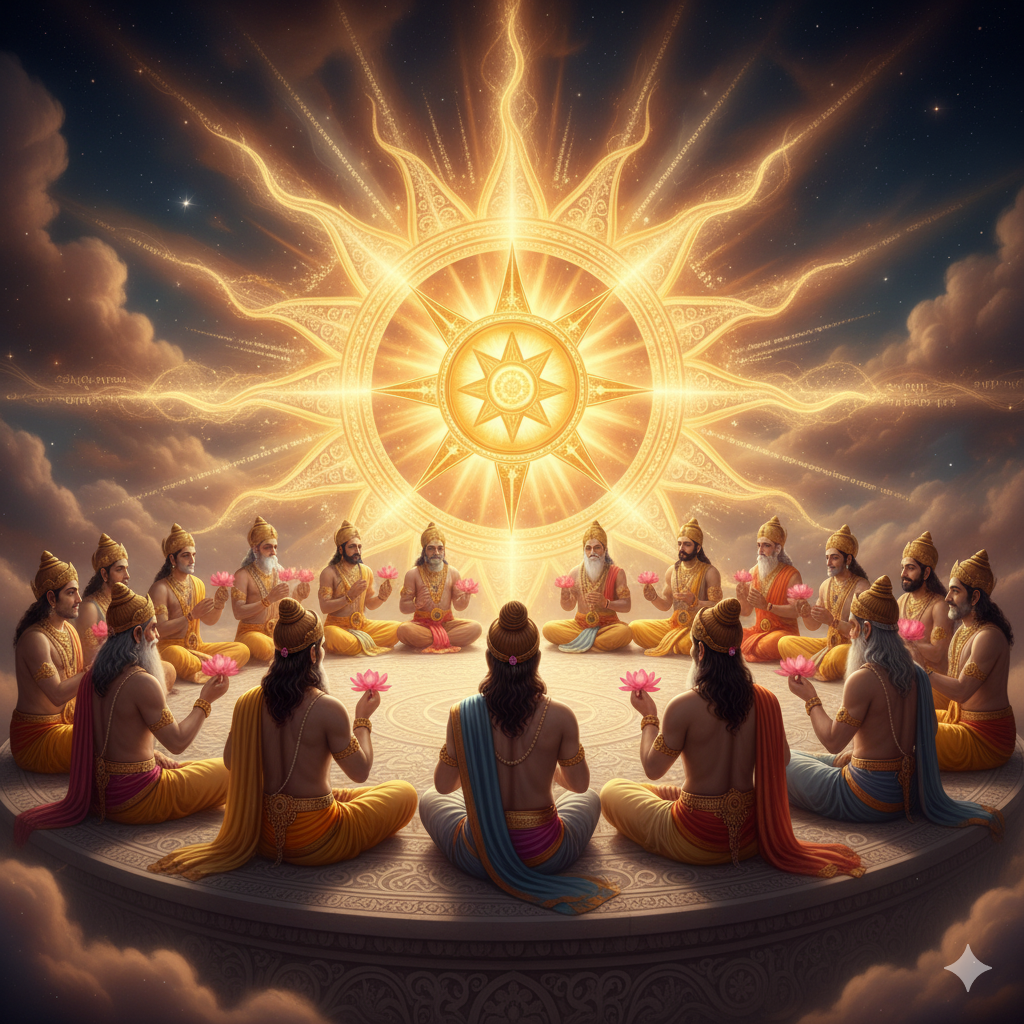
Sanskrit (Devanāgarī):
यन्मण्डलं देवगणैः सुपूजितं विप्रैः स्तुतं भावनमुक्तिकोविदम् ।
तं देवदेवं प्रणमामि सूर्यं पुनातु मां तत्सवितुर्वरेण्यं ॥3॥
Transliteration (IAST):
yanmaṇḍalaṃ devagaṇaiḥ supūjitaṃ vipraiḥ stutaṃ bhāvanamuktikovidam |
taṃ devadevaṃ praṇamāmi sūryaṃ punātu māṃ tatsaviturvareṇyam ||3||
Translation:
May that Sun, whose orb (maṇḍala) is worshipped by the hosts of gods (devagaṇas), praised by Brahmins (viprāḥ), the Knower of devotion and liberation (bhāvanamukti-kovida), be the Supreme among gods (devadeva). I bow to that Sun; may that Sun protect me — that tatsavitur vareṇyam (that Savitṛ who is worthy of adoration).
Verse 4
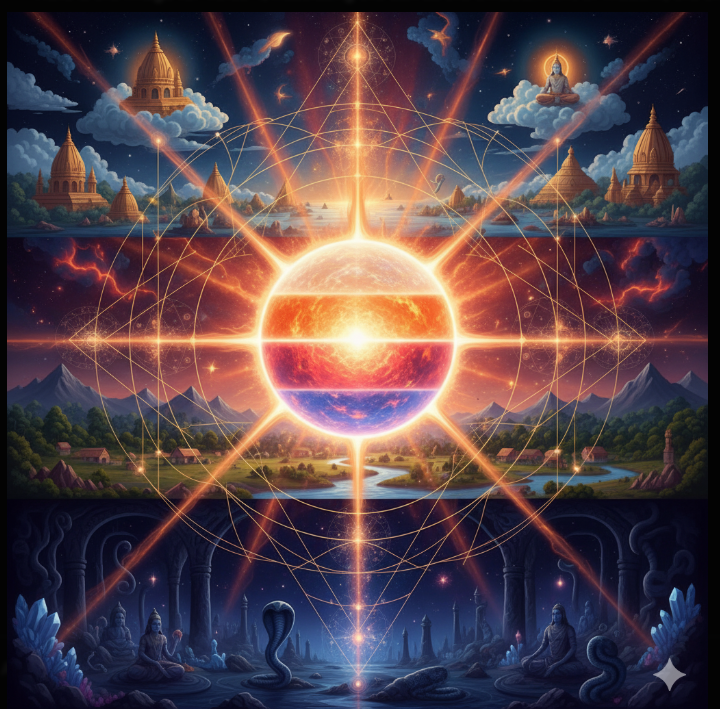
Sanskrit (Devanāgarī):
यन्मण्डलं ज्ञानघनं त्वगम्यंत्रैलोक्यपूज्यं त्रिगुणात्मरूपम् ।
समस्ततेजोमयदिव्यरूपं पुनातु मां तत्सवितुर्वरेण्यं ॥4॥
Transliteration (IAST):
yanmaṇḍalaṃ jñānaghanam tvagamyaṃ trailōkyapūjyaṃ triguṇātmarūpam |
samastatejomayadivyarūpam punātu māṃ tatsaviturvareṇyam ||4||
Translation:
May that Sun, whose orb is full of wisdom (jñānaghanaṃ), approachable (tvagamyaṃ), worshipped in the three worlds (trailōkya pūjyaṃ), of the form embodying the three guṇas (triguṇātma-rūpam), whose entire being is radiant and divine (samasta-tejomaya divya-rūpam), protect me; may that Sun — Savitṛ, worthy of adoration (tatsavitur vareṇyam) — cleanse me.
Reflections
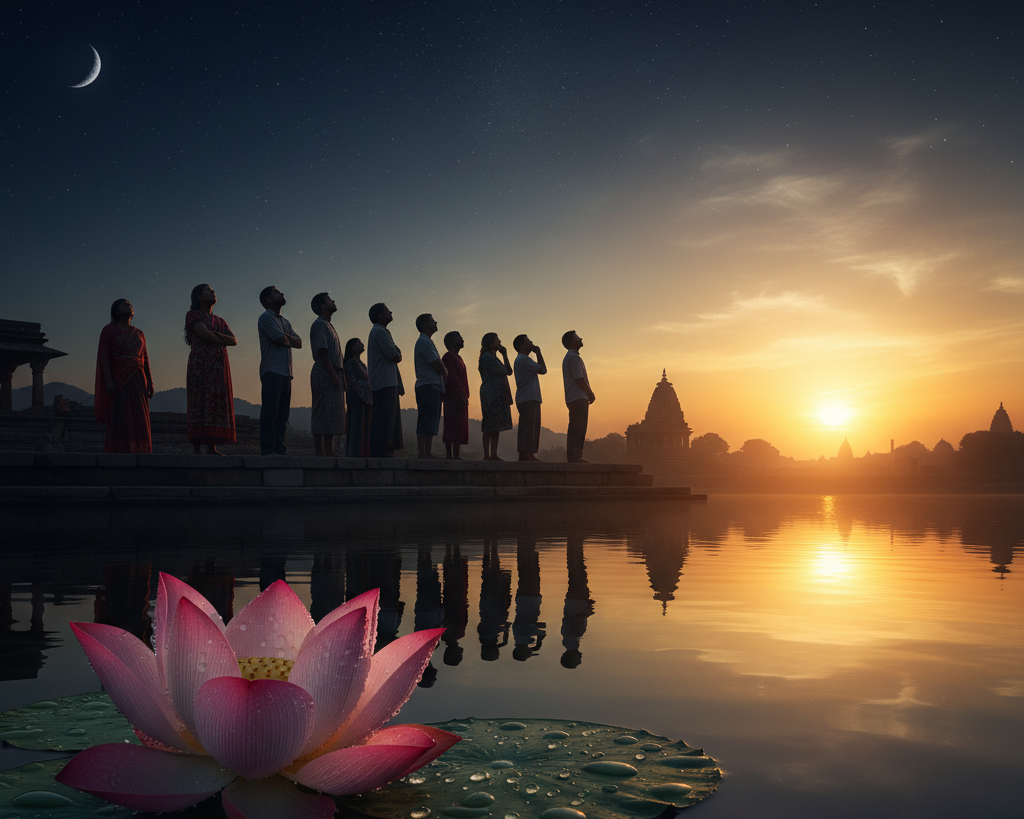
- Wisdom & Illumination: The Sun embodies not just physical brilliance but also spiritual insight — the light of knowledge.
- Universality: Gods, sages, and all beings across the three worlds worship the Sun, symbolizing a principle beyond sectarian boundaries.
- Accessibility: The Sun’s wisdom is approachable (tvagamyaṃ), reminding us that inner light is within reach.
- Purification: The refrain punātu māṃ emphasizes the Sun as purifier of ignorance and sin.
- Cosmic Principle: By encompassing the three guṇas and sustaining the three worlds, the Sun represents the very balance of creation.
Closing Thoughts

These verses invite us to see the Sun not just as the source of physical life but as the symbol of inner awakening. They call us to humility, reminding us that even the gods bow before this cosmic principle, and to hope — for the Sun’s radiance is accessible to us all as light, wisdom, and spiritual cleansing.
As we chant or contemplate these verses, we are invited to open our hearts to renewal and clarity. The light that rises each day in the sky can also rise within us, dissolving darkness and illuminating the path of liberation.
Next week, we’ll continue with verses 5 & 6, which highlight the Sun’s healing and life-sustaining powers.
References
- Surya Mandala Aṣṭakam — Devanāgarī PDF
Samastah Lokah Sukhino Bhavanthu
May All the Beings in All the Worlds Be Happy!

Jai Sai Ram!
Please note all images and content created using AI Tools