Māsa Shivaratri
Māsa Shivaratri: Remembering the Shiva Within
Each month, on the 14th night of the dark fortnight, the moon nearly disappears from the sky. In the spiritual calendar, this night—known as Māsa Shivaratri—is a sacred invitation to turn inward, to quiet the mind, and to contemplate the eternal. While Mahā Shivaratri is widely celebrated once a year, Bhagawan Sri Sathya Sai Baba reminds us that Shivaratri is not an annual event alone—it is a monthly opportunity for spiritual renewal.
“We have not only the Mahashivaratri once a year, but have a Shivaratri every month, dedicated to the worship of Shiva.” — Bhagawan Sri Sathya Sai Baba, 1969 Shivarathri Discourse
The Moon, the Mind, and the Night of Shiva
In His discourse, Bhagawan explains that the moon is the presiding deity of the mind. As the moon wanes during the dark fortnight, so too does the influence of the mind. On the 14th night, only one sixteenth of the moon remains—symbolizing the final vestige of mental distraction. This makes Māsa Shivaratri an ideal time for sādhana, when the mind is most subdued and the heart is most receptive. It is a sacred invitation to turn inward, to dissolve illusion, and to awaken to the formless Truth within. This is Māsa Shivaratri—a monthly spiritual observance that culminates on the 14th night of the dark fortnight, known as Chaturdashi, the night of Shiva.
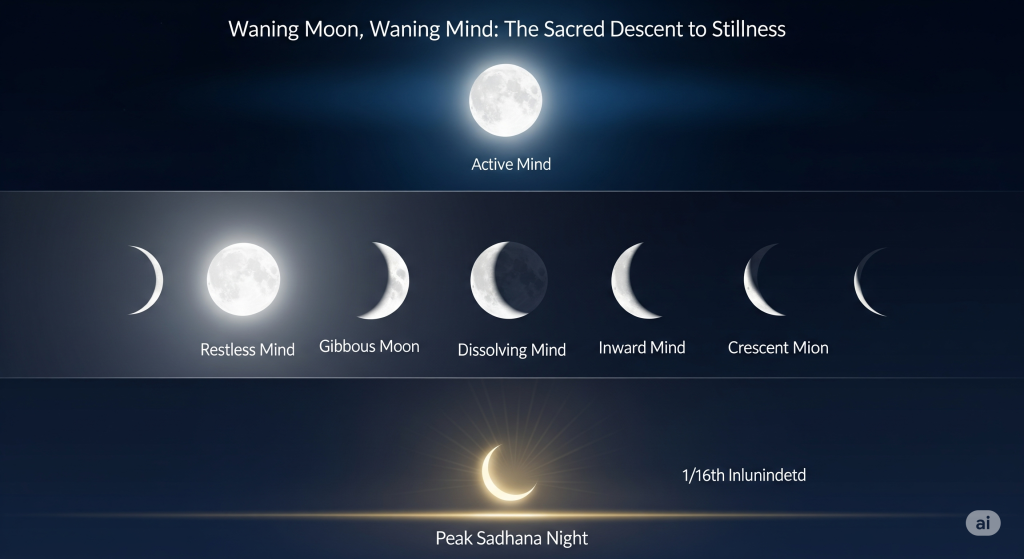
“The aim of all sadhana is to eliminate the mind. On this night, the moon which is the presiding deity of the mind has only one sixteenth of its power left.” — Bhagawan Sri Sathya Sai Baba, 1969 Shivarathri Discourse
Divine Grace Meets Human Effort
As Māsa Shivaratri invites us into inner stillness, Bhagawan reminds us that spiritual progress is not measured by grandeur, but by sincerity. Even the smallest movement toward liberation—be it a moment of silence, a whispered mantra, or a heartfelt prayer—is met with immense divine grace.
“If you make the slightest effort to move along the Path of your own liberation, the Lord will help you a hundred-fold. That is the hope that MahaShivarathri conveys to you.” — Bhagawan Sri Sathya Sai Baba, 1969 Discourse

This assurance transforms Māsa Shivaratri from a ritual into a monthly renewal of hope. It’s not about perfection—it’s about presence. The Lord does not wait for us to be ready; He responds the moment we begin.
Soham to OM: The Breath of Oneness
In the quiet hours of Māsa Shivaratri, Bhagawan invites us to visualize Shiva not as a distant deity, but as the inner power of all existence. With each breath, we unconsciously affirm Soham — “I am He.” This sacred assertion is not limited to sages or seekers; it is the natural rhythm of life itself.
“Resolve, on this Holy Shivarathri, in the Presence of Shiva Sai, to visualise the Shiva as the inner power of all. With each breath, you are even now, asserting ‘Soham,’ ‘I am He,’ not only you, but, every being that breathes, every being that lives, everything that exists.” — Bhagawan Sri Sathya Sai Baba, 1969 Discourse
Bhagawan explains that as we watch our breath and meditate on this Truth, the sense of separation between Sah (He) and Aham (I) begins to dissolve. Eventually, Soham transforms into OM — the Pranava, the primordial sound, the Swaswaruupa, or true nature of the Self.
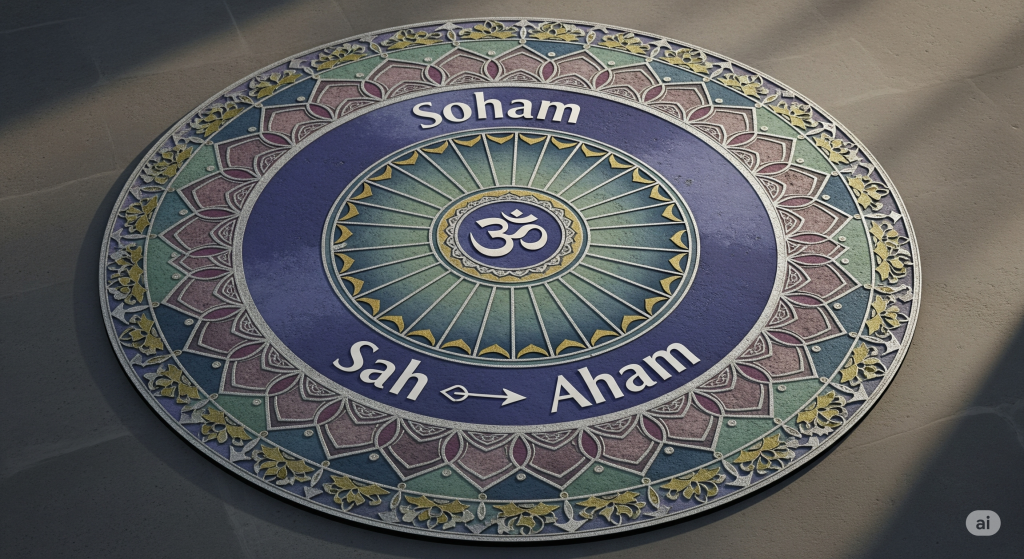
This teaching turns Māsa Shivaratri into a breath-based meditation, a monthly reminder to return to our source. It’s not about doing more—it’s about being more aware.
The Linga: Formless Form, Graceful Emergence
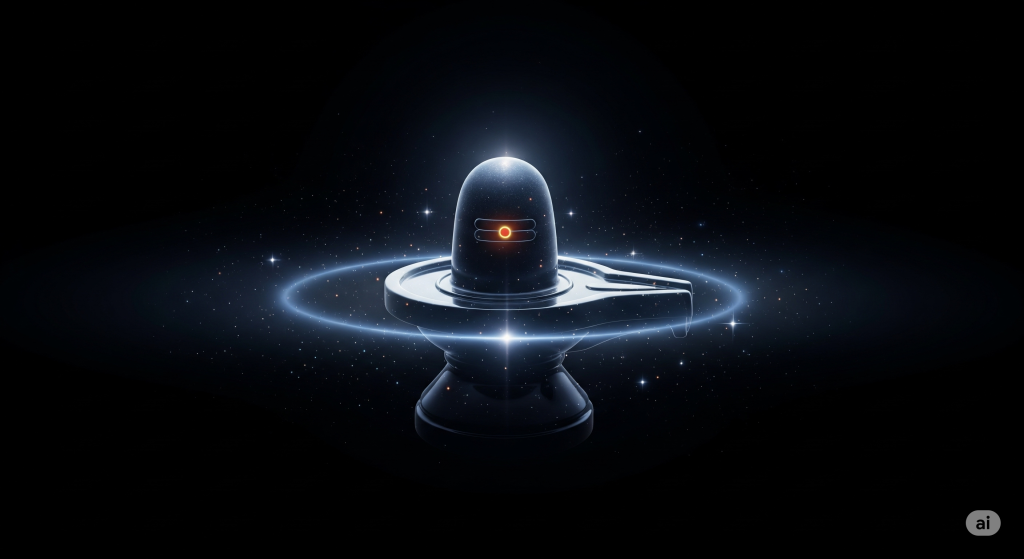
One of the most profound moments in Bhagawan’s Shivaratri discourses is the emergence of the Lingam—a sacred symbol of the formless Absolute. The Lingam is not merely an object of worship; it is a cosmic reminder of our true nature.
Bhagawan reveals that the Linga emerges not by magic, but through prayer and Grace. It is not merely a ritual object—it is a glimpse of Divinity, a sign of infinite compassion. Just as OM is the sound symbol of the Divine, the Linga is the form symbol—the most austere, meaningful, and attribute-free representation of God.
“Just as Om is the sound symbol of God, the Linga is the Form symbol or the visible symbol of God, the most meaningful, the simplest and the least endowed with the appendages of attributes.” — Bhagawan Sri Sathya Sai Baba, 1969 Shivarathri Discourse
“That which merges with the goal is Lingam — Leeyathe gamyam ithi lingam.” — Bhagawan Sri Sathya Sai Baba, 1969 Shivarathri Discourse
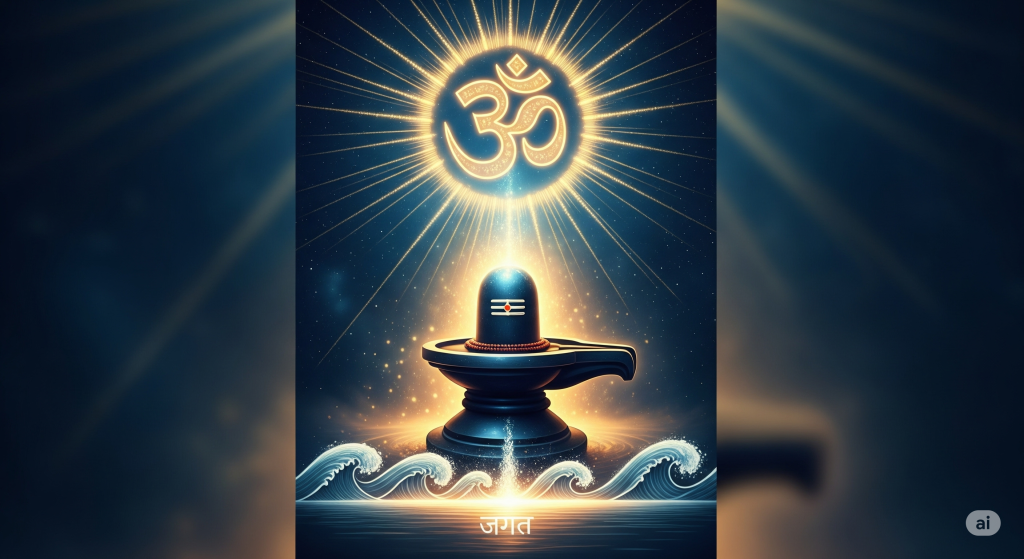
The Sanskrit etymology deepens this insight:
- Lingam: That in which the Jagat (changing world) attains Laya (mergence).
- Leeyathe: To dissolve, to merge.
Thus, the Linga is not just a symbol—it is the point of origin and return, where all forms dissolve into the formless essence.
Why the Night Matters: The Mind and the Moon
As Bhagawan explains that the Moon is the presiding deity of the mind, and just as the Moon wanes during the dark fortnight, so too must the mind be gradually dissolved through sadhana, to become A-manaska. Then only can maya (illusion) be rent asunder and the Reality revealed.
“The aim of all sadhana is to eliminate the mind.” –Bhagawan Sri Sathya Sai Baba, 1969 Shivarathri Discourse
Each night leading up to Shivaratri, a fraction of the Moon disappears—and with it, we are invited to let go of a fraction of our mental clutter. On Chaturdashi, only a sliver remains. It is the most potent time to engage in deep sadhana: puja, japam, dhyana. With vigilant effort, the mind can be quieted, and the veil of maya lifted.
In that silence, Shiva is revealed—not as a form, but as the formless Truth within.
Chidambara Rahasya: The Curtain of Maya
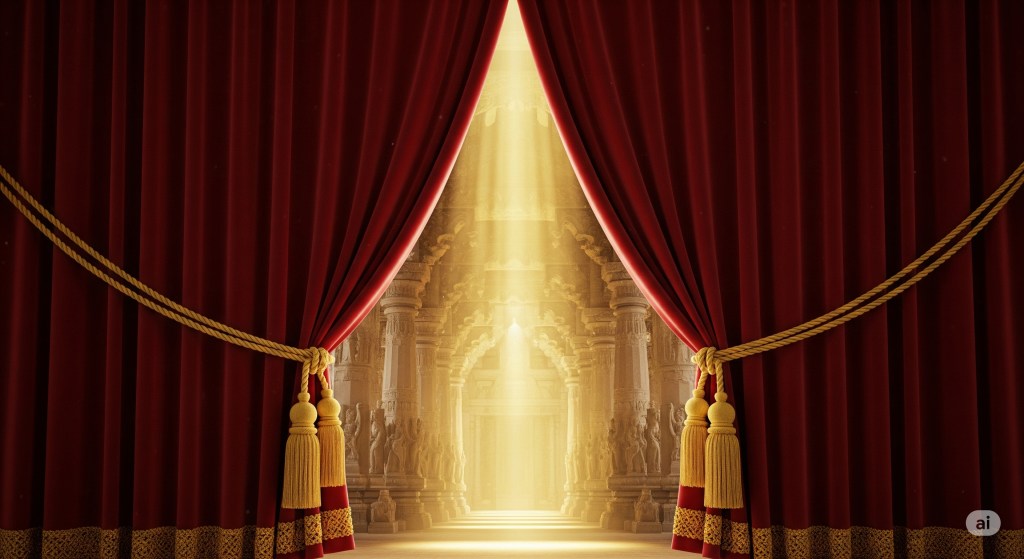
This revelation finds its perfect parallel in the sacred mystery of the Chidambaram Nataraja Temple. In its innermost sanctum, a curtain is lifted for a fleeting moment—not to reveal a deity, but emptiness. No idol, no flame—just space adorned with golden Bilva leaves. And then, the curtain falls again.
This is the Chidambara Rahasya—the secret of Chidambaram. The curtain symbolizes Maya, and its lifting represents the moment of inner revelation, when ignorance is parted and the seeker glimpses the Nishkala Shiva, the formless, attributeless Reality of Shiva.
“In Chidambaram, the curtain lifts for a moment—and we see nothing. But in that nothing, the sages saw everything. This is the Rahasya, the secret: The Divine is not hidden in form, but revealed in formlessness.”
Māsa Shivaratri is our personal Chidambaram. Each month, we are given the chance to lift the curtain of our own mind, to dissolve the ego, and to behold the emptiness that is fullness, the silence that is Truth, the Shivam that is our own Self.
Monthly Worship: A Lifestyle, Not a Ritual
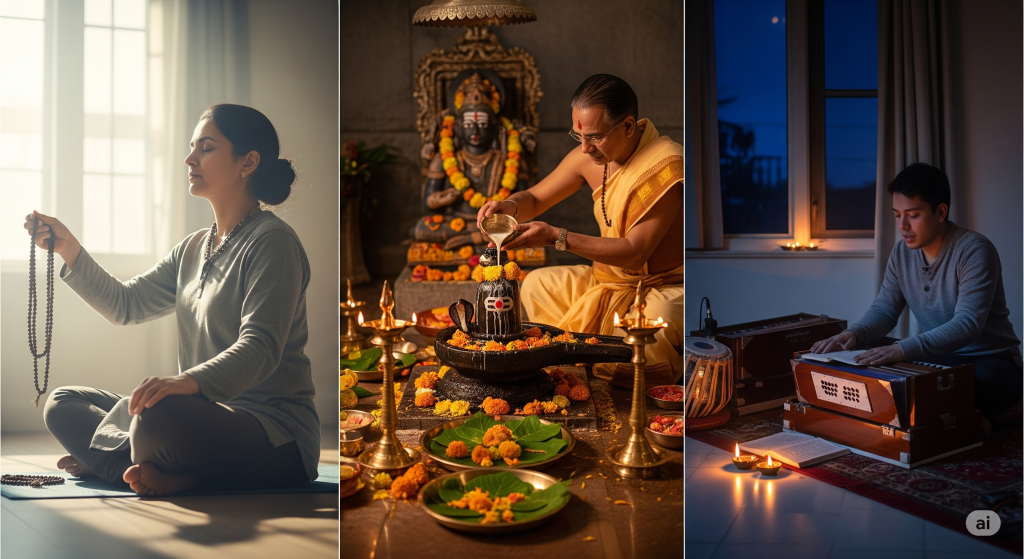
Bhagawan cautions us not to confine our devotion to one night a year. Instead, He encourages us to observe every Māsa Shivaratri with sincerity and simplicity. This can include:
- Japa of the sacred mantra Om Namah Shivaya
- Meditation on the inner light or Lingam
- Upavāsa (fasting) or mauna (silence)
- Night vigil with bhajans, scriptural reading, or quiet contemplation
“Every moment in our life can be taken to be Shivaratri. We need not wait for Shivaratri on a particular day in a year.” — Bhagawan Sri Sathya Sai Baba, 1969 Shivarathri Discourse
A Discourse to Contemplate
The 1969 Shivaratri discourse is rich with metaphors, insights, and spiritual encouragement. It reminds us that Shiva is not distant or abstract, but the very consciousness that animates all life. He is the stillness behind thought, the light behind the eyes, the silence between breaths.
Bhagawan’s words are not just teachings—they are invitations. Invitations to merge, to surrender, to awaken.
Final Reflection: The Curtain Within
On this Māsa Shivaratri, let us not seek the Divine in distant rituals or elaborate forms. Let us sit quietly, breathe gently, and lift the curtain of our own mind. Just as in Chidambaram, where the veil is drawn back to reveal sacred emptiness, we too can glimpse the formless Truth within—not through sight, but through stillness.
“Soham — I am He.” “OM — the Reality behind this relative reality.”
Each breath affirms our oneness. Each moment of silence draws us closer to the Divine Indweller. And in that sacred pause, what was once ego(illusion/ignorance) becomes Shivam (living divinity).
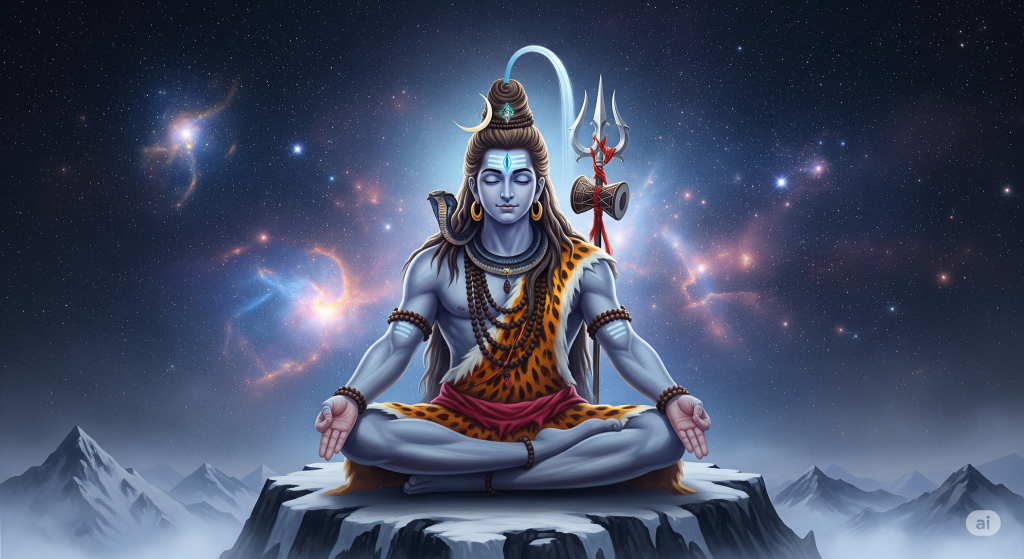
Tonight, let us dissolve the last fraction of the mind. Let us offer this layer of illusion to the fire of awareness. Let us become still enough to hear the breath of Shiva within.
Discourse Citation
Bhagawan Sri Sathya Sai Baba, Divine Discourse on Mahaashivarathri, Prasanthi Nilayam, February 1969. Available at: https://saispeaks.sathyasai.org/discourse/mahaashivarathri
Humble Pranams at the Divine Lotus Feet
Jai Sai Ram!
PS: All content and images created using AI Tools