Pancha Mukha Shiva

The Five Faces of Shiva – A Journey from Creation to Liberation
Loving Sairams…
The vision of Pañcha Mukha Shiva — the five-faced form of the Lord — is beautifully explained in the Shivopasana mantra and other Agamas. Each face is a manifestation of Lord Shiva – the Supreme Brahman, revealing – creation, preservation, dissolution, concealment, and grace.
Let us reflect on these five:
1. Sadyojāta (West – Creation)
Scriptural Reference: Creator of earth, linked with the Śṛṣṭi-śakti (power of creation).
Mantra:
सद्योजातं प्रपद्यामि सद्योजाताय वै नमो नमः।
भवे भवे नातिभवे भवस्व माम्। भवोद्भवाय नमः॥
Meaning: I surrender to Sadyojāta, the source of all creation. May I not fall into endless cycles of birth, but rise to the truth of Shiva. I surrender to Sadyojāta, the face of the West—source of creation and immediacy. May He accept my surrender. In every birth and becoming, may He guide me beyond the cycle of birth itself. He is the golden seed from which all forms arise. His gaze awakens the first breath of life, stirring the soil of existence.
2. Vāmadeva (North – Preservation & Bliss)
Scriptural Reference: Preserver of creation, embodiment of beauty, joy, and healing.
Mantra:
वामदेवाय नमो ज्येष्ठाय नमः श्रेष्ठाय नमो रुद्राय नमः कालाय नमः कलविकरणाय नमः।
बलविकरणाय नमो बलप्रमथनाय नमः सर्वभूतदमनाय नमो मनोन्मनाय नमः॥
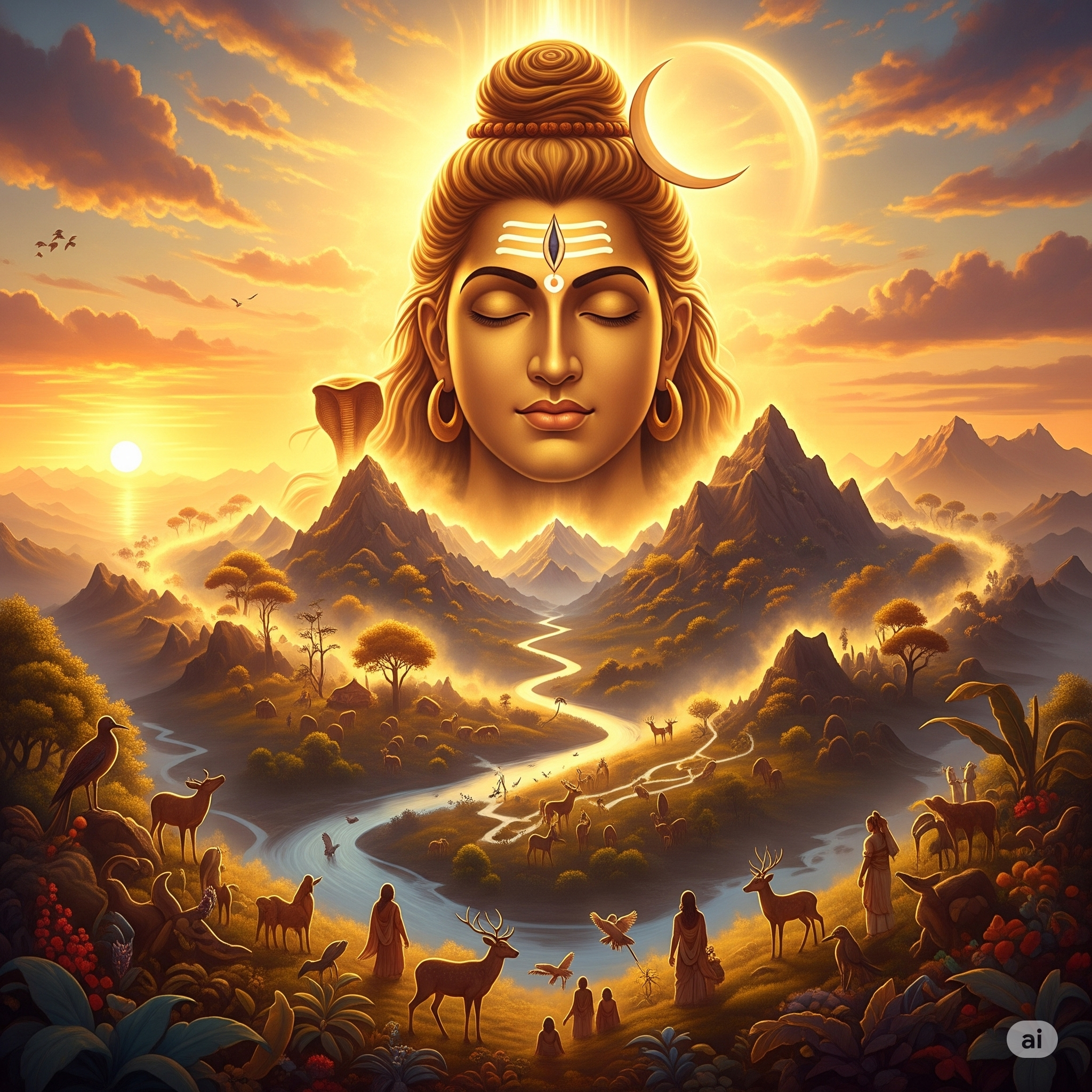
Meaning: Salutations to Vāmadeva, the most excellent, who subdues time and ego, who governs all beings, and who leads the mind beyond the mind. Vāmadeva, the face of the North—preserver of beauty, strength, and grace. Homage to the eldest, the noblest, to Rudra, to Time, to the All, and to the sixfold Rudra. He is the moonlight that soothes the restless heart. His presence flows like sacred rivers, sustaining all that lives.

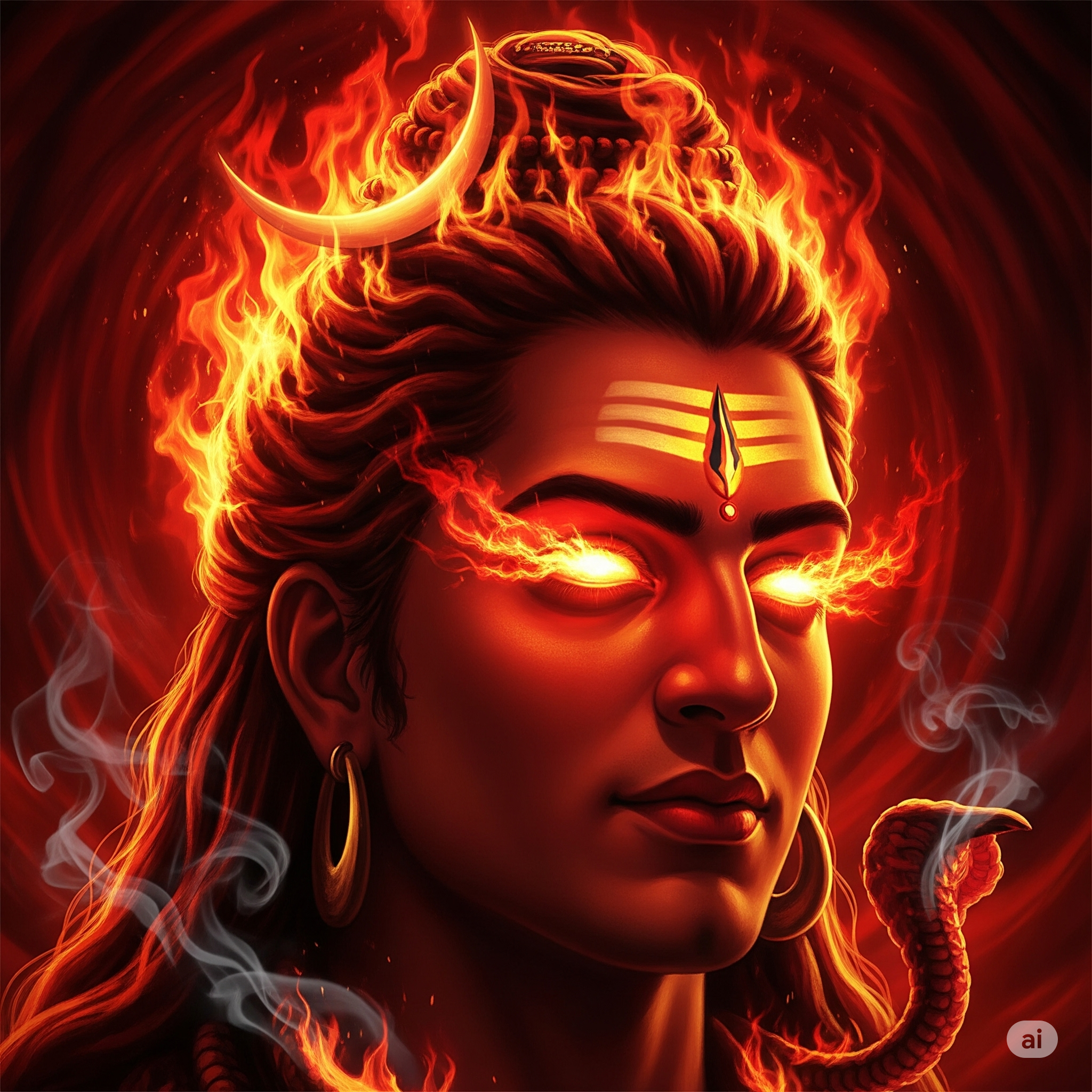
3. Aghora (South – Dissolution & Transformation)
Scriptural Reference: Transformer, purifier, remover of fear and ignorance.
Mantra:
अघोरेभ्योऽथ घोरेभ्यो घोरघोरतरेभ्यः।
सर्वेभ्यः सर्वशर्वेभ्यो नमोस्तु रुद्ररूपेभ्यः॥
Meaning: Salutations to Aghora and all forms of Rudra, from the gentle to the most fearsome, who dissolve impurities and liberate beings from fear—salutations to Rudra in all His manifestations. He is the fire that purifies, the storm that liberates. His roar breaks illusion, revealing the truth beneath all forms.
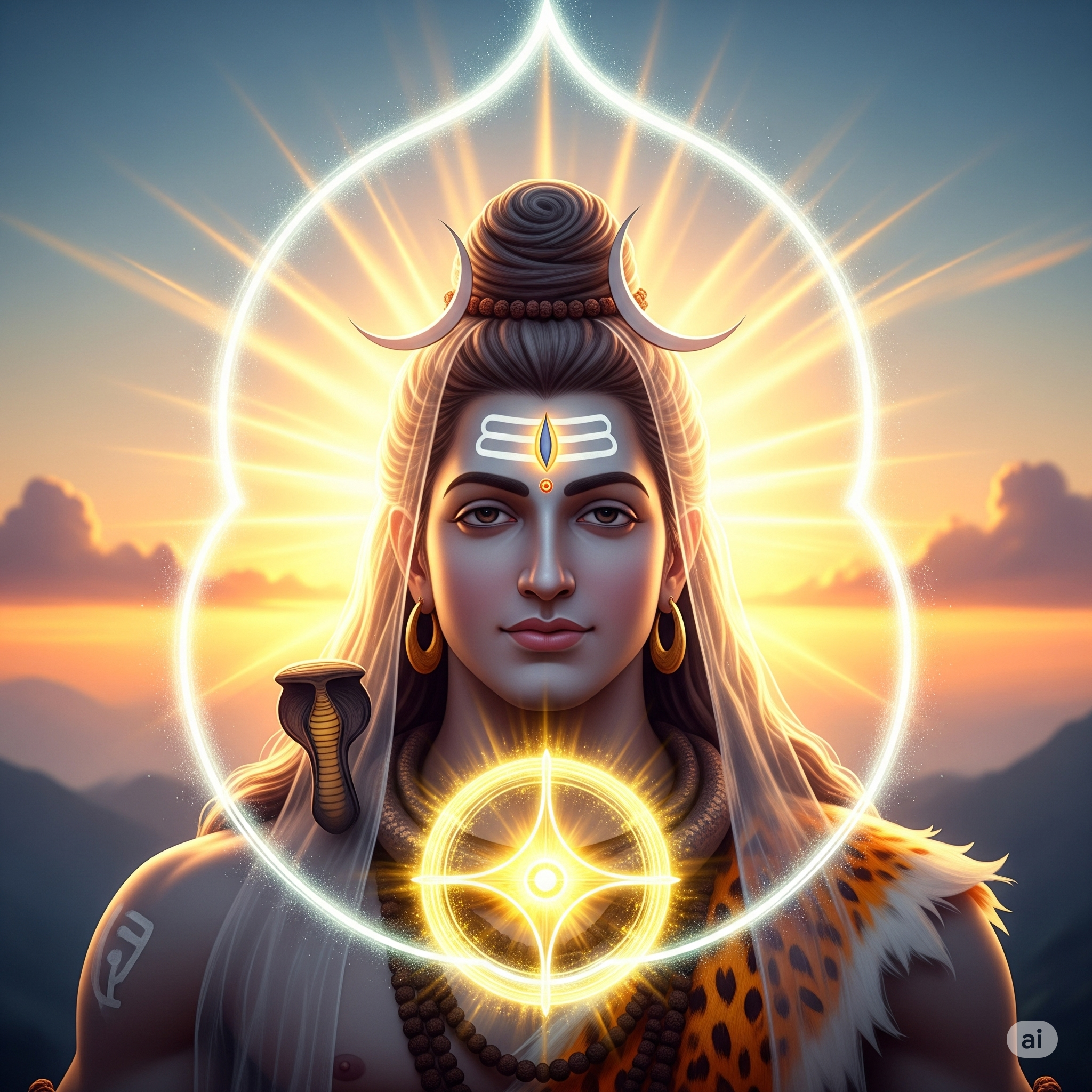
4. Tatpuruṣa (East – Concealment & Protection)
Scriptural Reference: Protector, concealer of divine mystery, connected with prāṇa (life-force).
Mantra:
तत्पुरुषाय विद्महे महादेवाय धीमहि।
तन्नो रुद्रः प्रचोदयात्॥
Meaning: We meditate on Tatpuruṣa, the indwelling Lord and protector of all beings. May Rudra guide our intellect to truth. We contemplate Tatpuruṣa, the face of the East—embodiment of supreme consciousness. May that Rudra inspire and illumine our minds. He is the breath between thoughts, the silence behind sound. His stillness draws the seeker inward, toward the hidden flame
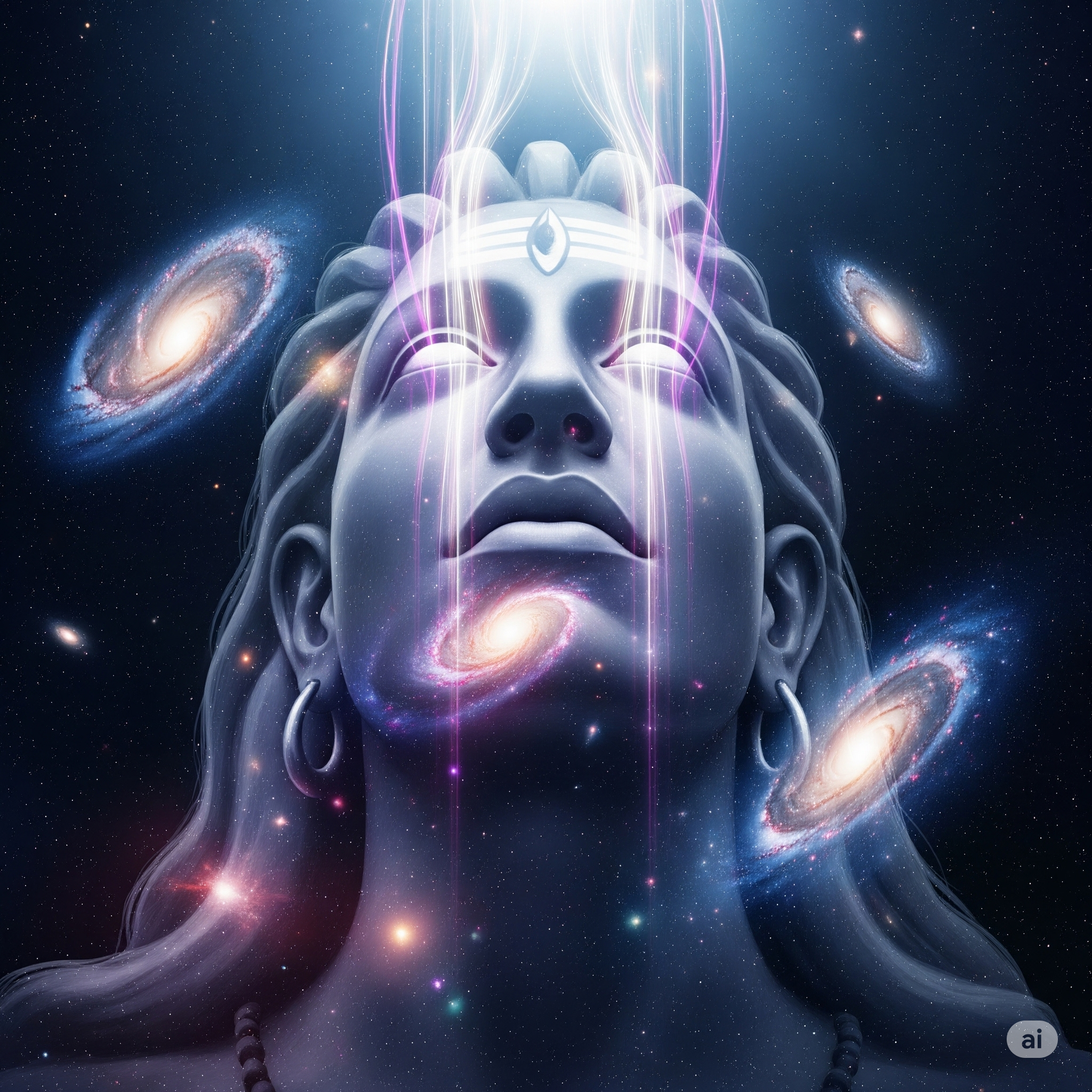
5. Īśāna (Upward – Grace & Liberation)
Scriptural Reference: Supreme face, transcendent, symbol of Ānugraha (liberation through grace).
Mantra:
ईशानः सर्वविद्यानामीश्वरः सर्वभूतानाम्।
ब्रह्माधिपतिर्ब्रह्मणोऽधिपतिर्ब्रह्मा शिवो मे अस्तु सदाशिवोम्॥
Meaning: Īśāna is Lord of all knowledge and all beings, the source and master of Brahman itself. May He reveal Himself as Sadāshiva within me. Īśāna, the upward face—lord of all knowledge and beings. Master of Brahmā and the Vedas—may He, the eternal Śiva, always abide in me. He is the light beyond thought, the eye that sees all directions. His wisdom pervades the cosmos, whispering truths beyond time.
Applying the knowledge of Pañcha Mukha Shiva –
Example scenario: The Journey from Chaos to Consciousness
The image below is an abstract visualization, designed as a symbolic representation of the human spiritual journey, guided by the divine forces of Pañcha Mukha Shiva by telling a powerful story of spiritual transformation. It represents the journey of an individual from a state of chaos to one of peace and ultimate liberation.
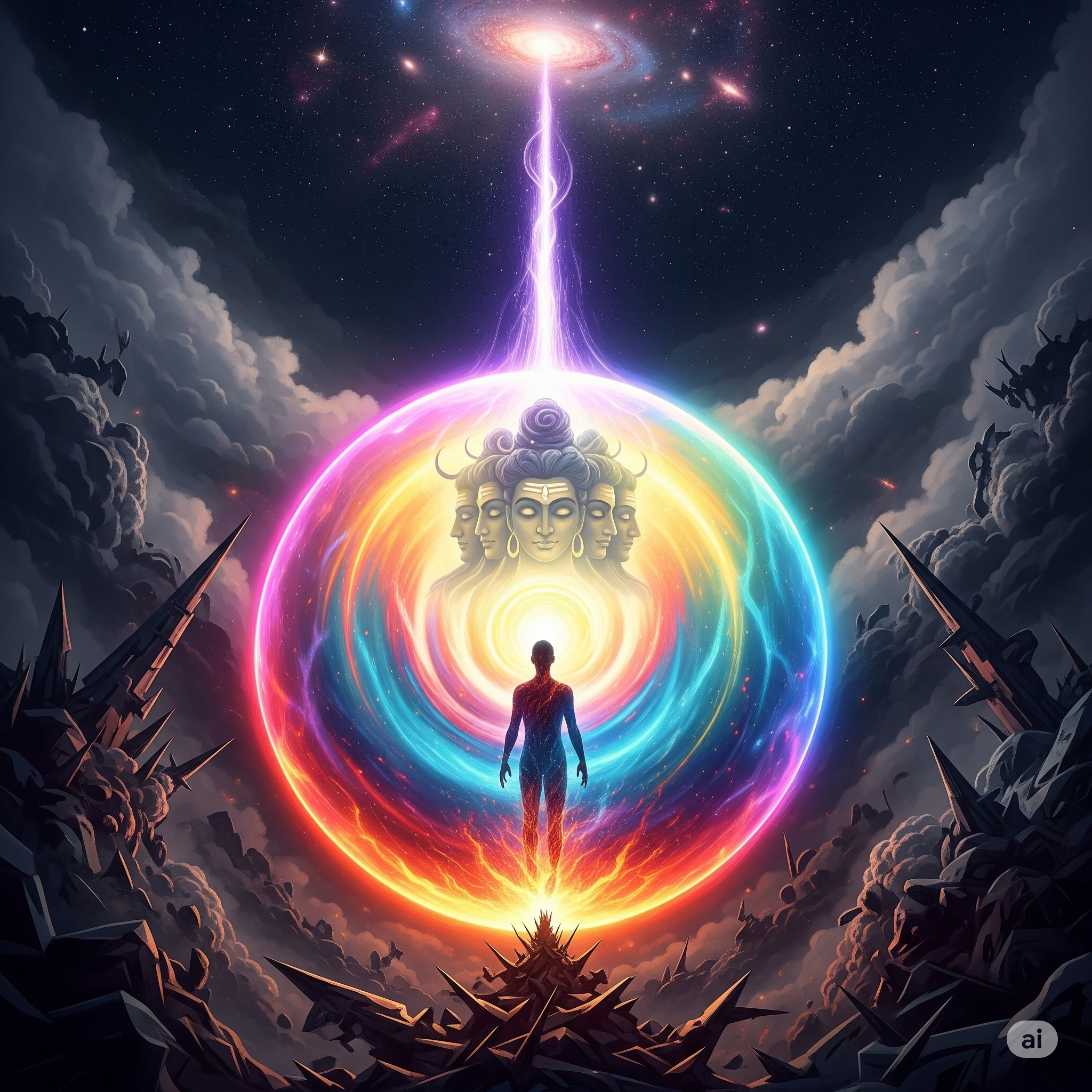
The Figure and the Dark Swirl:
The silhouette of a person emerges from a chaotic vortex of dark, stormy colors. This represents the human condition, often burdened by negativity, ego, and the turbulence of daily life.
The Guiding Light: As the figure ascends, they are enveloped in a protective sphere of light.
This light is a blend of the five divine aspects:
- Fiery Red Orange: At the base, it burns away negativity and transforms fear, representing Aghora.
- Peaceful Blue: This color radiates outwards, bringing a sense of calm and nourishment, symbolizing Vāmadeva.
- Bright Yellow White: It forms a shield of protection, guarding the figure and representing Tatpuruṣa.
- Golden Light: The golden hues subtly indicate the creative energy for new beginnings, a reflection of Sadyojāta.
- White-Violet Stream: The light culminates in a pure, upward-flowing stream that connects the figure to the cosmos. This is the essence of Īśāna, symbolizing grace, enlightenment, and liberation.
The Cosmic Connection: The figure is shown merging with a starry, galactic sky, signifying the ultimate union of individual consciousness with the vastness of the universe. The faint outlines of the five faces of Shiva are subtly embedded within the light, showing that these divine energies are the guiding force behind the entire journey.
This image communicates that the path to spiritual awakening is a process of rising above internal and external struggles, a journey of transformation guided by a divine, protective force towards ultimate freedom.
Concluding Reflection
The five faces of Shiva are not separate forms, but one indivisible truth. Together they represent the entire cosmic cycle: Creation (Sadyojāta), Sustenance (Vāmadeva), Dissolution (Aghora), Concealment/Protection (Tatpuruṣa), Grace/Liberation (Īśāna)
By contemplating on Pañcha Mukha Shiva, we move beyond the outer cycle of birth and death to the inner realization of Shiva as the eternal Self.
With humble pranams at the Divine Lotus Feet.
Jai Sai Ram
Please note all content and images generated using AI tools