Sacred Observance
Ananta Padmanabha Vratam – A Sacred Observance

Today marks the auspicious occasion of Ananta Padmanabha Vratam, a deeply revered vrata dedicated to Lord Vishnu in His infinite form as Ananta Padmanabha Swamy. Observed on the Chaturdashi (14th day) of the bright fortnight of Bhadrapada month, this vrata is performed by devotees seeking divine protection, prosperity, harmony in family life, and spiritual upliftment.
Significance of Ananta Padmanabha
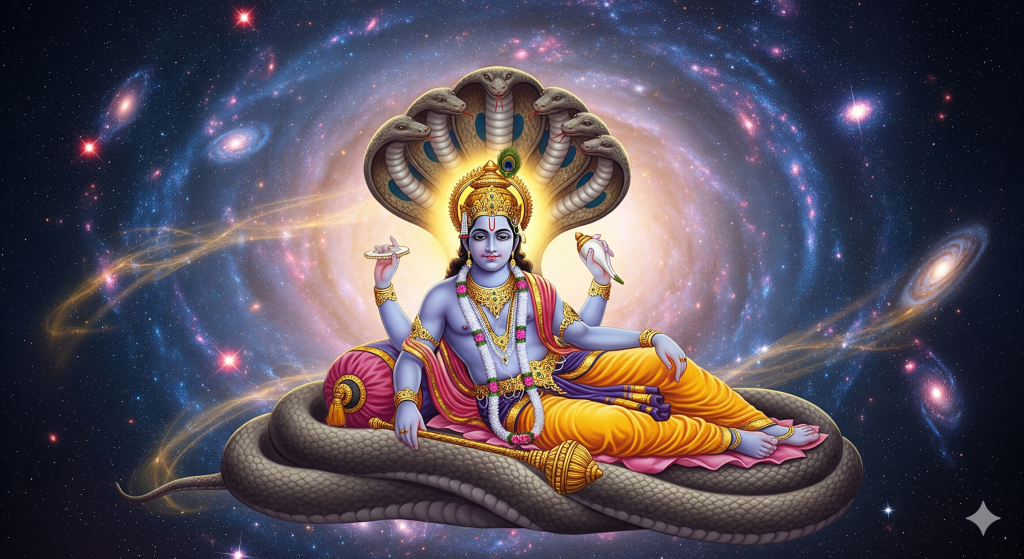
The word Ananta means “endless, infinite,” symbolizing the eternal presence of Lord Vishnu. In His reclining form on the cosmic serpent Adiśeṣa, Lord Padmanabha represents the eternal truth that sustains the universe. Performing this vrata is believed to bestow peace, remove obstacles, and ensure well-being for generations.
Sanskrit:
अनन्तानन्त देवेश अनन्तफलदायक।
अनन्तानन्दरूपोऽसि नमोस्तुते। अनन्ताय नमः॥
Transliteration:
Anantānanta deveśa anantaphaladāyaka |
Anantānandarūpo’si namo’stute | anantāya namaḥ ||
Translation:
O Lord of Infinite Lords, bestower of boundless fruits, You are the embodiment of eternal bliss— I bow to You in reverence. Salutations to the Infinite.
Rituals of the Vratam
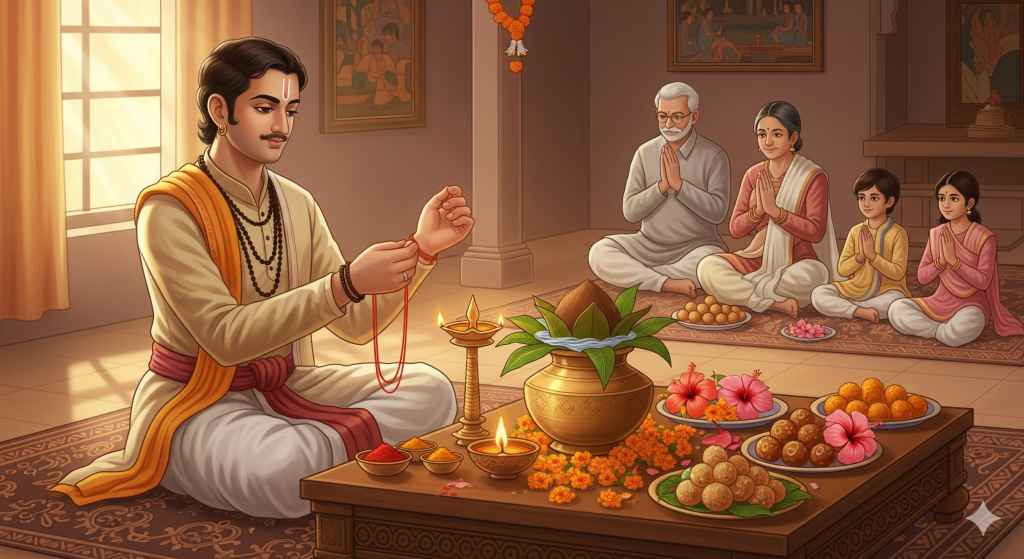
On this sacred day, devotees:
- Purify the home and heart with prayers, cleanliness, and devotion.
- Invoke Lord Ananta Padmanabha with special puja, offerings, and recitation of stotras and Vishnu Sahasranāma.
- Tie the sacred Ananta Sutra (a thread, usually red and yellow with 14 knots) around the wrist after worship, symbolizing protection and commitment to dharma.
- Observe fasting or simple satvik meals with deep contemplation and remembrance of the Lord.
The Vrata Katha – The Story Behind the Puja(shortened)
The origin of the Ananta Vratam is narrated in the Mahābhārata. After the dice game and years of exile, Yudhishthira, the eldest of the Pāṇḍavas, was instructed by Lord Krishna to observe this sacred vrata to restore peace and prosperity.

The vrata katha also speaks of a pious Brahmin couple. The wife, Sushila, tied the sacred Ananta Sutra after performing the vrata with great devotion. Her husband, Kaudinya, however, disregarded the sanctity of the thread and removed it in anger. Soon after, misfortunes struck the couple. Realizing his mistake, Kaudinya repented and undertook penance. Finally, Lord Ananta appeared before him, blessed him, and restored prosperity to their household.
This story conveys the importance of faith, devotion, and respect for sacred vows, reminding devotees that Ananta Padmanabha’s blessings flow only when the vrata is observed with sincerity and humility.
Sacred Verses for Devotional Recitation

These verses and mantras are an integral part of the puja, helping devotees focus their minds and connect with the divine.
**The following verses are derived from various pooja manuals and are part of the traditional ritualistic chants for the vratam.**
Sacred Invocations for Worship
These mantras are traditionally recited during various stages of the Ananta Padmanabha Vratam, especially while making offerings, invoking the deity, and entering into ritual presence.
| Invoking Lord Ananta | Transliteration | Translation |
|---|---|---|
| ॐ अनन्ताय नमः | Om anantāya namaḥ | Salutations to the Infinite One |
This mantra is used to invoke the presence of Lord Ananta, the boundless and eternal form of Vishnu, before beginning the ritual.
Yamuna Pūja – Honoring the Sacred River

Before the worship of Lord Ananta begins, devotees traditionally offer prayers to the Yamuna River, invoking her purity and grace. This act is not merely symbolic—it’s a spiritual preparation, a cleansing of the inner and outer self before approaching the Infinite.
Why Yamuna?
- Purity and Flow: Yamuna is revered as the embodiment of sacred flow—both literal and spiritual. Her waters are said to cleanse sins and purify intentions.
- Krishna Leela: Yamuna is intimately connected with Lord Krishna, who performed many divine acts along her banks. Since Ananta Padmanabha is a form of Vishnu, invoking Yamuna recalls the playful and loving aspect of the Divine.
- Ritual Sequence: In many traditions, the Yamuna Pūjanam is performed before the main Ananta Padmanabha worship. Red akṣatā (colored rice) is often offered to Yamuna Devi, symbolizing auspiciousness and readiness.
- Spiritual Gateway: Just as Yamuna flows toward the ocean, the devotee’s prayer flows toward the Infinite. She becomes the river of surrender, carrying the devotee’s intentions to the feet of Ananta.
Dhyanam
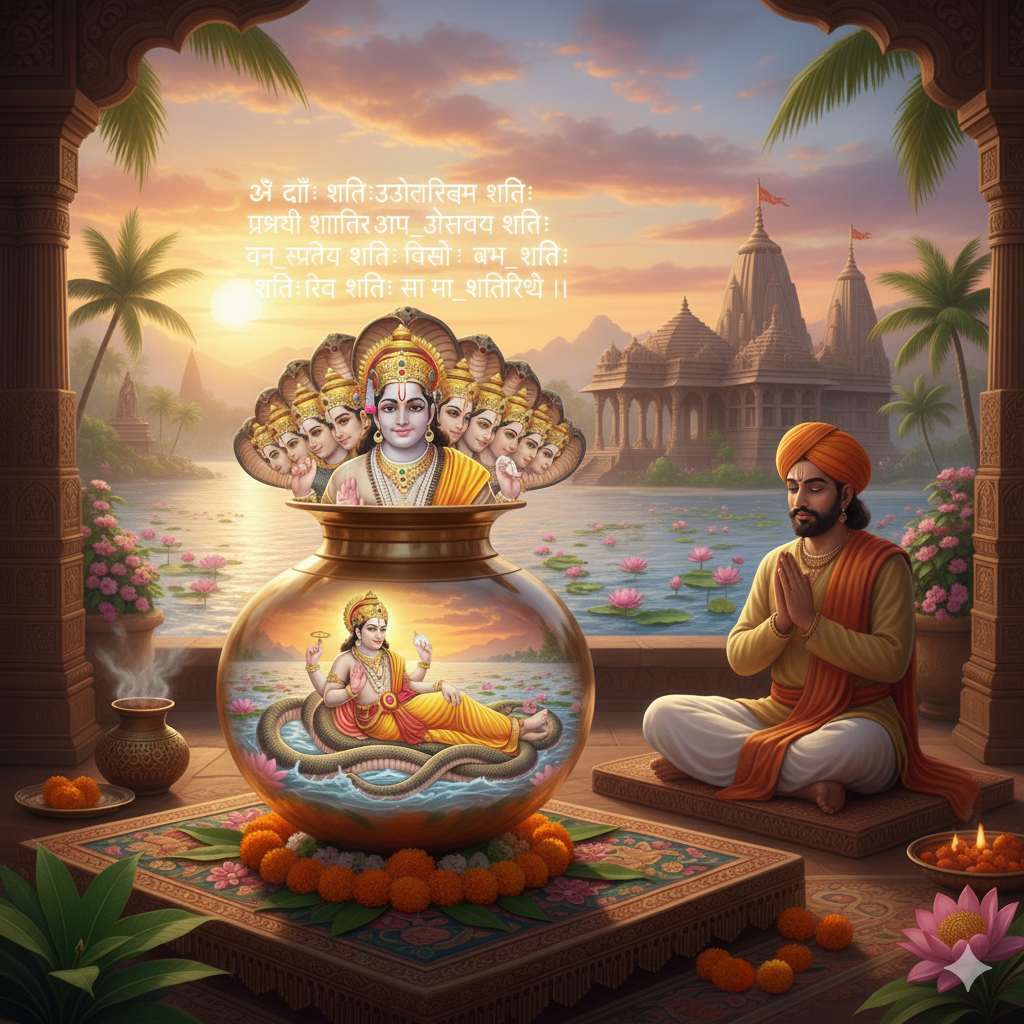
Transliteration
Dhyāyāmi anantaṁ deveśaṁ pītavasana-samācyutam | Navāmra-pallava-nibhaṁ piṅga-bhrūṣma-śrī-locanam || Pītāmbaradharaṁ devaṁ śaṅkha-cakra-gadādharam | Viśvākāraṁ viśvoniṁ viśvavandyaṁ hariṁ param || Sahasraśirasaṁ viṣṇuṁ śeṣasañjñaṁ ramāpatim | Alaṅkṛtaṁ samudrasthaṁ viśvarūpaṁ vibhāvaye || Asmin kalaśe anantaṁ dhyāyāmi ||
Translation
I meditate upon the Infinite Lord of Lords, Clad in radiant yellow garments, the changeless Narayana. His form is as tender as new mango leaves, With tawny brows and eyes shining with divine brilliance. He wears the golden robe, and holds the conch, discus, and mace— His form vast as the universe, origin of all worlds, Revered by all, the supreme Hari. Thousand-headed Vishnu, known as Ananta, Consort of Lakshmi, reclining upon the cosmic ocean. Adorned and majestic, manifesting the universal form— Within this sacred kalasha, I invoke and meditate upon Him.
Symbolic Highlights
- Navāmra-pallava-nibhaṁ: His form is as fresh and tender as new mango leaves—symbolizing renewal and auspiciousness.
- Piṅga-bhrūṣma-śrī-locanam: His eyes and brows radiate divine intensity and compassion.
- Viśvākāraṁ: He embodies the entire cosmos—echoing the Viśvarūpa of the Bhagavad Gita.
- Śeṣasañjñaṁ: Reclining on Ananta Shesha, the thousand-headed serpent—symbol of infinite time and cosmic support.
- Kalasha reference: The kalasha becomes a sacred vessel, housing the Infinite during the ritual.
Dorāgranthi Pūjā – Worship of the 14 Sacred Knots

In the Ananta Padmanabha Vratam, the sacred thread (dora) is not merely a ritual object—it is a symbolic bridge between the devotee and the Divine. Tied with 14 knots, each granthi represents a distinct Shakti. Before the thread is tied, it is placed reverently before Lord Ananta and worshipped invoking blessings for spiritual strength, purity, victory, and infinite grace.
Transliteration
Om śrīyai namaḥ | prathamagranthiṁ pūjayāmi |
Om mohinyai namaḥ | dvitīyagranthiṁ pūjayāmi |
Om mahābalāyai namaḥ | tṛtīyagranthiṁ pūjayāmi |
Om ajāyai namaḥ | caturthagranthiṁ pūjayāmi |
Om maṅgalāyai namaḥ | pañcamagranthiṁ pūjayāmi |
Om śubhāyai namaḥ | ṣaṣṭhagranthiṁ pūjayāmi |
Om jayāyai namaḥ | saptamagranthiṁ pūjayāmi |
Om vijayāyai namaḥ | aṣṭamagranthiṁ pūjayāmi |
Om jayantyai namaḥ | navamagranthiṁ pūjayāmi |
Om pāpanāśinyai namaḥ | daśamagranthiṁ pūjayāmi |
Om viśvarūpāyai namaḥ | ekādaśagranthiṁ pūjayāmi |
Om sarvamaṅgalāyai namaḥ | dvādaśagranthiṁ pūjayāmi |
Om mahānīyāyai namaḥ | trayodaśagranthiṁ pūjayāmi |
Om mahālakṣmyai namaḥ | caturdaśagranthiṁ pūjayāmi |
Symbolic Mapping of the Granthis
| Granthi | Invoked Shakti | Symbolic Essence |
|---|---|---|
| 1 | Śrī | Prosperity, grace |
| 2 | Mohinī | Enchantment, divine illusion |
| 3 | Mahābalā | Strength, resilience |
| 4 | Ajā | The unborn, eternal principle |
| 5 | Maṅgalā | Auspiciousness, sacred beginnings |
| 6 | Śubhā | Purity, goodness |
| 7 | Jayā | Victory, triumph |
| 8 | Vijayā | Overcoming obstacles |
| 9 | Jayantī | Celebrated success, divine fame |
| 10 | Pāpanāśinī | Destruction of sin |
| 11 | Viśvarūpā | Universal form of the Divine |
| 12 | Sarvamaṅgalā | All-auspiciousness |
| 13 | Mahānīyā | Reverence, supreme worthiness |
| 14 | Mahālakṣmī | Abundance, fulfillment, divine grace |
Aṅga Pūjā – Worship of the Divine Limbs of Lord Ananta
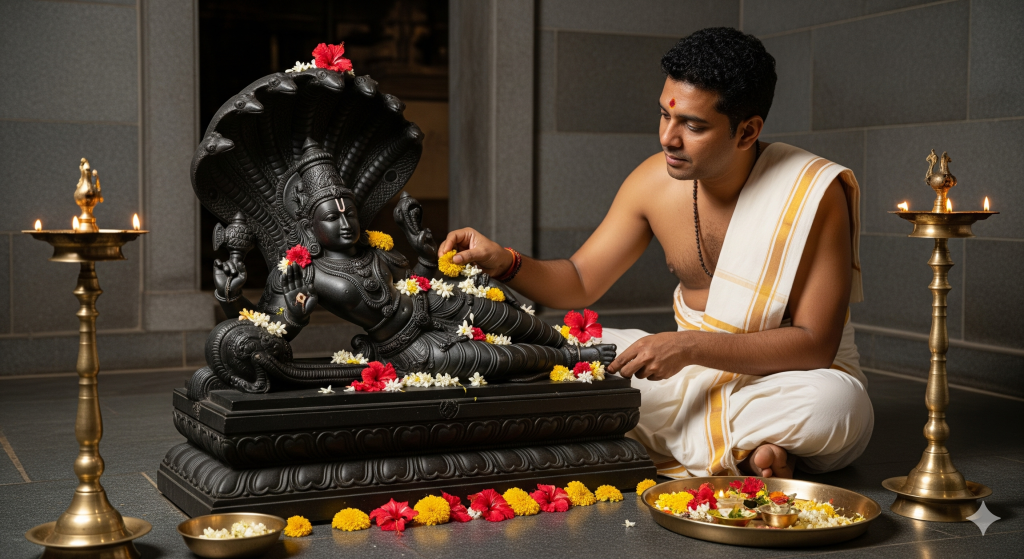
In this sacred offering, each limb of Lord Ananta is worshipped with flowers and a unique name that reflects His cosmic attributes. This ritual is a meditative unfolding of the Divine form—limb by limb, name by name.
Transliteration
Om anantāya namaḥ | pādau pūjayāmi |
Om śeṣāya namaḥ | gulphau pūjayāmi |
Om kālakālātmane namaḥ | jaṅghe pūjayāmi |
Om viśvarūpāya namaḥ | jānunī pūjayāmi |
Om upamāhīnāya namaḥ | ūrū pūjayāmi |
Om kālātmane namaḥ | kaṭiṁ pūjayāmi |
Om jagannāthāya namaḥ | guhāṁ pūjayāmi |
Om padmanābhāya namaḥ | nābhiṁ pūjayāmi |
Om sarvātmane namaḥ | kukṣiṁ pūjayāmi |
Om śrīvatsavate namaḥ | vakṣaḥ pūjayāmi |
Om cakrahastāya namaḥ | hastān pūjayāmi |
Om ājānubāhave namaḥ | bāhūn pūjayāmi |
Om vācaspataye namaḥ | vaktraṁ pūjayāmi |
Om keśavāya namaḥ | nāsikāṁ pūjayāmi |
Om nārāyaṇāya namaḥ | netre pūjayāmi |
Om govindāya namaḥ | śrotre pūjayāmi |
Om anantapadmanābhāya namaḥ | śiraḥ pūjayāmi |
Om viṣṇave namaḥ | sarvāṅgāni pūjayāmi |
Symbolic Commentary
Each name reveals a facet of Vishnu’s cosmic embodiment:
| Limb | Invoked Name | Symbolic Meaning |
|---|---|---|
| Feet | Ananta | Infinite foundation |
| Ankles | Śeṣa | Cosmic serpent, support of creation |
| Shanks | Kālakālātmā | Time beyond time |
| Knees | Viśvarūpa | Universal form |
| Thighs | Upamāhīna | Beyond comparison |
| Waist | Kālātmā | Lord of time |
| Organ | Jagannātha | Lord of the universe |
| Navel | Padmanābha | Lotus-naveled creator |
| Stomach | Sarvātmā | Self of all beings |
| Chest | Śrīvatsavān | Bearer of the Śrīvatsa mark |
| Hands | Cakrahasta | Holder of the discus |
| Arms | Ājānubāhu | Long-armed protector |
| Mouth | Vācaspati | Lord of speech |
| Nose | Keśava | Beautiful and radiant |
| Eyes | Nārāyaṇa | All-pervading vision |
| Ears | Govinda | Knower of all sounds |
| Head | Anantapadmanābha | Infinite lotus-naveled one |
| Whole Body | Viṣṇu | All-pervading Divine |
Ananta Vratam Prayer – A Mantra of Surrender and Refuge
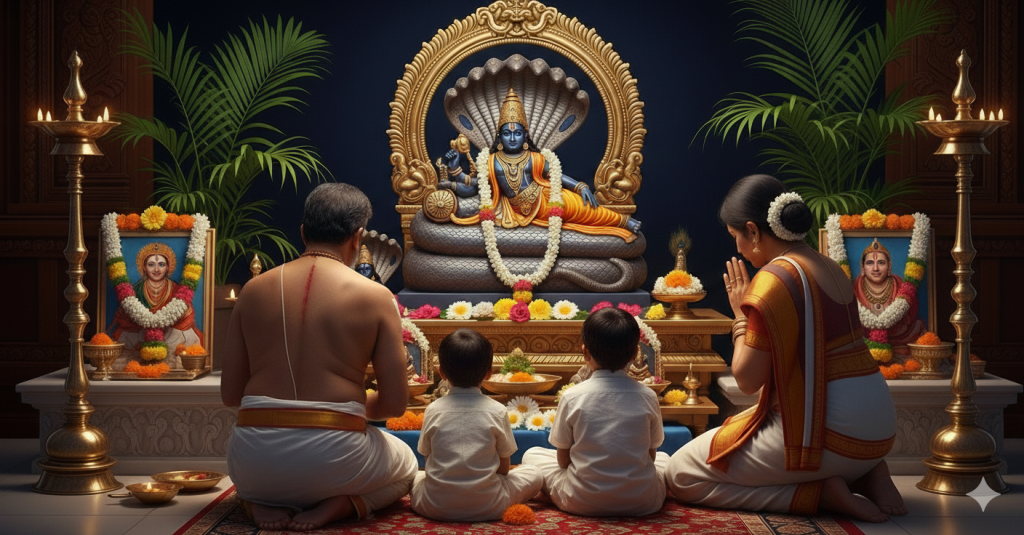
This prayer is recited to express complete surrender to Lord Ananta—the Infinite One. It encapsulates the essence of the vratam: offering oneself fully, seeking refuge in the boundless grace of the Divine.
Sanskrit
अनन्ताय नमो नमः। अनन्ताय सर्वं समर्पये।
अनन्ताय नमो नमः। अनन्ताय शरणं गतः॥
Transliteration
Anantāya namo namaḥ | Anantāya sarvaṁ samarpaye |
Anantāya namo namaḥ | Anantāya śaraṇaṁ gataḥ ||
Translation
“Salutations to the Infinite One, I surrender everything to the Infinite One.
Salutations to the Infinite One, I have taken refuge in the Infinite One.”
Commentary
This mantra is not just a prayer—it is a declaration of spiritual intimacy. It affirms:
- Surrender (samarpaye): Offering not just ritual items, but the heart, the ego, the self.
- Refuge (śaraṇaṁ gataḥ): Seeking shelter in the Infinite—not out of fear, but out of love.
- Repetition (namo namaḥ): A rhythmic bowing, echoing the eternal nature of devotion.
This verse can be recited at the end of the pūjā, during silent meditation, or even as a daily invocation—threading the Infinite into every breath.
Vishnu Sahasranāma – Names Reflecting the Infinite

From the Vishnu Sahasranāma, many names glorify the boundless aspect of Lord Ananta Padmanabha. A few that resonate with this vrata are:
- भुजगोत्तमः (Bhujagottamaḥ) – “The supreme serpent,” a nod to Adiśeṣa/Ananta.
- हिरण्यनाभः (Hiraṇyanābhaḥ) – “He with the golden navel,” recalling the cosmic lotus.
- पद्मनाभः (Padmanābhaḥ) – “Lotus-navelled One,” a primary epithet of Vishnu.
- अनादिनिधानः (Anādi-nidhānaḥ) – “Without beginning or end,” describing the eternal infinite.
- अनन्तरूपः (Ananta-rūpaḥ) – “Of countless forms,” reflecting His limitless manifestations.
These names remind us that the infinite Lord pervades creation in countless ways, sustaining the universe with His eternal presence.
Blessings of Ananta Padmanabha
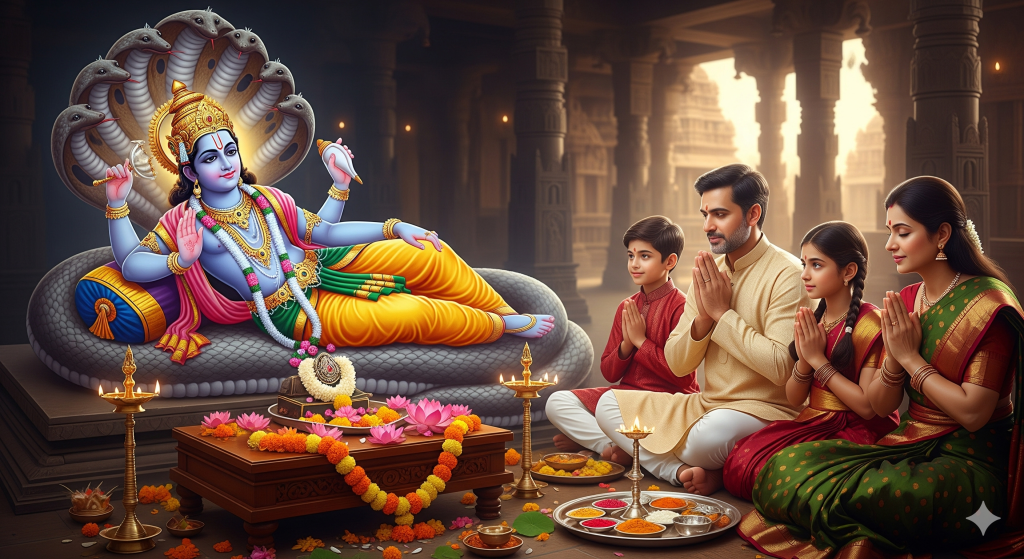
The story of the Ananta Vratam reminds us that when devotion is sincere and vows are honored, the Lord’s grace flows endlessly. Just as Yudhishthira regained harmony and prosperity by observing this vrata, and Kaudinya’s life was restored after his repentance, so too does Lord Ananta Padmanabha bless His devotees with peace, stability, and abundance.
The sacred thread tied on this day is more than a symbol — it is a reminder that the Lord’s protection and compassion are boundless, extending to all who surrender with faith.
As you reflect on this vratam, may your life be filled with unshakable stability, inner harmony, and the gentle assurance of divine presence. May Lord Ananta Padmanabha’s grace ever guide and protect you and your family, bringing prosperity in the material world and progress on the spiritual path.
॥ ॐ अनन्ताय नमः ॥
Om Anantāya Namaḥ
— Salutations to the Infinite One.
Full Pooja Method
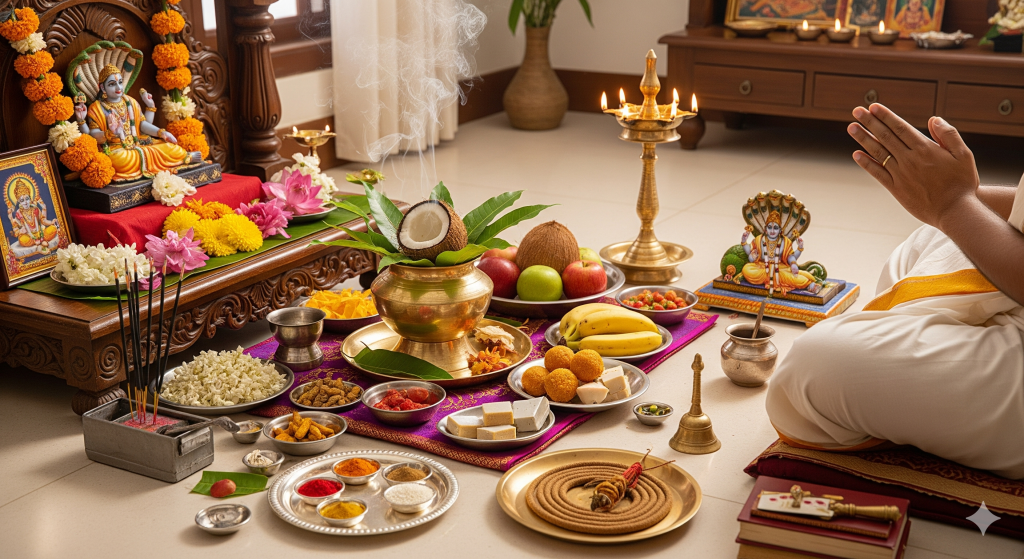
For those wishing to perform the Ananta Padmanabha Vratam in its complete traditional form, a detailed step-by-step Pooja Vidhi is available on SanskritDocuments.org. This includes preparations, kalasha setup, shodasha-upachara worship, special offerings, and the sacred thread (dora) rituals.
Reference: Ananta Padmanabha Vrata Pooja Method – SanskritDocuments.org
Samkastah Lokah Sukhino Bhavanthu
May all the beings in all worlds be happy!

Jai Sai Ram!
Please note all content and images generated using AI Tools