Eternal Offering
The Sacred Identity of Yajña and Viṣṇu
Introduction
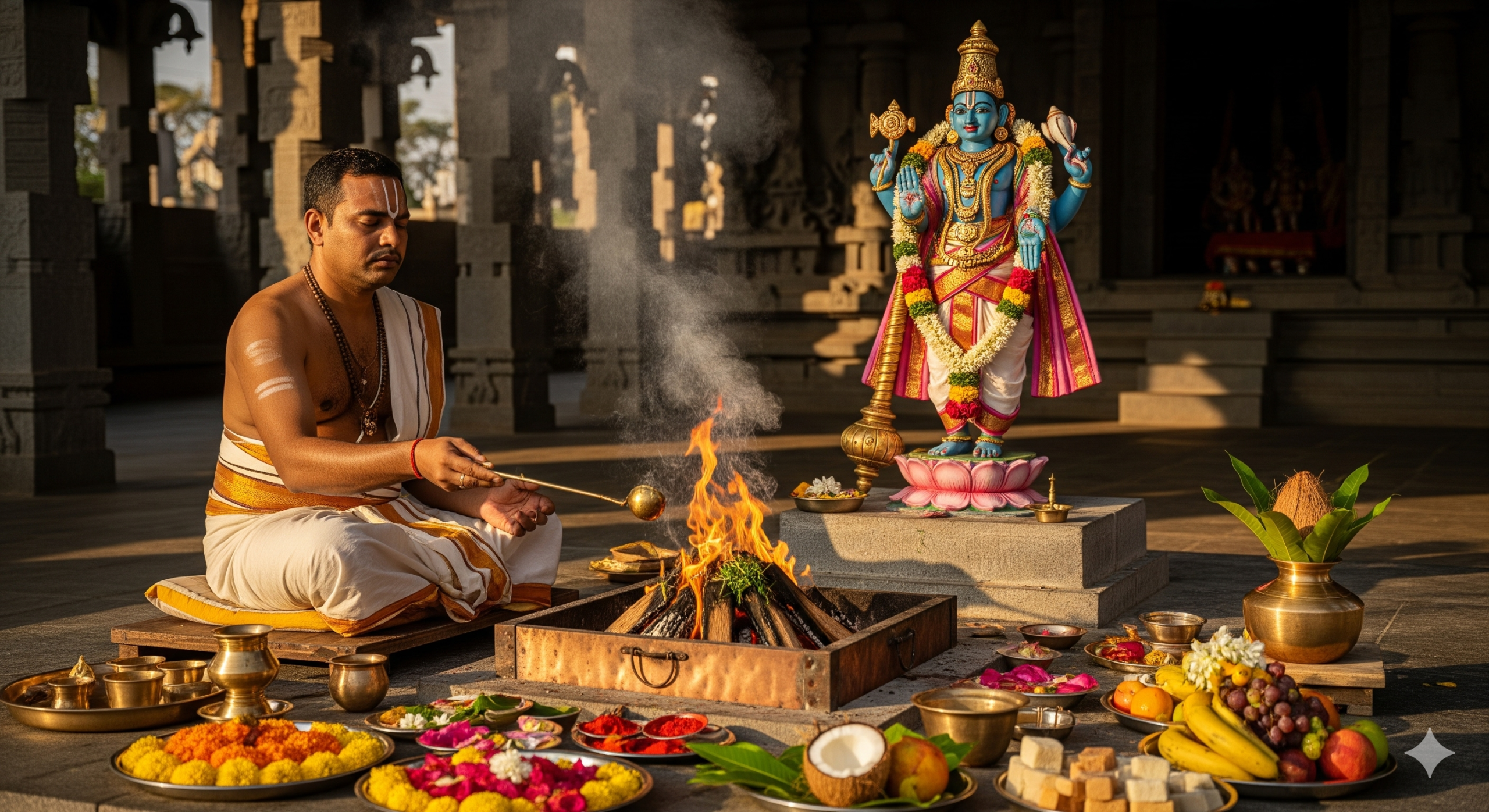
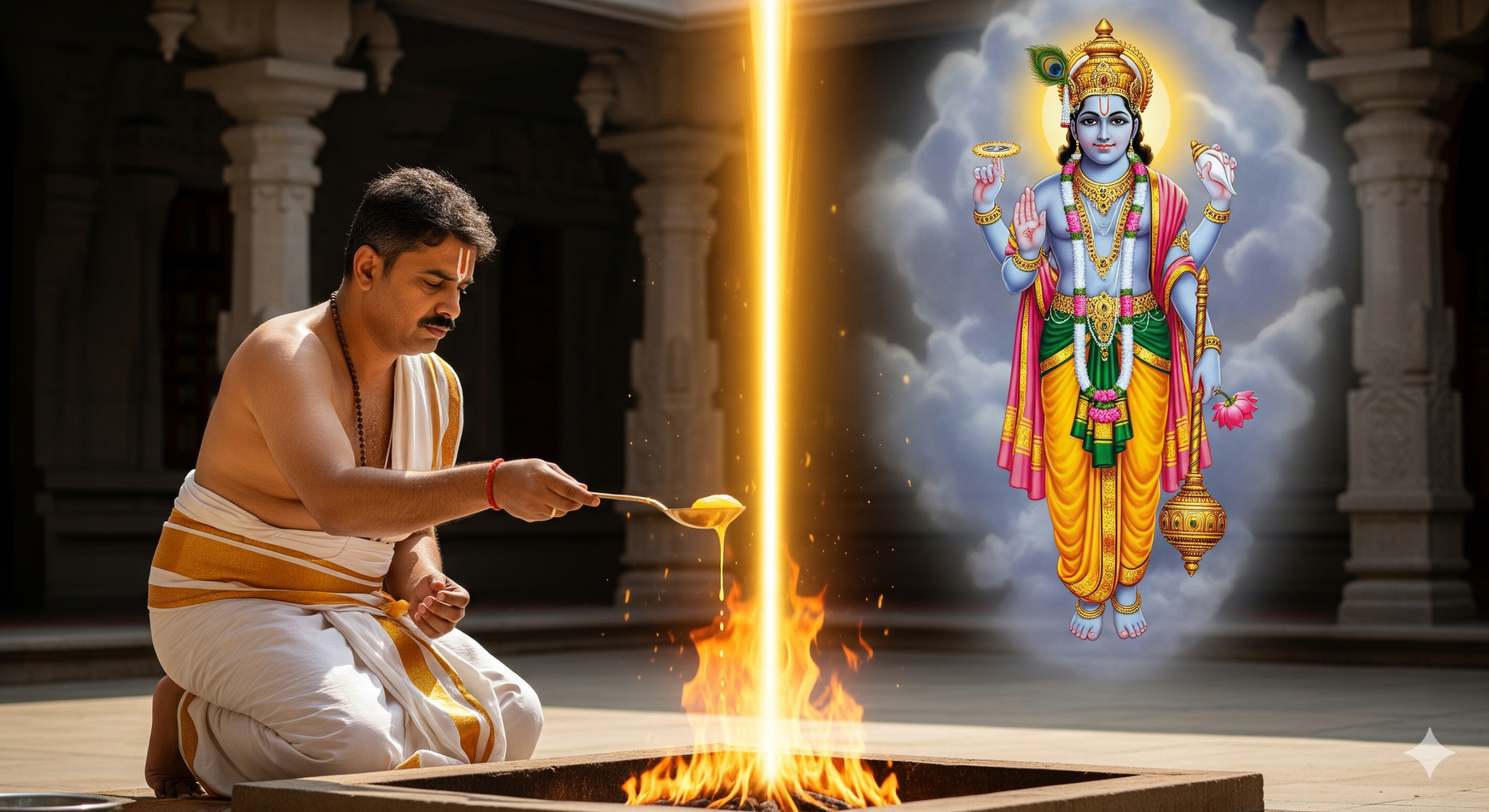
Among the many profound declarations in the Vedic corpus, few are as significant and far-reaching as the phrase “Yajño Vai Viṣṇuḥ” — “Yajña indeed is Viṣṇu.”
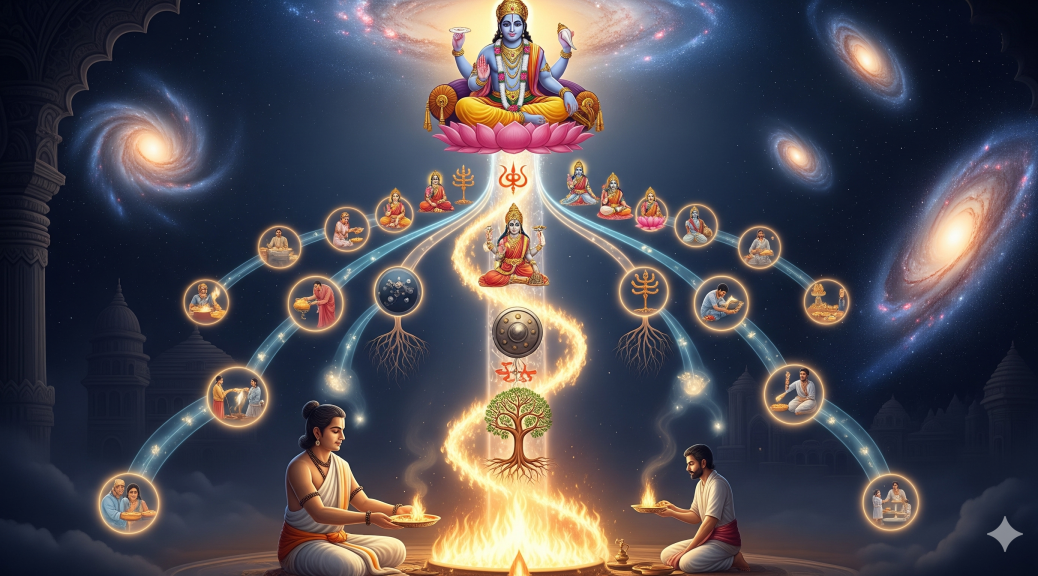
Bhagawan Sri Sathya Sai Baba, in His discourse “Make Every Moment a Yajna”, draws attention to this very phrase, reminding us that life itself is to be seen as a yajña — a sacred act of offering.
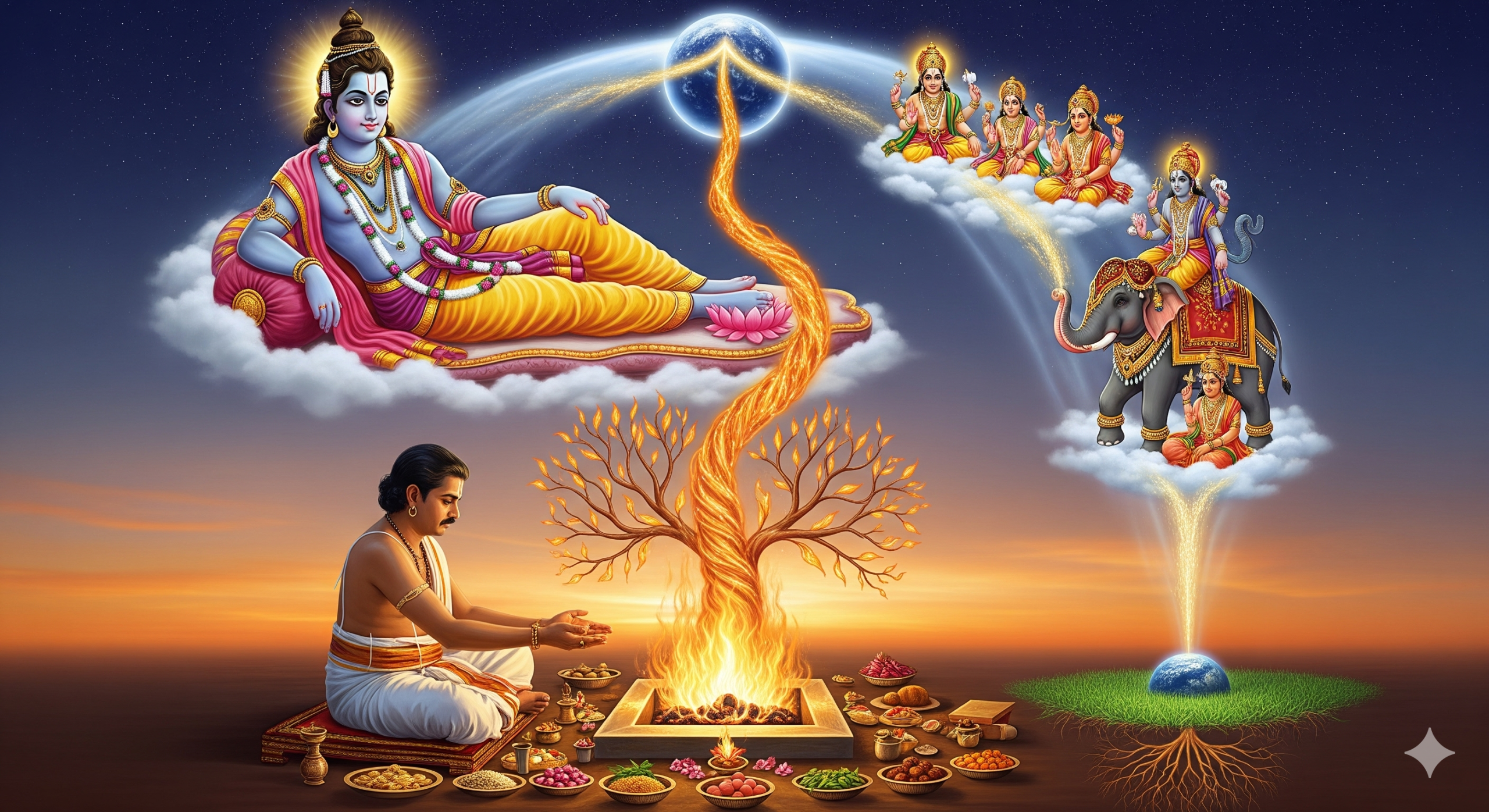
Inspired by this insight, we undertook a study of the Taittirīya Brāhmaṇa to trace the phrase across its occurrences, and what emerges is a beautiful, multidimensional vision of yajña as the sustaining principle of existence, inseparable from Viṣṇu, the all-pervading Divine.
This post brings together all eight occurrences of “Yajño Vai Viṣṇuḥ” in the Taittirīya Brāhmaṇa, with their Sanskrit text, translations and commentaries.
The Taittirīya Brāhmaṇa: Context

The Taittirīya Brāhmaṇa is part of the Kṛṣṇa Yajur Veda, elaborating on the performance and meaning of yajñas (sacrifices). More than a ritual manual, it encodes symbolic truths: every act in a yajña reflects cosmic realities. Within it, the phrase “Yajño vai Viṣṇuḥ” — “Yajña indeed is Viṣṇu” — recurs eight times, underscoring how sacrifice is inseparable from the sustaining presence of Viṣṇu.
Occurrences in the Taittirīya Brāhmaṇa
1. Taittirīya Brāhmaṇa 1.2.5.1
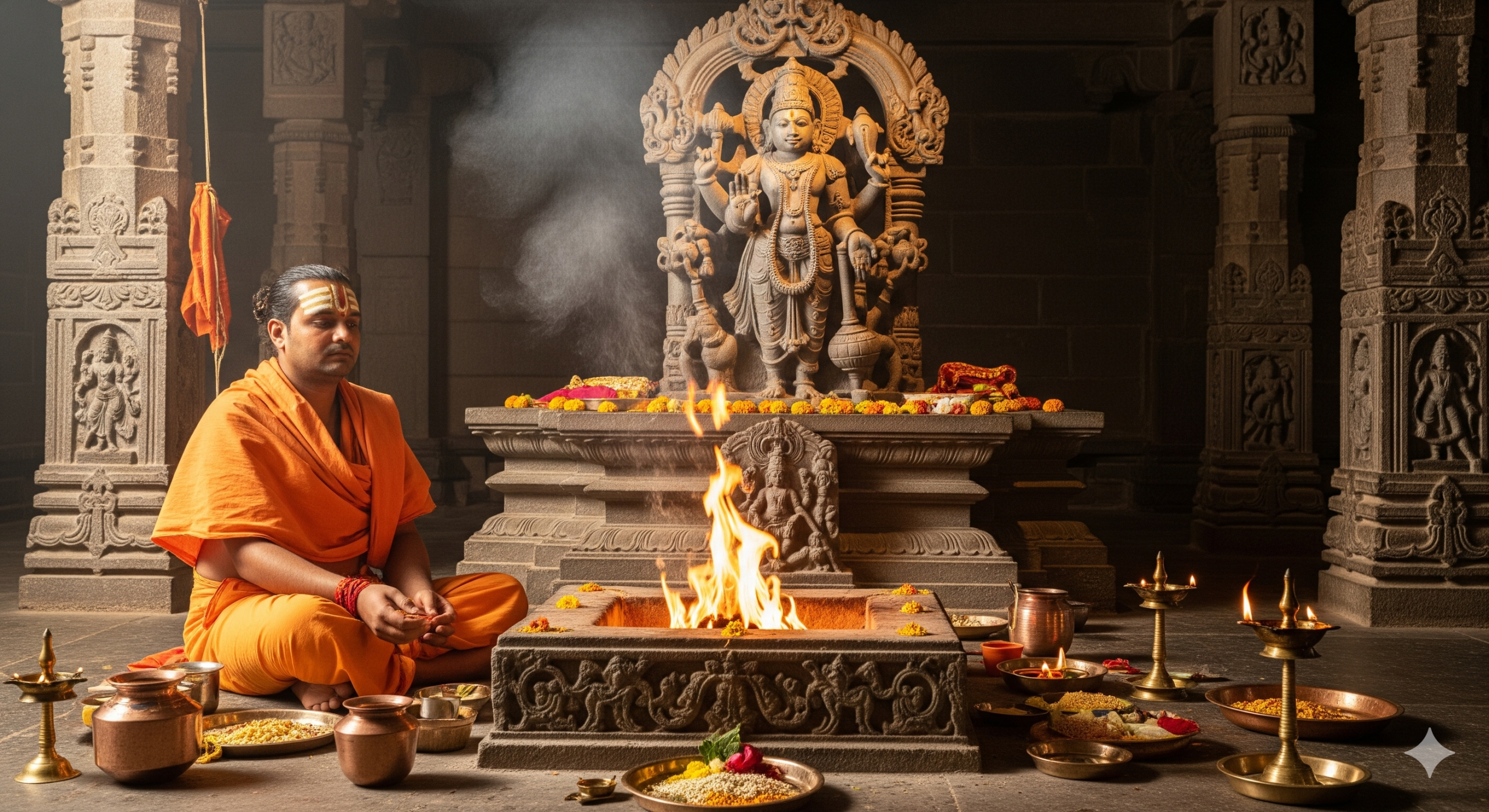
Sanskrit
अप्र॑तिष्ठां॒ वा ए॒ते ग॑च्छन्ति । येषाꣳ॑ संवथ्स॒रेऽना॒प्तेऽथ॑ । ए॒का॒द॒शिन्या॒प्यते᳚ । वै॒ष्ण॒वं वा॑म॒नमाल॑भन्ते । य॒ज्ञो वै विष्णुः॑ । य॒ज्ञमे॒वाल॑भन्ते॒ प्रति॑ष्ठित्यै । ऐ॒न्द्रा॒ग्नमाल॑भन्ते । इ॒न्द्रा॒ग्नी वै दे॒वाना॒मया॑तयामानौ । ये ए॒व दे॒वते॒ अया॑तयाम्नी । ते ए॒वाल॑भन्ते ॥ १। २। ५। १॥
Translation
“Those whose year-long sacrifice is incomplete lack firm foundation. Therefore, on the Ekādaśinī day, they perform the Vaiṣṇava offering, for Yajña is indeed Viṣṇu. Thus they establish the sacrifice upon firm ground. They also offer to Indra and Agni, for Indra and Agni are the leaders of the gods, and by offering to them, they bring the rite to its proper course.”
Commentary
Here Viṣṇu, as yajña, provides stability and foundation — without Him, ritual is incomplete and lacks support.
2. Taittirīya Brāhmaṇa 1.4.3.6

….. इ॒दं विष्णु॒र्विच॑क्रम॒ इति॑ वैष्ण॒व्यर्चाऽह॑व॒नीया᳚द्ध्व॒ꣳ॒सय॒न्नुद्द्र॑वेत् । य॒ज्ञो वै विष्णुः॑ । य॒ज्ञेनै॒व य॒ज्ञꣳ संत॑नोति । … ॥ १। ४। ३। ६॥
Translation:
“This is Vishnu who moves through all; he is to be invoked with Vaishnava offerings. The sacrifice itself is Vishnu, and through the sacrifice one attains continuity.
Commentary:
Vishnu is equated with the yajna itself, showing that ritual action and divine presence are inseparable.
3. Taittirīya Brāhmaṇa 1.8.1.2

…रेत॑ ए॒व हि॒तं त्वष्टा॑ रू॒पाणि॒ विक॑रोति । उ॒परि॑ष्टाद्वैष्ण॒वेन॑ । य॒ज्ञो वै विष्णुः॑ । य॒ज्ञ ए॒वान्त॒तः प्रति॑तिष्ठति ॥ १। ८। १। २
Translation:
Tvaṣṭṛ transforms the seed into beneficial forms. Above all, through Vaishnava invocation, the sacrifice is Vishnu. The sacrifice stands firmly and wholly in its entirety.”
Commentary:
Tvaṣṭṛ transforms the seed into beneficial forms, symbolizing the manifestation of order from latent potential. By invoking Vishnu, the yajna itself becomes divine, complete, and firmly established, uniting ritual and cosmic principle.
4. Taittirīya Brāhmaṇa 3.1.6.7

अथै॒तं विष्ण॑वे च॒रुं निर्व॑पति । य॒ज्ञो वै विष्णुः॑ । य॒ज्ञ ए॒वान्त॒तः प्रति॑तिष्ठति । सोऽत्र॑ जुहोति । विष्ण॑वे॒ स्वाहा॑ य॒ज्ञाय॒ स्वाहा᳚ । प्र॒ति॒ष्ठायै॒ स्वाहेति॑ ॥ ३। १। ६। ७॥
Translation:
“Here, the offering is made beautifully to Vishnu. The sacrifice itself is Vishnu, and the sacrifice stands fully established. One offers ‘Svāhā’ to Vishnu for the yajna, and ‘Svāhā’ for its firm establishment.”
Commentary:
This verse emphasizes that the act of offering, when performed with devotion, becomes an expression of Vishnu himself. The repeated use of “Svāhā” sanctifies both the offering and the stability of the sacrifice, illustrating that ritual action is inseparable from divine presence. By acknowledging Vishnu as the sacrifice, the verse reinforces that yajna is not merely a physical act but a living, sustaining force that upholds cosmic order.
5. Taittirīya Brāhmaṇa 3.2.3.12

अ॒य॒स्पा॒त्रेण॑ वा दारुपा॒त्रेण॒ वाऽपि॑दधाति । तद्धि सदे॑वम् । उ॒द॒न्वद्भ॑वति । आपो॒ वै र॑क्षो॒घ्नीः । रक्ष॑सा॒मप॑हत्यै । अद॑स्तमसि॒ विष्ण॑वे॒ त्वेत्या॑ह । य॒ज्ञो वै विष्णुः॑ । य॒ज्ञायै॒वैन॒दद॑स्तं करोति । विष्णो॑ ह॒व्यꣳ र॑क्ष॒स्वेत्या॑ह॒ गुप्त्यै᳚ । अन॑धः सादयति । गर्भा॑णां॒ धृत्या॒ अप्र॑पादाय । तस्मा॒द्गर्भाः᳚ प्र॒जाना॒मप्र॑पादुकाः । उ॒परी॑व॒ निद॑धाति । उ॒परी॑व॒ हि सु॑व॒र्गो लो॒कः । सु॒व॒र्गस्य॑ लो॒कस्य॒ सम॑ष्ट्यै ॥ ३। २। ३। १२॥
Translation:
“One may offer with a metal vessel, a wooden vessel, or even with water; it is always appropriate. From this arises the upward force. Waters are indeed protectors of the sacrificial fire, dispelling obstacles. ‘To Vishnu,’ it is said, for the yajna itself. Vishnu secures the oblation for the sacrifice, supports it from below, and sustains the generative powers. Therefore, the wombs of living beings receive their sustenance. Above, he places the realm of heaven, the heavenly world, for the collective welfare of all.”
Commentary:
This verse highlights the flexibility of offerings—metal, wood, or water—all are valid when offered with devotion, reflecting the universal accessibility of yajna. It emphasizes the protective and sustaining role of Vishnu, who secures the oblation, nurtures life, and upholds cosmic order. The sacrificial act is linked to creation itself, as Vishnu supports the generative powers below and establishes the heavenly realm above, ensuring the welfare of all beings.
6. Taittirīya Brāhmaṇa 3.3.6.11
अ॒सौ वै जु॒हूः । अ॒न्तरि॑क्षमुप॒भृत् । पृ॒थि॒वी ध्रु॒वा । तासा॑मे॒तदे॒व प्रि॒यं नाम॑ । यद्घृ॒ताचीति॑ । यद्घृ॒ताचीत्याह॑ । प्रि॒येणै॒वैना॒ नाम्ना॑ सादयति । ए॒ता अ॑सदन्थ्सुकृ॒तस्य॑ लो॒क इत्या॑ह । स॒त्यं वै सु॑कृ॒तस्य॑ लो॒कः । स॒त्य ए॒वैनाः᳚ सुकृ॒तस्य॑ लो॒के सा॑दयति । ता वि॑ष्णो पा॒हीत्या॑ह । य॒ज्ञो वै विष्णुः॑ । य॒ज्ञस्य॒ धृत्यै᳚ । पा॒हि य॒ज्ञं पा॒हि य॒ज्ञप॑तिं पा॒हि मां य॑ज्ञ॒निय॒मित्या॑ह । य॒ज्ञाय॒ यज॑मानाया॒त्मने᳚ । तेभ्य॑ ए॒वाशिष॒माशा॒स्तेऽना᳚र्त्यै ॥ ३। ३। ६। ११॥
Translation:
“This is indeed the oblation offered, situated in the intermediary space, firmly supported by the earth. It is called ‘Priya’—that which is dear—and the ghee offering is made with this name. Through this, the world of the virtuous is established. Vishnu protects it. The sacrifice is indeed Vishnu, and through the sacrifice one is safeguarded. Protect the yajna, protect the lord of the yajna, protect me—the sacrificer. By these offerings, blessings are assured for the performer and for others.”
Commentary:
This verse emphasizes the sanctity of the oblation, describing it as firmly grounded yet present in the intermediary space, bridging earth and heaven. Naming the ghee offering ‘Priya’ underscores the heartfelt devotion inherent in ritual acts, which aligns them with cosmic order and the world of the virtuous. Vishnu is invoked as the protector of the sacrifice, reinforcing the recurring teaching that the yajna itself is Vishnu. By safeguarding the sacrifice, its lord, and the sacrificer, the verse conveys that every ritual act, however small, carries protective power and grants blessings, uniting human effort with divine presence.
7. Taittirīya Brāhmaṇa 3.3.7.7
ताभ्या॑मे॒व प्र॑ति॒प्रोच्या॒त्याक्रा॑मति । विजि॑हाथां॒ मा मा॒ संता᳚प्त॒मित्या॒हाहिꣳ॑सायै । लो॒कं मे॑ लोककृतौ कृणुत॒मित्या॑ह ।आ॒शिष॑मे॒वैतामाशा᳚स्ते । विष्णोः॒ स्थान॑म॒सीत्या॑ह । य॒ज्ञो वै विष्णुः॑ । ए॒तत्खलु॒ वै दे॒वाना॒मप॑राजितमा॒यत॑नम् । यद्य॒ज्ञः । दे॒वाना॑मे॒वाप॑राजित आ॒यत॑ने तिष्ठति । इ॒त इन्द्रो॑ अकृणोद्वी॒र्या॑णीत्या॑ह ॥ ३। ३। ७। ७॥
Translation:
“Through these offerings, the oblation proceeds and fulfills its purpose. ‘May I not be dissatisfied,’ it is said. ‘Let my world be established in the world-creating act.’ The blessings invoked through these offerings are granted. This is the abode of Vishnu. The sacrifice is indeed Vishnu. This is the imperishable support of the gods. When the yajna exists, it stands in the imperishable realm of the gods. Indra himself does not act without its energy.”
Commentary:
This verse emphasizes that every oblation and offering has a purposeful trajectory, culminating in blessings and cosmic order. The act of offering is seen as establishing one’s world while simultaneously sustaining the gods’ realm, highlighting the intertwining of human ritual and divine order. Vishnu is identified as the very essence and support of the sacrifice, reinforcing the core principle that the yajna itself is divine and imperishable, and even powerful deities like Indra depend on its energy to act, showing that ritual and cosmic authority are inseparably linked.
8. Taittirīya Brāhmaṇa 3.8.11.2

अदि॑त्यै॒ स्वाहाऽदि॑त्यै म॒ह्यै᳚ स्वाहाऽदि॑त्यै सुमृडी॒कायै॒ स्वाहेत्या॑ह । इ॒यं वा अदि॑तिः । अ॒स्या ए॒वैनं॑ प्रति॒ष्ठायोद्य॑च्छते । सर॑स्वत्यै॒ स्वाहा॒ सर॑स्वत्यै बृह॒त्यै᳚ स्वाहा॒ सर॑स्वत्यै पाव॒कायै॒ स्वाहेत्या॑ह । वाग्वै सर॑स्वती । वा॒चैवैन॒मुद्य॑च्छते । पू॒ष्णे स्वाहा॑ पू॒ष्णे प्र॑प॒थ्या॑य॒ स्वाहा॑ पू॒ष्णे न॒रन्धि॑षाय॒ स्वाहेत्या॑ह । प॒शवो॒ वै पू॒षा । प॒शुभि॑रे॒वैन॒मुद्य॑च्छते । त्वष्ट्रे॒ स्वाहा॒ त्वष्ट्रे॑ तु॒रीपा॑य॒ स्वाहा॒ त्वष्ट्रे॑ पुरु॒रूपा॑य॒ स्वाहेत्या॑ह। त्वष्टा॒ वै प॑शू॒नां मि॑थु॒नानाꣳ॑ रूप॒कृत् । रू॒पमे॒व प॒शुषु॑ दधाति । अथो॑ रू॒पैरे॒वैन॒मुद्य॑च्छते । विष्ण॑वे॒ स्वाहा॒ विष्ण॑वे निखुर्य॒पाय॒ स्वाहा॒ विष्ण॑वे निभूय॒पाय॒ स्वाहेत्या॑ह । य॒ज्ञो वै विष्णुः॑ । य॒ज्ञायै॒वैन॒मुद्य॑च्छते । पू॒र्णा॒हु॒तिमु॑त्त॒मां जु॑होति । प्रत्युत्त॑ब्ध्यै सय॒त्वाय॑ ॥ ३। ८। ११। २॥
Translation:
“‘Svāhā to the Sun, Svāhā to the Sun for me, Svāhā to the Sun in the form of a well-prepared offering,’ it is said. This is Aditi, who elevates the oblation upon establishment. ‘Svāhā to Sarasvatī, Svāhā to Bṛihatī, Svāhā to Sarasvatī in the purifying fire,’ it is said. Speech itself elevates the offering. ‘Svāhā to Pūṣan, Svāhā for the worldly lord, Svāhā to Pūṣan in the offering,’ it is said. Cattle are Pūṣan, and the offering raises them. ‘Svāhā to Tvaṣṭṛ, Svāhā to the paired forms of Tvaṣṭṛ, Svāhā to Tvaṣṭṛ in all forms,’ it is said. Tvaṣṭṛ shapes the cattle into proper forms. Then, through these forms, the offering is elevated. ‘Svāhā to Vishnu, Svāhā to Vishnu for removal, Svāhā to Vishnu for fulfillment,’ it is said. The sacrifice is indeed Vishnu, and through the sacrifice, offerings are elevated. The performer offers a full and complete oblation, dedicated for the intended purpose.”
Commentary:
This verse systematically shows how every divine aspect—Aditi, Sarasvatī, Pūṣan, Tvaṣṭṛ, and finally Vishnu—is invoked in the offering, demonstrating the layered sanctity of yajna. Each invocation, whether of cosmic forces, speech, or generative powers, serves to elevate the oblation and align it with divine order. Vishnu is ultimately affirmed as the sacrifice itself, receiving and manifesting every offering in fullness. The verse emphasizes that the complete oblation, when properly offered, unites all forces and reaches Vishnu, highlighting the central Vedic principle that every act in the yajna, however small, is inherently sacred and cosmic in effect.
Reflections

When seen together, the eight occurrences of “Yajño Vai Viṣṇuḥ” span the whole spectrum of human and cosmic needs:
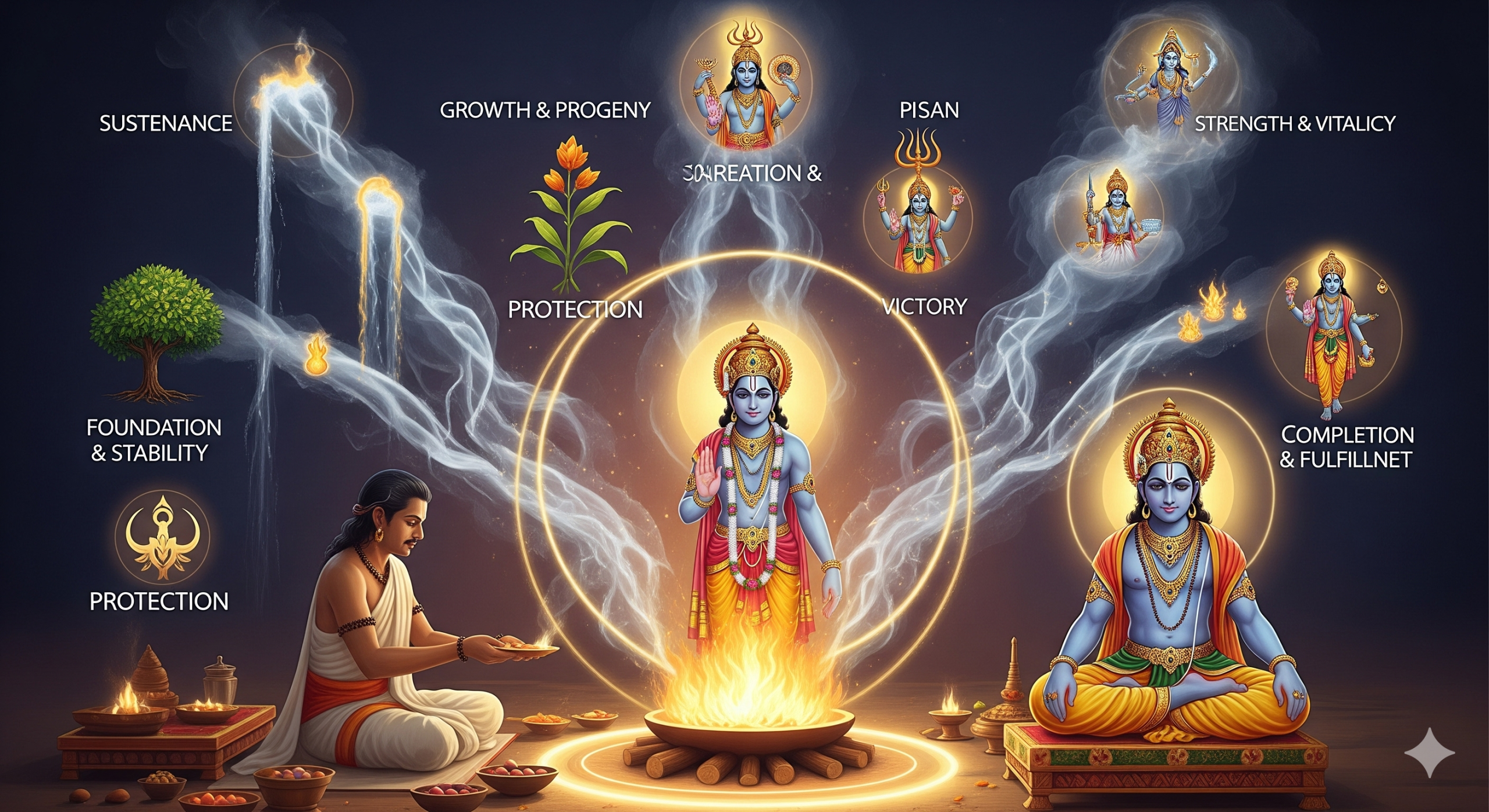
Eight Themes Attributed to Vishnu in Yajna
- Vishnu as the Receiver of Offerings (1.4.3.6)
Every oblation and ritual act, however small, reaches Vishnu. He is the divine recipient who ensures that offerings achieve continuity, sanctity, and peace. - Vishnu as the Embodiment of the Sacrifice (1.8.1.2)
Through the Vaishnava invocation, the yajna itself is Vishnu, standing firm and complete. He transforms potential into beneficial forms, integrating ritual with cosmic order. - Vishnu as the Sanctifier (3.1.6.7)
Devotion and utterance, such as saying “Svāhā,” sanctify both the oblation and the stability of the yajna. Vishnu ensures the ritual attains its intended spiritual efficacy. - Vishnu as Sustainer of Life and Cosmic Order (3.2.3.12)
By securing the oblation and supporting generative powers, Vishnu sustains both creation and the world of beings, showing that every act contributes to the welfare of the cosmos. - Vishnu as Protector (3.3.6.11)
Vishnu safeguards the sacrifice, its lord, and the sacrificer. Through his protection, blessings are granted, and even the simplest offerings maintain their divine potency. - Vishnu as the Imperishable Support of the Gods (3.3.7.7)
Vishnu underpins the world of the virtuous and the realm of the gods. Even Indra’s actions depend on the energy of the yajna, demonstrating Vishnu’s role as eternal support. - Vishnu as the Integrator of Cosmic Forces (3.8.11.2)
All divine aspects—Aditi, Sarasvatī, Pūṣan, Tvaṣṭṛ—are invoked and unified in the offering, culminating in Vishnu, who receives, elevates, and manifests the totality of ritual and cosmic energies. - Vishnu as the Receiver of Complete and Perfect Offerings (3.8.11.2)
Through careful, complete oblation, every act of devotion reaches Vishnu, who manifests the fullness of the sacrifice and ensures the blessings are realized in the world.
Deeper Themes Attributed to Vishnu in Yajna
- Sustenance (1.4.3.6) – Vishnu maintains continuity and peace; he ensures that offerings sustain life and cosmic order.
- Growth and Progeny (1.8.1.2) – Through Tvaṣṭṛ’s shaping and Vishnu’s presence, the yajna enables growth, productivity, and the generative powers of beings.
- Foundation and Stability (3.1.6.7) – Vishnu provides the firm ground for the sacrifice; even the smallest acts are stabilized by his presence.
- Completion and Fulfillment (3.2.3.12) – Vishnu ensures that offerings reach their goal, enabling the full realization of yajna’s purpose.
- Protection (3.3.6.11) – Vishnu safeguards the sacrificer, the sacrifice, and the yajna itself, granting blessings and security.
- Victory (3.3.7.7) – As the imperishable support of the gods, Vishnu upholds divine order, enabling triumph over chaos and sustaining righteous worlds.
- Strength and Vitality (3.8.11.2, first part) – Invocations to cosmic forces under Vishnu’s aegis energize life, speech, and action, imparting vitality and power.
- Fulfillment of Cosmic Design (3.8.11.2, second part) – Through complete and perfect offerings, Vishnu manifests the totality of the sacrifice, ensuring the universe’s order and the blessings of the ritual are fully realized.
Eight Dimensions of Vishnu in the Yajna
| Verse Number | Vishnu’s Role / Theme | Essence of the Verse |
|---|---|---|
| 1.4.3.6 | Sustenance | Vishnu maintains continuity and peace; every offering reaches him, establishing cosmic order. |
| 1.8.1.2 | Growth & Progeny | Through Tvaṣṭṛ’s shaping and Vaishnava invocation, the sacrifice promotes growth, productivity, and generative powers. |
| 3.1.6.7 | Foundation & Stability | Devotional utterances (“Svāhā”) stabilize the sacrifice; Vishnu gives it firmness and support. |
| 3.2.3.12 | Completion & Fulfillment | Offerings, whether metal, wood, or water, reach Vishnu and achieve the full purpose of yajna. |
| 3.3.6.11 | Protection | Vishnu safeguards the sacrifice, its lord, and the sacrificer, granting blessings and security. |
| 3.3.7.7 | Victory | As imperishable support of the gods, Vishnu upholds cosmic order, enabling triumph and righteous worlds. |
| 3.8.11.2 (part1) | Strength & Vitality | Invocations to Aditi, Sarasvatī, Pūṣan, Tvaṣṭṛ energize life, speech, and action under Vishnu’s aegis. |
| 3.8.11.2 (part2) | Fulfillment of Cosmic Design | Complete oblations manifest Vishnu fully, realizing the universe’s order and the ritual’s blessings. |
Practical Application

Living the Yajna in Modern Life
Bhagawan Sri Sathya Sai Baba, in His discourse “Make Every Moment a Yajna,” beautifully explains:
“Man embarks upon an undertaking with a purpose, goal, or an end in view. But, the endeavour is sublimated into a yajna (sacrificial rite which can draw down the Grace of God) only if the purpose, goal or end is the glorification of God, regardless of other considerations. ‘Yajno vai Vishnuh,’ say the Vedas. God is the yajna, for He is the Goal. His Grace is the reward. His creation is used to propitiate Him; the performer is He, the receiver is He. When the ego of the sacrificer does not claim a place, the yajna is rendered Divine.” [saispeaks]
In earlier times, yajna was commonly associated with sacrificial fires, rituals, and offerings into the sacred flame. Today, the essence of yajna extends far beyond ritual. Any task, duty, or work performed with selflessness and surrender is a yajna. Whether it is caring for family, fulfilling professional responsibilities with integrity, serving the community, or engaging in spiritual practices—all of these become yajnas when dedicated to God without ego.
The “Eight Dimensions of Vishnu in the Yajna” table illustrates how Vishnu, the all-pervading Divine, manifests in each facet of life—sustenance, growth, protection, and fulfillment. By seeing our everyday responsibilities through this lens, we realize that:
- Our body becomes the altar, our thoughts and actions the offerings, and our heart the sacred fire.
- Work itself becomes worship when performed with dedication and without expectation of personal gain.
- Success and struggle alike are transformed into offerings, sanctified by the Divine presence.
Bhagawan’s reminder of “Yajno vai Vishnuh” thus calls us to re-envision every act as a sacred sacrifice. In this way, modern life itself becomes a continuous yajna, and every action finds fulfillment in God.
Closing Thoughts

The Taittirīya Brāhmaṇa, through its eightfold affirmation “Yajño Vai Viṣṇuḥ”, reminds us that yajña is not an occasional ritual but the very principle of living. It nourishes, protects, strengthens, and leads to victory and fulfillment.
As a gentle takeaway, Yajña can be understood as any work or task we do, and via Viṣṇuḥ as the offering of that work to the All-pervading Divine. In this light, every action in our life — however small or ordinary — becomes sacred when offered to Viṣṇu. This is the heart of the teaching: to transform life itself into an unbroken yajña. A thought for us all to quietly ponder and practice.
References
Samastah Lokah Sukhino Bhavanthu
May all the beings of all the worlds be happy!

Jai Sai Ram!
Please note all images and content created using AI Tools