A Night of Stargazing: What I Saw in the Sky on 10-06-2023
Hello, dear readers! I hope you are all doing well and enjoying the beauty of nature. Today, I want to share with you my experience of stargazing on the night of 10-06-2023, when I observed some amazing constellations and planets in the sky. The sky was partially cloudy however I was still able to see and capture some nice photos. I used my mobile phone as a camera and a star map to help me identify what I saw. Here are some of the highlights and photos of my night sky observations:
Ursa Major and Arundhati-Vasishta
The first constellation that caught my eye was Ursa Major, also known as the Big Dipper or the Plough. It is a large constellation in the northern sky that contains seven bright stars (Saptha rishi mandala) that form a distinctive shape. It is one of the oldest and most recognized constellations in many cultures, and has various myths and legends associated with it.
One of the most interesting features of Ursa Major is the pair of stars Mizar and Alcor, which are also known as Arundhati and Vasishta in traditional Indian astronomy. They are located at the bend of the Big Dipper’s handle and can be seen as a single star with the naked eye, or as two stars with a telescope or binoculars. They represent a legendary couple who were devoted to each other and exemplified marital fidelity. They are also considered as a symbol of good fortune and happiness for married couples.
I was able to see both Mizar and Alcor clearly with the photos taken (see below), and I felt a sense of awe and wonder at their beauty and significance.

Scorpio and Antares

The next constellation that I observed was Scorpio, also known as Scorpius, which is a zodiac constellation located in the southern sky, near the center of the Milky Way. It is one of the brightest and most easily visible constellations, especially in the summer months. It depicts a scorpion, a symbol of power and mystery in many ancient civilizations.
The most prominent star in Scorpio is Antares, which is also the 15th brightest star in the night sky. It is a red supergiant, one of the largest and most luminous stars known. Its name means “rival of Mars” in Greek, because of its reddish hue and similar brightness to the planet Mars. Antares is also known as the heart of the scorpion, as it marks the location of the scorpion’s chest in the constellation.
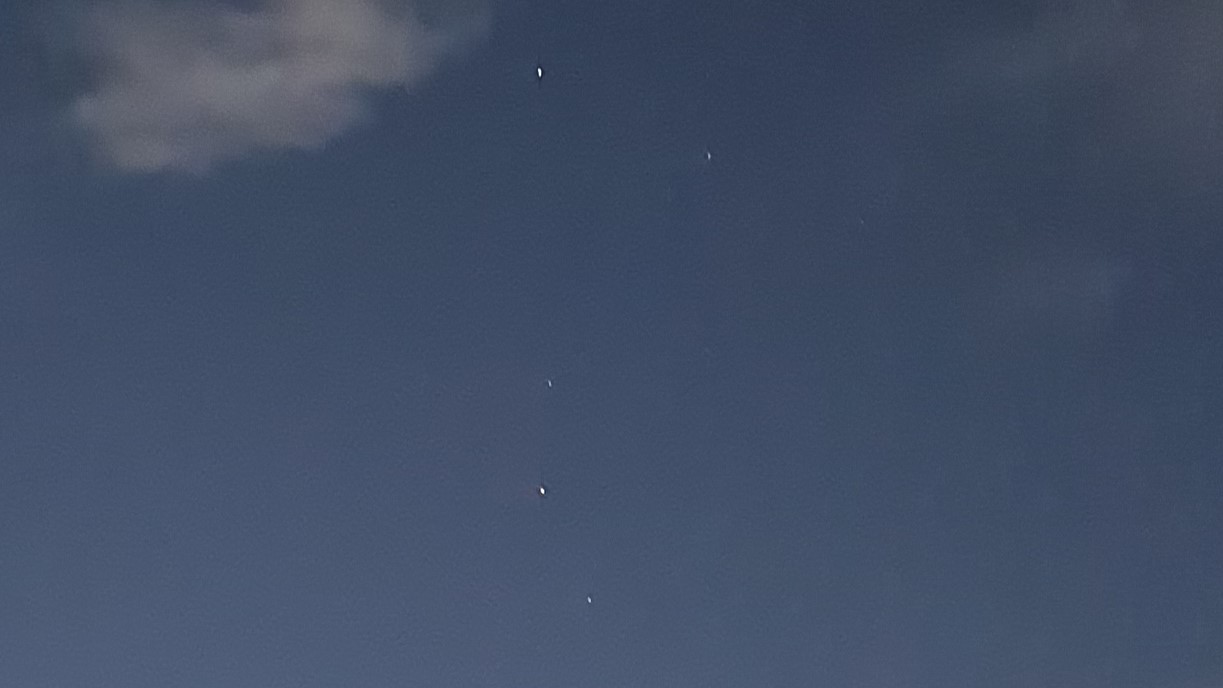
I was able to see Antares shining brightly in the sky, along with three other stars that form the head of Scorpio: Graffias, Dschubba, and Pi Scorpii. They looked like a curved line of four stars above Antares. See photo below.
Crux and the Southern Cross

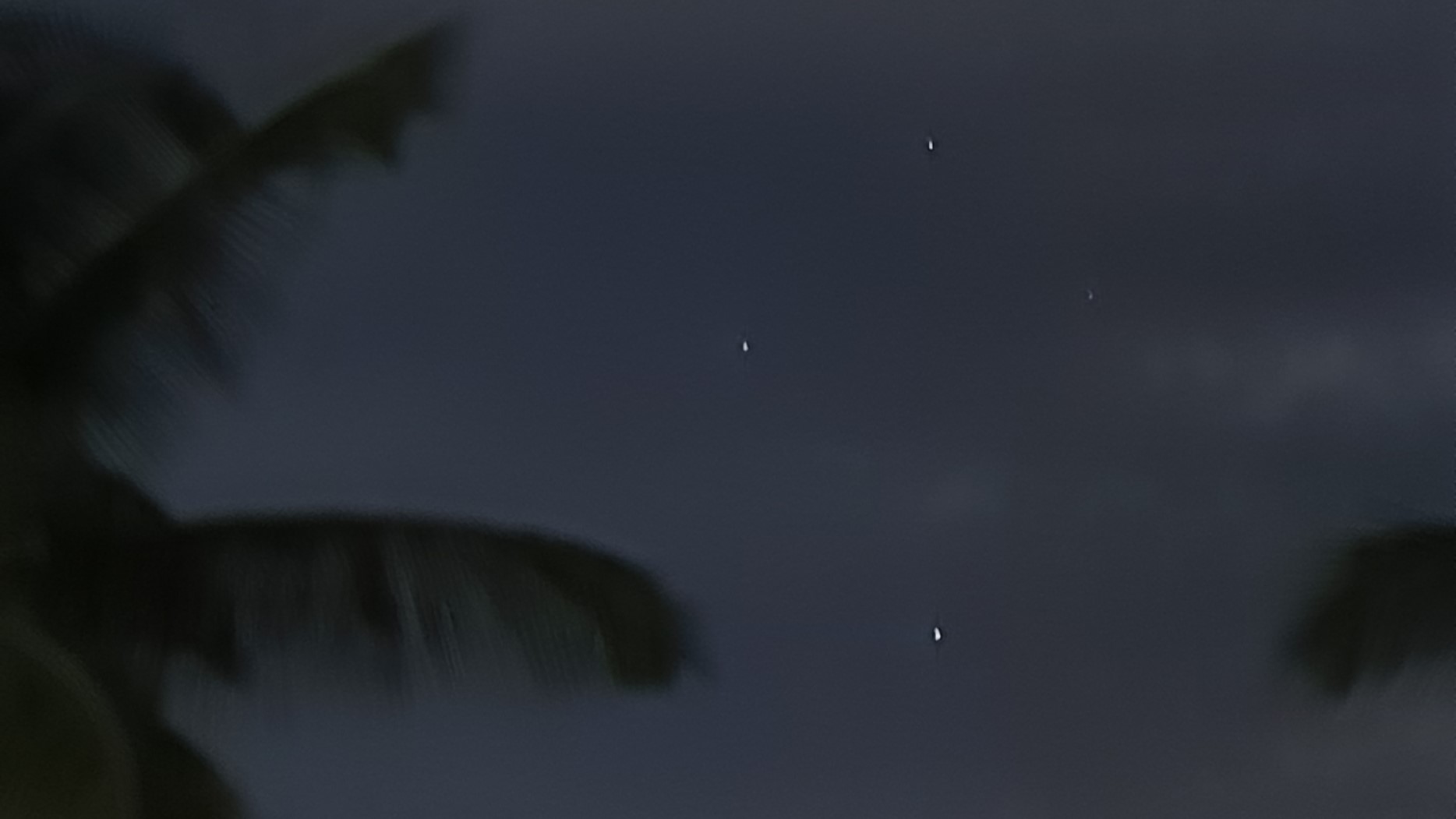
The third constellation that I saw was Crux, also known as the Southern Cross. It is a small but conspicuous constellation in the southern sky that is also one of the best known constellations in the southern hemisphere. It has a high cultural significance in many countries, such as Australia and New Zealand, where it appears on their flags and coats of arms. It consists of four bright stars that form a cross-shaped pattern, with a fifth star near the junction of the cross.
I was able to see all four stars of Crux clearly with my mobile phone camera as shown below: Acrux, Mimosa, Gacrux, and Delta Crucis. They looked like a diamond-shaped cross in the sky. The fifth star, Epsilon Crucis, was fainter but still visible.
Venus and Mars
The last two objects that I observed were not stars but planets: Venus and Mars. They are two of the five planets that can be seen with the naked eye from Earth. They are both terrestrial planets, meaning they have a rocky surface, unlike the gas giants Jupiter and Saturn.
Venus is the second planet from the Sun and the brightest object in the night sky after the Moon. It is often called Earth’s twin because of its similar size and mass, but it has a very different environment, with a thick atmosphere, high temperatures, and no signs of life. Currently, Venus appears as a bright white star in the western sky after sunset.
Mars is the fourth planet from the Sun and the second smallest planet in the solar system. It is often called the red planet because of its reddish color, caused by iron oxide on its surface. It has a thin atmosphere, polar ice caps, volcanoes, canyons, and evidence of past water activity.
I was able to see both Venus and Mars in the sky on the night of 10-06-2023. Venus was brighter and closer to the horizon, while Mars was dimmer and higher in the sky. Venus looked like a jewel shining in the dark.

Conclusion
I hope you enjoyed reading about my night sky observations on 10-06-2023. It was a wonderful experience for me to see the beauty and diversity of the stars and planets. I learned a lot about the constellations and their stories, and I felt a connection with the ancient cultures that also admired the sky.
Thank you for reading my blog post and stay tuned for more updates! 😊